Full article about São João’s June fires perfume Pico’s lava-cove coast
Whalers’ lore, vineyard walls and 23 June bonfires blaze above the Atlantic
Hide article Read full article
The scent of grilled sardines and burnt kelp drifts through São João at 23:00 on 23 June. Low-tide branches, snipped from the rocks that morning, hang across freshly painted timber doors. Basalt walls crackle with bonfires; concertinas leak from open windows and braid with the distant roll of São João Bay.
A fault-line between ocean and vineyard
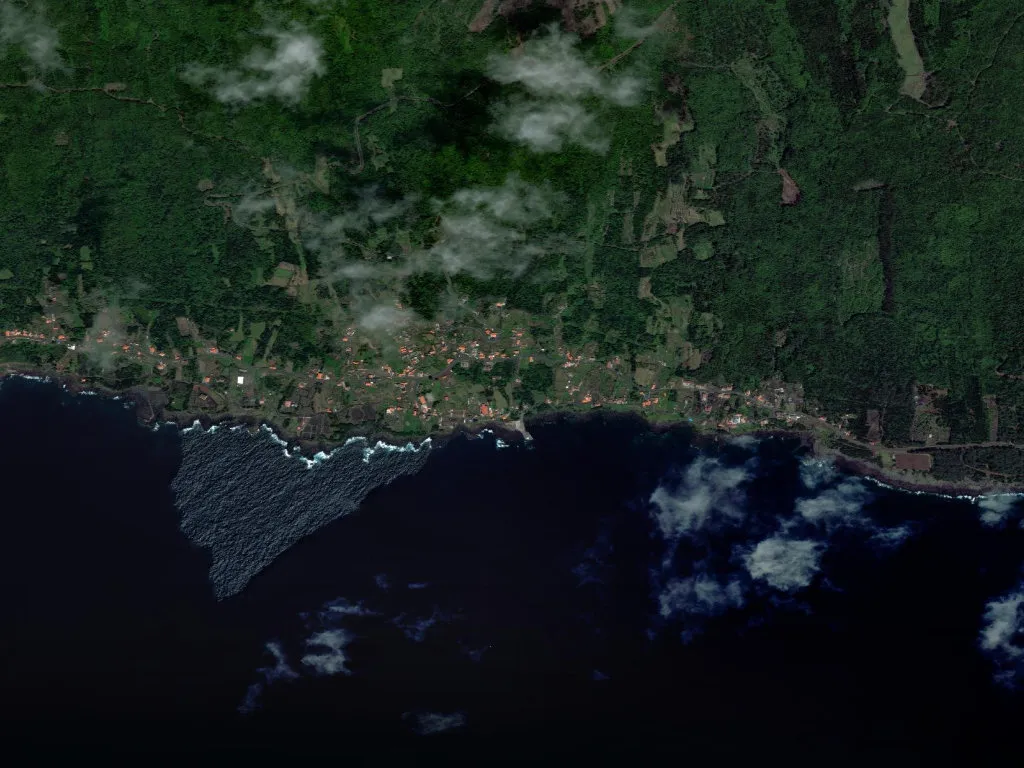
São João crouches on a ledge thirty metres above the Atlantic. Black-lava coves dent the coast; pillow-lava outcrops glow like stone cushions through the clear water. Behind the spray, UNESCO-stepped vineyards climb in dry-stone zig-zags—walls that trap daytime heat and keep salt wind off the vines. There are no rivers, only summer-dry streams where wild figs muscle through the gorse.
The parish still talks in two accents: “cove folk” whose windows face the Faial-Pico channel, and “ridge folk” who wake above the high-walled plots. The divide dates from the sperm-whale years. Ask Sr. Totó, the last lookout alive, to show you the whale teeth in his coat pocket—he will, if you buy him a bica first.
Stone, carving and June fire
The parish church of São João Baptista squats at the centre, its bell-tower disproportionately tall, as if competing with the volcano behind it. Inside, 18th-century gilded wood catches candle-light; the patron saint occupies a niche carved from local basalt. In the forecourt, a salt-whipped stone cross carries 1700s inscriptions scored with blades once used to strip blubber. The Holy Spirit “impérios” scattered through the lanes keep their arched basalt doors open; on Pentecost Sunday iron pots of soup steam outside and clay jugs of aromatic wine pass from hand to hand.
A whaleman’s table
Fish stew murmurs with tomato, onion and sweet pepper; corn bread arrives hot enough to melt butter. Liver sauce clings to boiled taro that drinks in the dark gravy. Sarrajão—fresh tuna grilled on coarse salt—keeps its centre blush-pink. Vine-dried garlic-chilli chouriço, cured in sea wind, explodes salt and smoke. Dessert is honey-cake and coscorões, fried twists that shatter like brittle. The table wine, grown inside those lava walls, is light, sharp and poured by the jug; refuse it and you insult the cook.
Muleteer paths and glass-clear water
The “Caminho das Voltas” wriggles four kilometres between stone walls and vines that climb like green graffiti. From Cimo da Rocha the Faial channel spreads wide; dolphins sometimes arc beneath the cliff. Pack water and a sweet bun—there is no café, only Dona Albertina’s cow watching from the wall as if to say, “Another tourist?”
Below, São João Bay invites a snorkel: cold water reveals parrotfish nibbling algae, morays wedged in lava fissures. Bring mask and fins—bare hands see only rock. At the quay, boats unload just-caught tuna at five-thirty; cash only. Zé Mário slices the loins with a pocket knife older than the parish and will not tap a card machine—“That’s city nonsense.”
Dusk drains the light from the vineyard terraces. Concertina notes linger in the lanes, mixing with wood-smoke and the hush of waves on basalt. São João slips into sleep between the embers of St John’s fires and the salt the wind leaves on black stone. Stay late, walk to the pier, watch Faial’s lights tremble on the water—the moment the village exhales and tells the night, “Enough visitors; leave me with my stones and silence.”