Full article about Bandeiras, Pico: Walking Between Lava Walls and Ocean Vineya
Black basalt corrals tame Atlantic gales so Verdelho grapes ripen on Madalena’s raw northwest coast.
Hide article Read full article
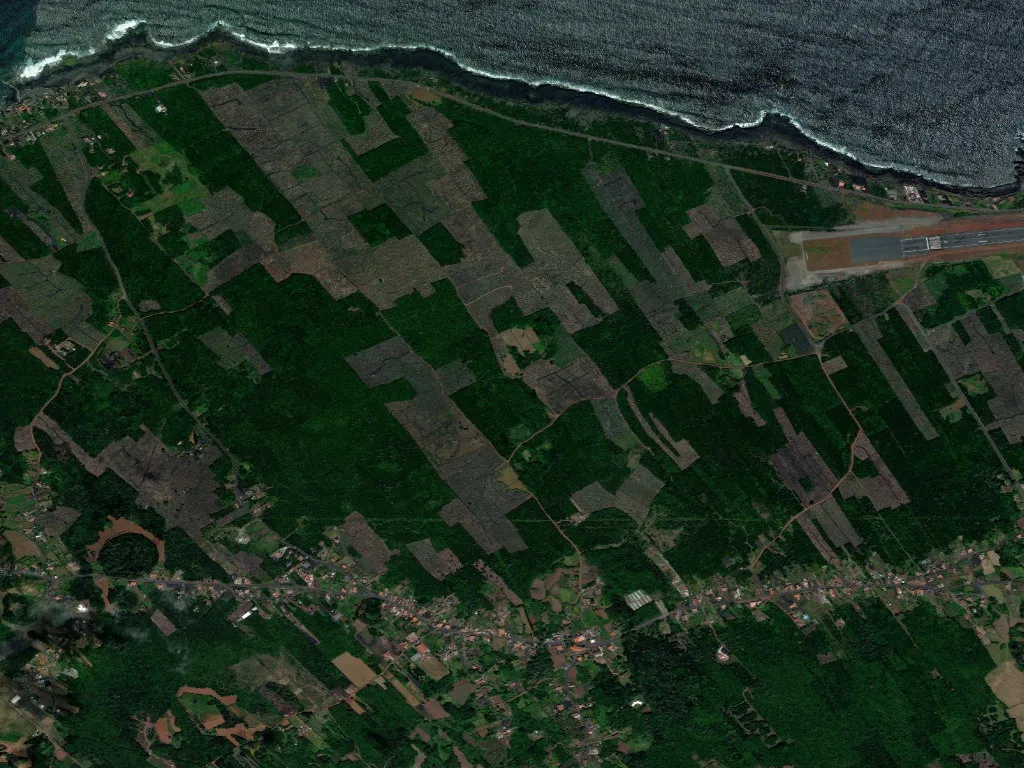
The Atlantic westerly hits the walls first. It slams into slabs of black basalt, skids around the lava enclosures, and arrives at the vines so depleted that the leaves barely shiver. In Bandeiras, on Pico’s northwestern shoulder, you don’t admire the landscape from a distance—you walk inside it, hemmed by dry-stone corrals that have been standing since the 1500s to keep salt spray and fury out of the vineyards. Over your shoulder, the stratovolcano itself is a dark hyphen cut into the sky, reminding you that this ground was once molten and was civilised only by obstinacy.
What the stone taught us to plant
The parish archive begins in 1527, when a census for Dom João III listed 23 household heads. Even then, settlers understood that soil here was not a gift but a negotiation. Every square metre of vineyard demanded a week of levering lava blocks into walls two metres high, creating a sun-trap that lets Verdelho ripen while the ocean howls overhead. The name Bandeiras (“flags”) comes from the scraps of cloth or wooden stakes families used to mark property lines on a terrain where rock and cloud look identical. UNESCO’s 2004 World Heritage listing cites no romantic aesthetics—just the concrete genius of turning magma into wine.
Our Lady of the Good Voyage watches the negotiations from her parish church, rebuilt in 1892 on 16th-century footings. Inside, gilded carvings and ex-voto panels record generations who entrusted the Madonna with their departures to the whaling grounds and their uncertain harvests. Outside, cobbled lanes muffle footsteps; ruined windmills stand on ridges like broken chess pieces, reminders that wheat was also tried here—and lost.
The taste of making do
At table, the Atlantic and the volcano share the plate without quarrel. Fish broth arrives steaming, thickened only by its own collagen and accompanied by dense yellow corn bread. Black-pork chouriço, cured in braziers of bay and heather, is matched with yams that fatten in the lee of a basalt wall. Molho de fígado—once whale, now sustainably caught tuna—gives a dark, iron-intense sauce that tastes of the old dangerous returns. The summary of Bandeiras, though, is bolo de vinho: a loaf of rye and spice drenched in Verdelho until it becomes dessert, edible proof that the grape can finish what the lava began.
That Verdelho once graced the courts of St Petersburg and Vienna; in 1843, The Lancet praised its “raciness peculiarly adapted to the English palate.” A handful of families still tread their grapes in century-old stone lagares, ferment in 200-year-old chestnut barrels, and hand-cork each bottle. Their annual output would fit into a London wine bar’s cellar, but quantity is not the point. The wine is a first language, spoken with basalt-calloused hands.
Walking inside the walls
There are no postcard viewpoints here; instead you are invited to step physically into the World Heritage site. A signposted 4 km loop drops from the church, threads through working vineyards, skirts abandoned currais where ivy stitches stone to stone, and follows the Ribeira de Bandeiras to the Atlantic. Placards from the Azores Geopark decode pillow lavas and endemic knotweed; kingfishers ratchet past in flashes of copper. The path ends at Cais do Mourato, a natural harbour where barrels were once lowered into whale-boats for export to England.
On 15 August the parish stages the Festa da Nossa Senhora da Boa Viagem—brass bands, processions, and street arches woven from vine prunings. Midnight mass spills out of the church; locals balance candles against the wind while the priest blesses fishing boats hauled onto the slipway. Three weeks later, the vintima marks the harvest: tables laid on the threshing floor, bottomless clay cântaros of Verdelho, and canto ao desafio—improvised sung debates that can last until the walls blush with dawn.
Evening light slants across the basalt, turning charcoal to antique gold. Long shadows of the vines stripe the lava like bar-code. The westerly keeps hammering the walls, as it did yesterday, as it will tomorrow. Protected by patience turned to stone, the Verdelho holds on—and ripens where nothing should ever have grown.