Full article about Candelária: Pico’s Wind-Carved Wine Coast
Where lava-walled vineyards cling above Atlantic cliffs and 829 souls keep Verdelho alive.
Hide article Read full article
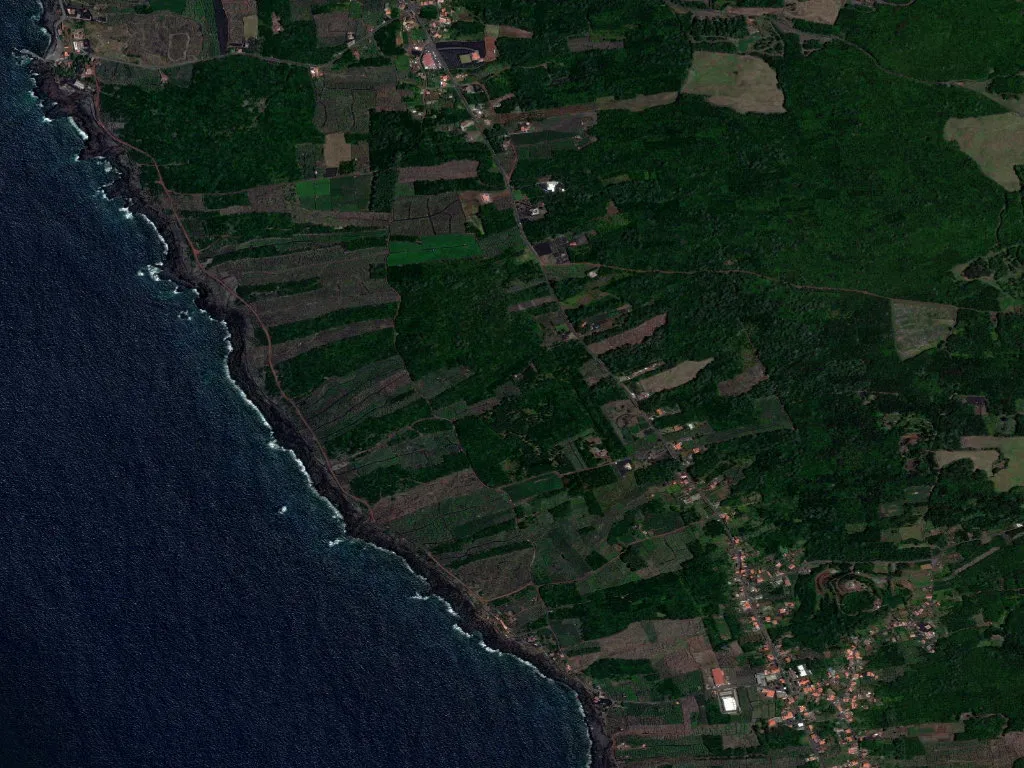
The wind combs across fields of black basalt, scouring the stone walls that run from the Atlantic breakers up to the waist of the island. Between those lava ramparts – stacked as neatly as if a mason-giant had been paid by the hour – the Verdelho vines grip the ground, their roots corkscrewed into crevices, afraid, it seems, of being blown clean off the slope. Behind them the ocean hammers the cliffs of Monte; in front, the hamlets – Mirateca, Guindaste, Campo Raso – press shoulder-to-shoulder like villagers watching a parade. Candelária is not a tableau for cruise brochures; it is 829 souls who still hoe their grapes, haul fish boxes and file into Sunday mass with the same resignation they show when queuing for coffee.
Seminary of the Atlantic
Locals love the statistic: more priests per square kilometre have been baptised here than anywhere else in the Azores. Two even reached the top floor of the Vatican hierarchy: Cardinal Nunes and Bishop Goulart. The cardinal’s birthplace is ordinary whitewash, distinguished only by a ceramic plaque the size of a side plate. Next door, the parish church of 1803 is scaled precisely to its flock – neither cathedral-large nor chapel-small. Inside, beeswax and dried lavender mingle in the same perfume that drifts through every Azorean nave. Dotting the parish are tiny roadside shrines – Our Lady of Fátima beside a pasture gate, Saint Nuno squeezed between two dairy sheds – and the colour-washed Impérios do Espírito Santo, storehouse-temples where, each May, the Holy Spirit soups are ladled out from zinc cauldrons. No foam or micro-herbs: just bread, meat and broth for people who have spent the morning digging potatoes or mending nets.
Walls, vines and 100-metre drops
UNESCO arrived in 2004 and declared the landscape world heritage; the residents shrugged and carried on pruning. The vines still grow inside child-high mazes of loose basalt, each plot a private game of Battleship against the wind. Verdelho remains king – poured cool before a plate of limpets or alongside the queijadas that Tia Albertina sells from her kitchen door. Park where the tarmac narrows above Criação Velha: there are no boardwalks, no selfie wings, only the chessboard vineyards, the cliff edge and the Atlantic exploding below. Beaches? None. Instead, footpaths stitched together by cow-track and tractor-rut link one cluster of houses to the next; you walk them in wellies, nodding to neighbours exercising their dogs, the silence broken only by a distant lowing or a two-stroke engine echoing off the lava.
Living memory
The folk-dance group has worn the same woollen jackets and vermilion skirts since 1966; today Ana teaches the same steps to her granddaughter. Festival nights ring with corridinhos whose lyrics even the priest mouths under his breath. The menu is inflation-proof: caldeirada if the boat came back lucky, molho de fígado on saints’ days, linguiça with yams when no one can be bothered. Nothing here was designed for Instagram – the food is the colour of appetite and the portions are sized to power a day in the fields.
Candelária sells no zip-lines, no souvenir tea towels. It offers instead basalt lanes where your phone loses the signal, the metallic smell of wet earth after a squall, and the moment at dusk when the sun slips behind Faial and every stone wall turns the colour of burnt honey. Come if you want the sort of quiet that gift shops can’t package.