Full article about Lava-Baked Vines of Santa Luzia, Pico
Walk Pico’s scorched stone hugs where Verdelho defied 1718 lava in São Roque do Pico
Hide article Read full article
The black basalt burns the soles of your feet even in the shade. At midday the air quivers like a skillet left on the hob, and inside that oven the vines survive, crouched within high walls that look more like stone hugs than windbreaks. Each curral – the tiny, hand-piled enclosures unique to Pico – is a back-garden the size of a picnic rug; land is measured by the length of a hoe, never by the tape. Between them the path is so narrow that gorse needles snag on rubber boots, and the salt that crusts a grey seal’s pelt is the same salt freckling the stems of Verdelho.
Where the earth caught fire
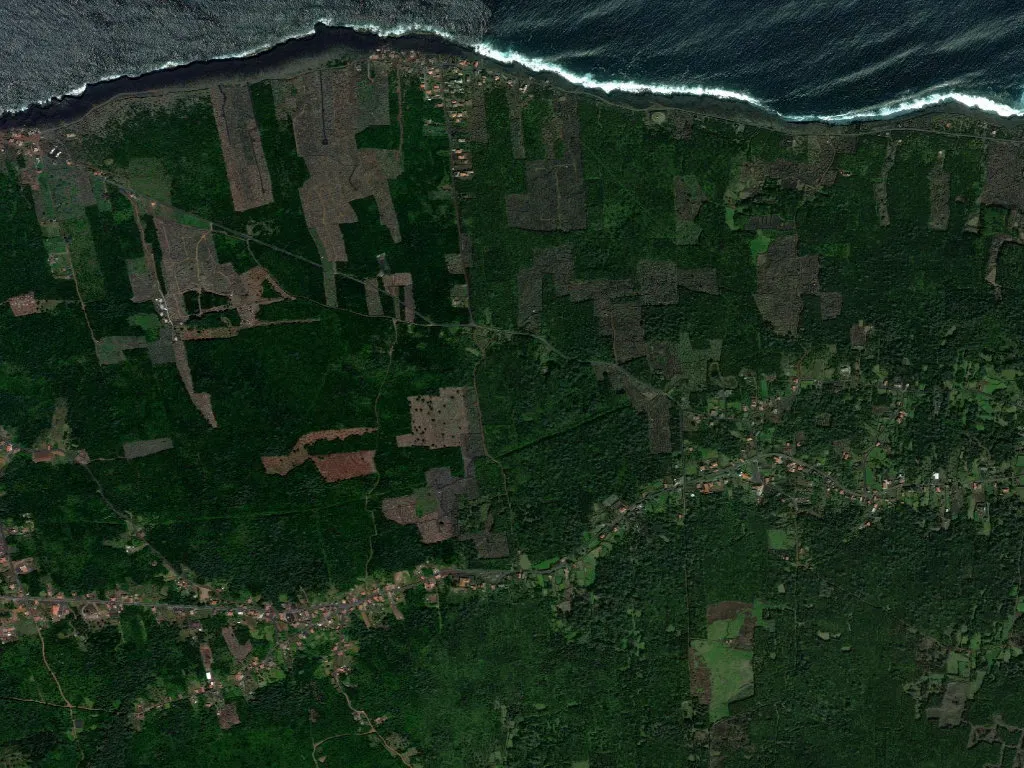
On the night of 1 February 1718 the sky turned brick-red. Those who lived here – scarcely more than the 436 who remain today – first heard timber groan, then felt the hush of stone rolling forward. The chapel vanished with the brittle chime of a dropped plate: names, dates, promises swallowed whole. When the lava cooled, someone jammed a wooden cross into the still-warm crust; it lasted about as long as a recited Lord’s Prayer. Using the same heat-radiating stone, they built a new church beside the ruin; the first Mass smelled of sulphur and burnt crusts.
Three years later the parish founded its Império do Divino Espírito Santo – not from sudden piety but because islanders needed a pretext to pool what little they had left. The eruption had punched perfect post-holes in the rock; into them they rammed vine stakes. Between two boulders a single bunch elbowed room to swell, and from that defiant gap Pico’s signature Verdelho was born.
Hermitages and scattered memories
Wander among the currais and you’ll lose yourself in toponyms. Mistério Grande – literally “Big Mystery” – is where the flow twists like a waist; Lajido do Meio is the lava bench where moonlit waves sound as if they’re breaking against your headboard. The chapel of Nossa Senhora Rainha do Mundo shelters behind a wall so low that goats use it as a windbreak; inside, a sea-fog of salt has erased the Virgin’s face. São Mateus da Costa is even smaller: three widows in black and one biscuit-pinching child fill it to capacity. Its bell doesn’t toll on the hour; it answers the wind.
Walking on burnt sugar
There is no signed trail, only the strip where stone refused to sprout. The walk begins with the snap of charred myrtle and ends on the iodine breath of dried kelp. Half-way, a basalt slab polished by countless jeans serves as a bench; empty lager tins are lined up like altar boys, the only clue that teenagers still come here. Elsewhere walls slump, fig-tree roots lever stones apart, and sow-thistle colonises the beds.
When the wind veers north-east you catch the ghost-song of sperm whales long since chased off the mid-Atlantic ridge; swing south-west and you hear Aunt Amélia’s Saturday fado drifting from the bakery loudspeaker. The silence between is so elastic you can feel the ridge contracting at sunset. Yet wine is still made here – a few barrels a year – enough that on feast day every glass carries a speck of black volcanic sand at the bottom, a gritty reminder that the vineyard and the volcano share the same bedrock.