Full article about Coriander steam & cedar-scented São Pedro, Terceira
Black-grit beach, 1980-cracked tiles, frankincense altar: São Pedro’s Azorean pulse.
Hide article Read full article
The scent of coriander before noon
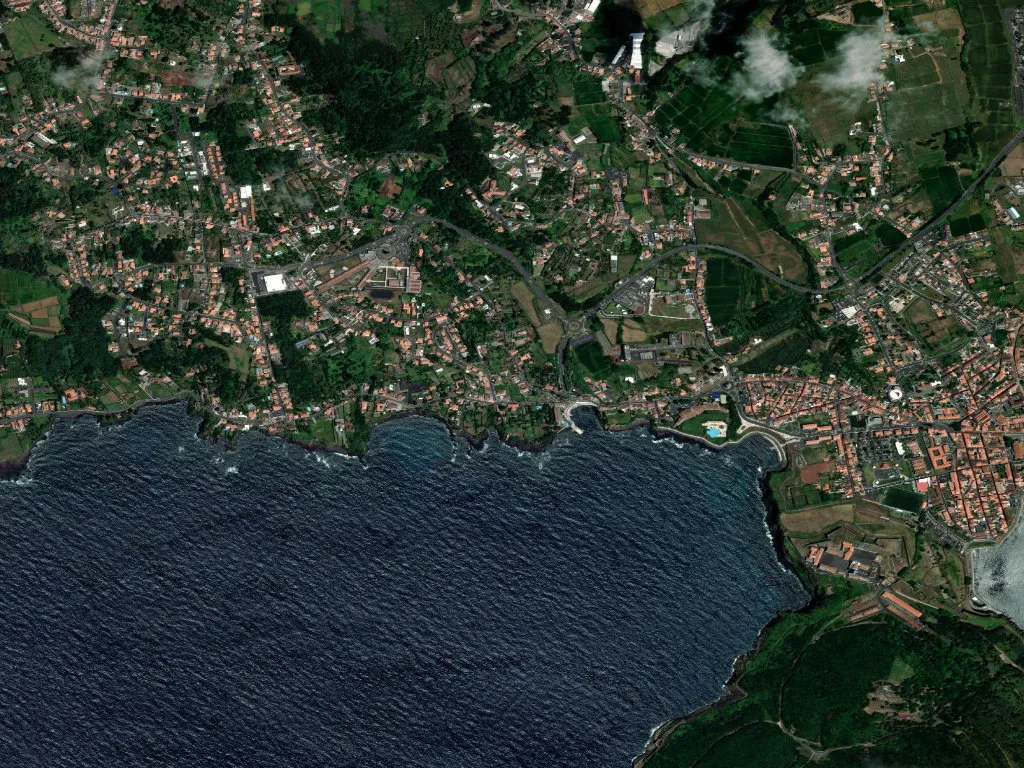
By 11.30 the square is still empty, yet coriander steam is already rising from the aluminium pot inside the tiny café on Largo de São Pedro. Fishermen at Praia de São Mateus aren’t hauling nets Newfoundland-style; they bulldoze them forwards, backs bowed, across black volcanic grit that squeals under bare soles. The Atlantic breeze carries something sharper than salt—sardines blistering on a flat-iron someone nicked from the ironing pile and pressed into service as a grill. In the bakery on Avenida Álvaro Martins Homem the bolo lêvedo—a sweet, English-muffin-meets-brioche that Azoreans insist is “bread”—never sees a wood oven; it puffs up on a domestic gas hob, and the queue evaporates by nine.
Stone, cedar and 1980 cracks
São Pedro’s parish church is late-Mannerist, not Baroque, its façade severe after the Jesuit fashion. Inside, the 1747 blue-and-white tile panels still show lightning-bolt fractures from the 1 January 1980 earthquake that rattled Terceira at 4.30 pm. The cedar altarpiece arrived as ballast in a Brazilian caravel; the wood was carved by enslaved hands and still gives off a ghost of frankincense when the sun warms it. The 16th-century fort, built to spot Spanish galleons, now watches over a tennis-club car park; teenagers split Super Bock on the ramparts and use the sentry walk as a bench. The stone fountain dated 1788 no longer spills water—mains plumbing arrived in the 1970s and the spring was politely retired.
Iron pot, hybrid grapes and custard scorch
Alcatra—the island’s iconic pot-roast—simmers here in an enamelled cast-iron descendant, not the traditional clay vessel. Four cloves of garden garlic, no spice voyages: the flavour is smoke and reduced Tinta wine from a three-litre flagon poured into plastic cups at Santo António street feasts. Phylloxera wiped out the Verdelho vineyards a century ago; today’s glass holds a crisp hybrid white, served ice-cold in beer mugs. Custard-apples change hands at Rosa’s Wednesday stall—five euros a kilo in a carrier bag. Donas-amélias, the island’s saffron-and-cinnamon cakes, are fried in lard and will blister your fingers if greed overtakes patience.
Pine plantation, laurel ghost and lava pools
Behind the cemetery the PR05-TER trail climbs into a 1960s Monterey pine plantation; the original laurel forest fuelled island hearths long ago. Slippery basalt slabs and moss turn the hour-long ascent into a flip-flop audition. From Miradouro da Falca you sight the rust-red roof of Praia da Vitória’s power station and the weekly ferry nosing out toward São Miguel. The lava pools of São Mateus stay stubbornly cold even in August; towel-toting cruise passengers photograph each other in the shallows while locals wait for September. Four Ribeiras beach is shingle, not sand; Kiko the surf instructor rents boards for twenty euros and throws in a wetsuit if you arrive with a Spanish accent.
Nine-hole, bobbins and last-call fado
Terceira’s only public golf course—nine holes, 25 € green fee—loses most of its balls in the yellow gorse. The bandstand hosts no philharmonic; Saturday nights belong to teenagers swigging bagaço grape firewater. Two wooden lace-pillows survive in a workshop run by a Swiss expat and his Terceirense wife; fifteen euros an hour buys a lesson in rendas de bilros—bobbins clacking like cicadas—but few takers. At dusk the windows of Bar Cais de São Pedro glow amber; Zé’s guitar picks out a homesick fado that drifts across the quay until the PSP police car cruises past. Mr Armando hauls his wicker veranda chair to the pavement as he has every evening since the Carnation Revolution, eyes fixed on the horizon that twice a year carries the Tall Ships race past his door.