Full article about Angra’s Bronze Dawn: Bells, Brioche & Basalt Memories
Fog lifts with cathedral bronze, bakery steam curls through UNESCO lanes, and every stone remembers
Hide article Read full article
The Bells That Know Your Name
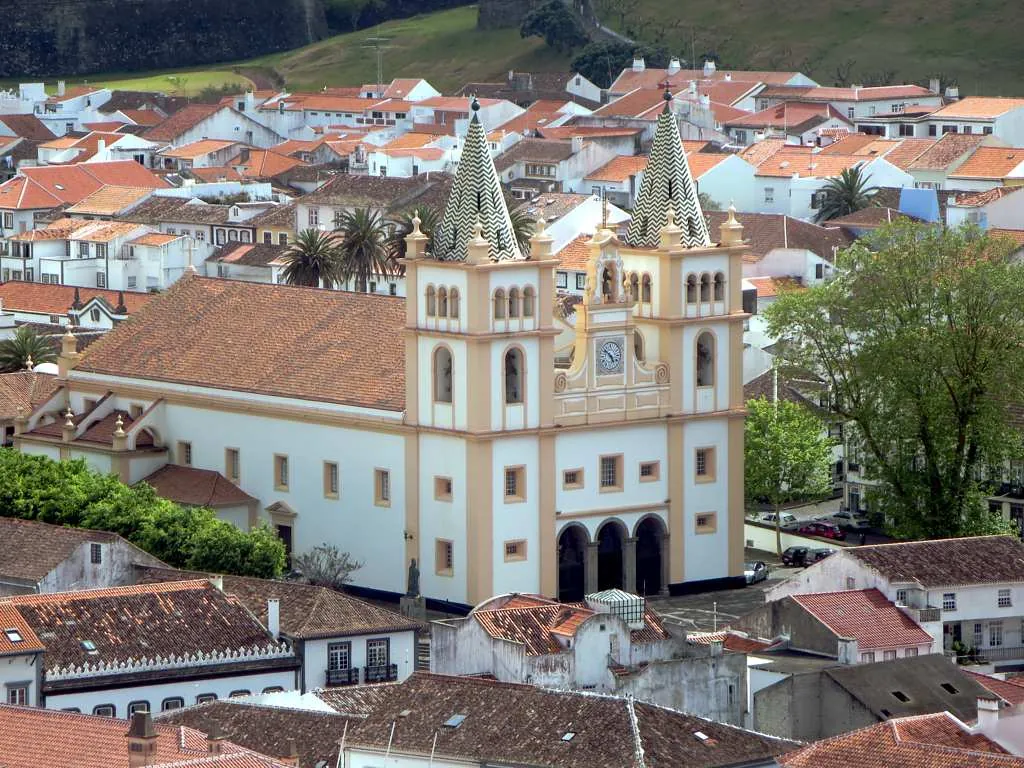
The cathedral bells don’t ring – they resonate. At seven o’clock, while fog still hesitates over the bay, the first bronze note lands inside the ribcage and flutters there like a second heartbeat. Grey doves lift from the eaves of Rua da Rosa, wheeling against a pewter sky, and you realise Angra is waking from a sleep that bears no resemblance to the rest of Terceira.
In the seams of the Unesco-listed centre, alleys narrow into corridors where the wind delivers the exact smell of low tide – not the brochure-salt, but the damp-paper scent of wrung-out seaweed and mussels that exists nowhere else on the island. The walls aren’t white; they are bone-white, limewash stirred with black volcanic sand, and when the January sun strikes them for a full three hours they exhale a dry, biscuity warmth that makes cats pour themselves like liquid across the basalt steps.
The Minute the Bread is Born
Rua de Santo Espírito smells of yeast before it smells of morning. At 06:30 the bakery unlocks; at 07:03 the first loaves slide from the wood oven and Rua Direita becomes a flue of scorched dough and malt. Dona Lurdes, 82, still climbs the 47 steps to her house by the Renaissance fountain. She buys her brioche here every Friday – “the same taste I carried home with my mother before the earthquake.” She means 1980, the year the main church clock stopped at 16:32, but she also means the other quake, the one that lives in the stone itself. Walk past Largo Prior do Crato and you can read the trauma in the architecture: a row of too-straight houses like milk teeth in an old mouth, the exact line where the ground shrugged and the city rebuilt itself.
Afternoon Courts
On summer afternoons, when the patterned calçamento begins to release its stored heat, the stone benches of Jardim Duque da Terceira fill with men playing sueca. They use packs bent double from years of humidity, slapping cards to the wood – tchic-tchic – while arguing over bluefish yields with the same fervour sixteenth-century bishops reserved for heresy. Fountains murmur, a cruise ship whistles into the bay, and the air tastes of warmed pine and cigarette paper.
128 Ways for a Door to Groan
Conservation statistics list 128 protected buildings; locals count 128 different door-hinges. The captain-major’s townhouse sighs like a querulous aunt; the former cod warehouse laughs. Each carries the echo of a different departure – Brazil-bound sons, mass-bound grandmothers, a final turn of the key on Christmas Eve.
Up Where the Atlantic Changes its Mind
Climb the cavalry track on Monte Brasil and the perfume shifts: eucalyptus, then pine, then suddenly nothing but wind freighted with salt from routes Columbus once used for rudder repairs. From Pico das Cruzetas, Angra looks like a architect’s model – red-tiled roofs overlapping like fish scales, churches stranded like upturned boats, the bay a blue eye that blinks when clouds pass. Teenagers sit on the wall where, in 1581, a lookout spotted French privateers, and smoke their first illicit cigarettes into the trade wind.
Night Acoustics
Darkness drops fast here. Footsteps grow louder; whole conversations drift from open casement to casement like paper aeroplanes. At 22:30 the last boutique shutters and the silence becomes so dense you can hear the sea even during spring tides when the beach is five streets away. Listen longer and the houses begin to talk: the rafters of the Palácio dos Capitães-Generales shift like old galleon timbers, palm fronds whisper gossip in the garden, the cathedral clock ticks seconds with the patience of something that knows every sailor eventually comes home.
Population: 928 souls. Elevation: 155 m above a bay once judged the safest anchorage in the entire Atlantic. Archetype: the art of doing nothing with absolute conviction.