Full article about Doze Ribeiras: Twelve Streams, One Azorean Secret
Watermills, cliff-edge footpaths and black-cobble beaches where sardines sizzle on Midsummer’s Eve
Hide article Read full article
Water and stone
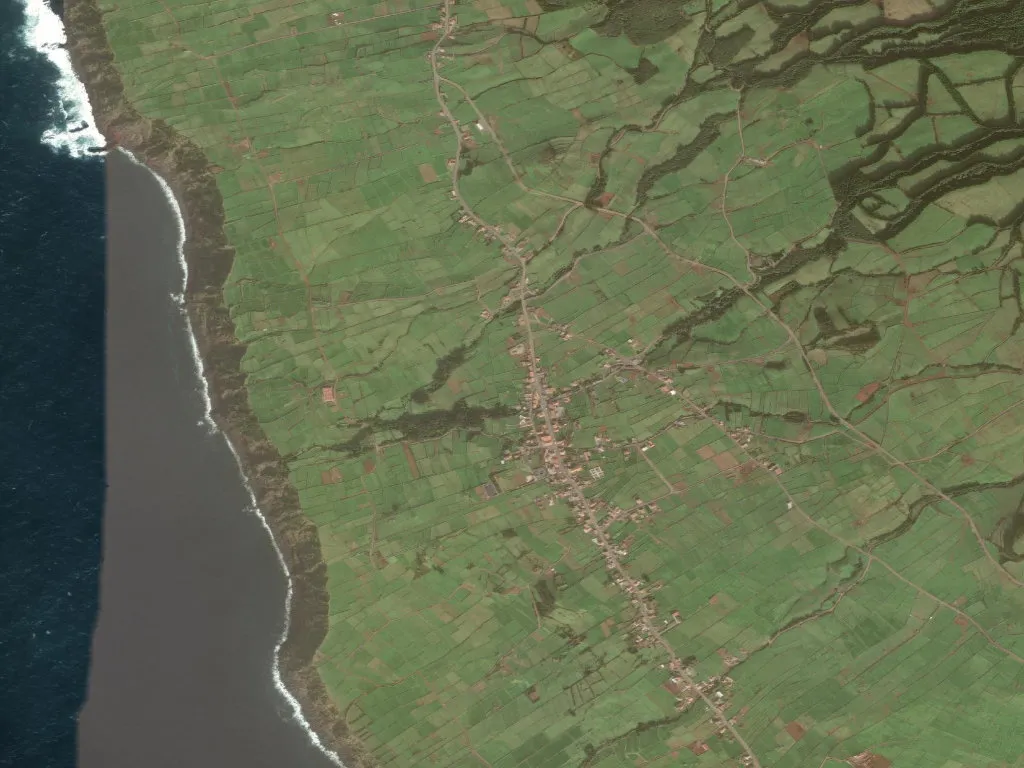
Twelve streams spill off the ridge in year-round descent—an oddity in the Azores, where summer usually silences running water. The largest, Ribeira do Porto, fills the valley with a low thunder after heavy rain; the other eleven murmur companionably through cow pastures and Japanese cedar. Two watermills still lean over Ribeira da Lapa, wheels frozen but grindstones visible through cracked shutters; a third stands on the roadside verge, its roof patched with corrugated zinc.
The church of Nossa Senhora da Conceção locks at five. Ask at the white house to the left of the porch—two knocks, nothing more. Inside, an eighteenth-century gilded altarpiece glints above 1953 azulejos painted to replace those lost in the earthquake. Wooden ceiling panels in the choir carry flaking Baroque angels that no one notices except the woman who dusts them every Friday.
Footpath PR01TER begins behind the bell tower, hugging the basalt cliff for six kilometres to Raminho. Yellow markers every 500 m; carry water—there are no springs. Mid-way, a discreet sign points to a cory’s shearwater burrow; return after dark between August and October and the air vibrates with their nasal calls.
Fajã beach lies 200 m below the road: 156 uneven steps, no sand, only black cobbles polished by the tide. The sea is gentle, but the climb back is penance. Fill your bottle at the spring beside the car park before you start.
Fire, songs and sardines
On 24 June the parish lights a single pyre of gorse and vine prunings in Ribeira da Cruz. Grilled sardines appear at nine; locals leap the flames until the last ember dies. Skip the jump, they say, and fear will dog you for a year.
Since 1987 a communal bonfire has replaced individual hearths at Christmas. A eucalyptus trunk is dragged down from the serra by tractor at dusk; the fire burns until conversation runs out. Bring a jacket—when the flames drop the night air bites.
15 August belongs to Nossa Senhora da Conceção. A 4 pm procession circles the church; at eight the brass band strikes up and folk dancers launch into the sapa—right foot always forward, three steps, half-turn. No tickets: drop what you like into the bar bucket.
What the land gives
Café Quinta das Doze opens at seven, closes Wednesdays. Turnip soup with house chouriço is €4, bread included. Saturday-only pork crackling (€3) arrives with yams lifted that morning. Rough red “vinho de cheiro” comes in unoiled plastic bottles—€2 buys half a litre. There is no menu; ask what’s cooking.
Fresh cheese is sold from the side door: ring the bell on the left. €6 a kilo, wrapped in foil, made at dawn and usually gone by teatime.
At km-marker 18 the regional road widens into the Miradouro do Baloiço—space for eight cars. A timber swing rated to 100 kg faces São Jorge 55 km away. Golden hour begins an hour before sunset; pack out everything you bring—there are no bins, no loos, only Atlantic light on water and stone.