Full article about Porto Judeu
From basalt harbour to misty pasture, a 30 km² Azorean world where cows graze above the Atlantic
Hide article Read full article
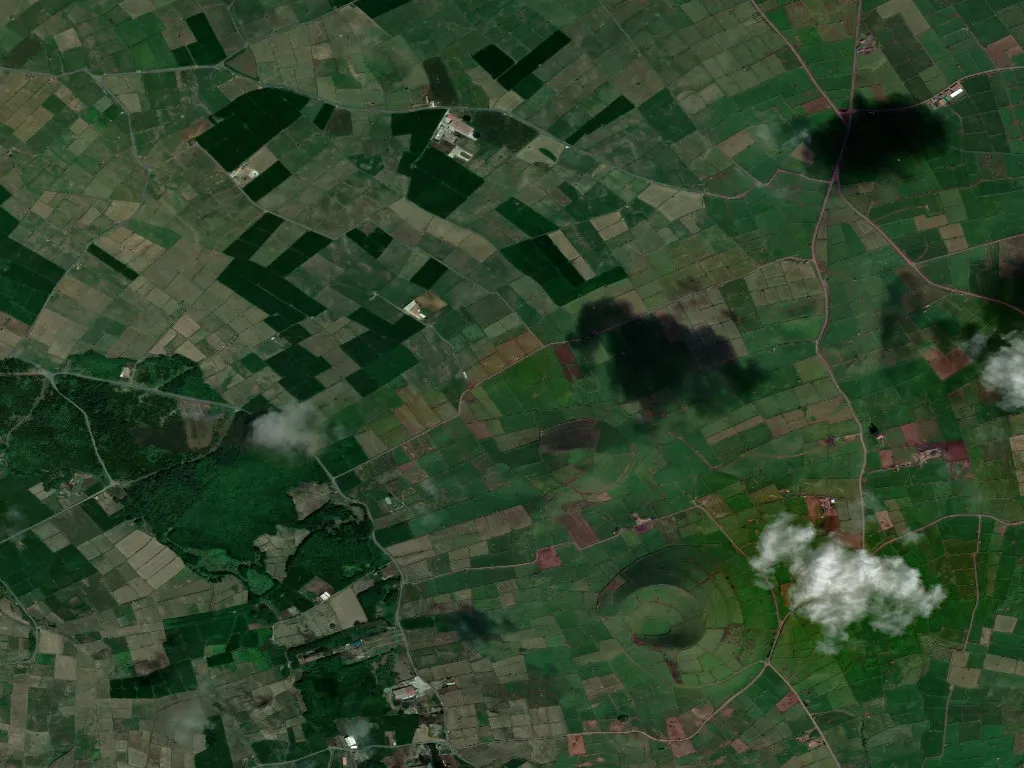
The wind hits you head-on as you drop down the narrow road to the sea. Porto Judeu unfurls between the slope and the southern shore of Terceira, a parish of just 30 sq km where the average altitude of 266 m means you live in two worlds at once: the high ground of cattle pastures and the shelter of the bay that gives the place its name. Light turns quickly here – a low morning sun is erased by clouds rolling in off the Atlantic – while 2,293 people keep the rhythm of a community that knows the weight of salt and the fickleness of the ocean.
Between the harbour and the high ground
At 75 inhabitants per sq km the place feels emptier than the numbers suggest. Porto Judeu is not a tight cluster but a scatter of houses that straggle from the coast up the lanes to the ridge. Walk the parish and you notice the shift: close to the water the older dwellings are built from dark basalt; higher up, the green intensifies and cows graze untethered. Stone is the daily language – in the loose-wall boundaries that have defined fields for generations, in the steps cut into the slope, in the uneven cobbles that destroy a new pair of shoes.
The population has aged, undeniably. With 424 seniors to 312 children the tempo is slower, conversations longer, front doors left open. Yet there is stubborn continuity: families who stayed, others who returned from Toronto or New Bedford, Massachusetts, still tending small plots of taro, kale and maize planted by hand. Three neighbours I can name keep vineyards inside circular stone currais, even though the grapes earn little. “It’s so it doesn’t die,” they say.
The sea that shelters – and exposes
Porto Judeu’s bay offers only partial refuge. It is no deep-water harbour, but for centuries served as an alternative anchorage when Angra do Heroísmo, a few kilometres west, was cut off by weather. Today the small beach fills with local families in July and August; out of season the Atlantic reclaims its solemnity. Low tide leaves rock-pools where children hunt crabs and algae form slippery carpets. The smell of sargassum blends with brine, and the metronomic crash of swell on basalt is the sound visitors from cities fall asleep to.
Look south and there is nothing between you and Antarctica. No other island breaks the horizon – only the darker blue of ocean meeting the lighter blue of sky. The view offers no comfort, only a bracing reminder of why our grandparents prayed before boarding a boat.
Wine, earth and memory
The parish lies within the Azores’ demarcated wine region, yet almost every household still claims a relation with a few rows of vines. The verdelho grapes, picked in September, are trained inside low circular walls that blunt the wind. Production is domestic: fruit ferments slowly in family cellars and emerges as a dry, faintly acidic white that tastes of grilled fish and salt air. “Wine to drink, not to keep,” says my uncle, topping up glasses to accompany a plate of fried chicharro.
The cooking is equally unshowy. My mother’s octopus stew spends three hours on the hob; chicharro is eaten with the fingers, bones watched for; alcatra – beef slow-cooked in a clay pot – appears only when continentals visit. On feast-days the dough for massa sovada is still kneaded at dawn – stand outside the bakery at seven and you’ll catch the sweet smell of it rising.
The last light
When evening drops and the sea turns pewter, Porto Judeu reveals its true scale. There are no grand monuments, no sweeping plazas or signposted viewpoints. Instead there is the Cais road where teenagers gather in summer, Tó’s café that opens at six for talk of football and politics, the football pitch beside the school where Saturday matches are still played in father’s boots. The parish asks for no attention, yet rewards anyone who stays long enough to feel stone beneath the sole and salt on the tongue. Stay, and you realise that what looks like the edge of the world is, in fact, a remarkably good place to live.