Full article about Ribeirinha’s Stone Corrals & Honeyed Wine
Terceira’s Atlantic-hugged parish shelters 120 stone currals and 18% proof nectar
Hide article Read full article
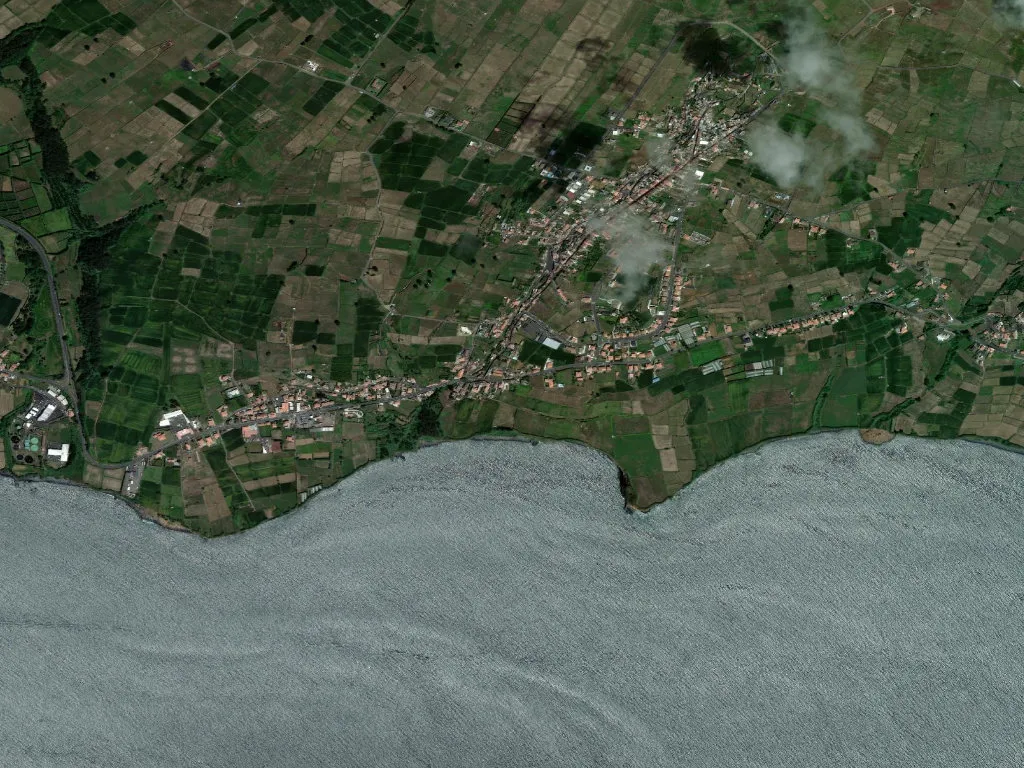
Black basalt walls drink in the late-day heat while vines hang in tiny terraces that spill to the Atlantic. Ribeirinha’s signature is the curral: 120-odd circular shelters of stacked stone that tame the south-westerlies and give each cluster of grapes its own pocket greenhouse. Salt drifts inland on the breeze, mixing with the mineral scent of the ribeiras that run off the island’s highest ridge, Santa Bárbara, and empty onto a lava shelf where tide-filled pools mirror the channel’s cobalt.
Between the fajã and the thousand-metre ridge
The parish church rose again after the 1980 earthquake; inside, an 18th-century ivory crucifix brought back from Goa. On Largo do Cruzeiro a baroque fountain still splashes. Basalt houses with first-floor balconies have been rebuilt stone by stone. Shore-side, the chapel of Nossa Senhora da Boa Viagem has watched the little quay since the 1600s, blessing boats that once carried casks of fortified wine to Brazil.
How to taste curral wine
The corrals are protected as public-interest monuments; within the walls the air warms and harvest slides into October. The wine is white, honeyed, 18% proof. Ring the parish council to arrange a visit to Sr António Borges; he pours it with biscoitos encarnados, crimson biscuits spiced with clove and a splash of the same wine. In September the communal lagar opens and the whole street turns out to tread.
Two trails worth the climb
The Vinháticos path zig-zags between basalt walls and micro-vineyards; the PR01TER corkscrews up to the summit of Santa Bárbara at 1,021m, giving a theatre-view of the channel and a crash-course in Azorean endemics. Down at the quay, hand-liners sell black scabbardfish at dawn; the natural pools refill with every incoming tide.
Festivals you can gate-crash
May–June: Espírito Santo festas—an império hung with tissue-paper carpets, free bowls of caldo and sweet bolo doce. Palm Sunday: the Romaria do Senhor dos Passos processes down packed-earth lanes. St John’s Eve: seven waves leapt over at midnight, bonnets of bonfires on the beach. August: the missa do mar carries the priest to the pier to bless the small-boat fleet.
When the low sun ignites the corral walls and vine shadows stretch across still-warm stone, you’ll hear the ribeira murmuring below—water on basalt, feeding the terraces that make the wine and keep the memory.