Full article about São Bento: Azores Hamlet Above the Roaring Atlantic
Stone-walled vineyards, salt-wind wine and elders pacing Terceira’s high lonely plateau
Hide article Read full article
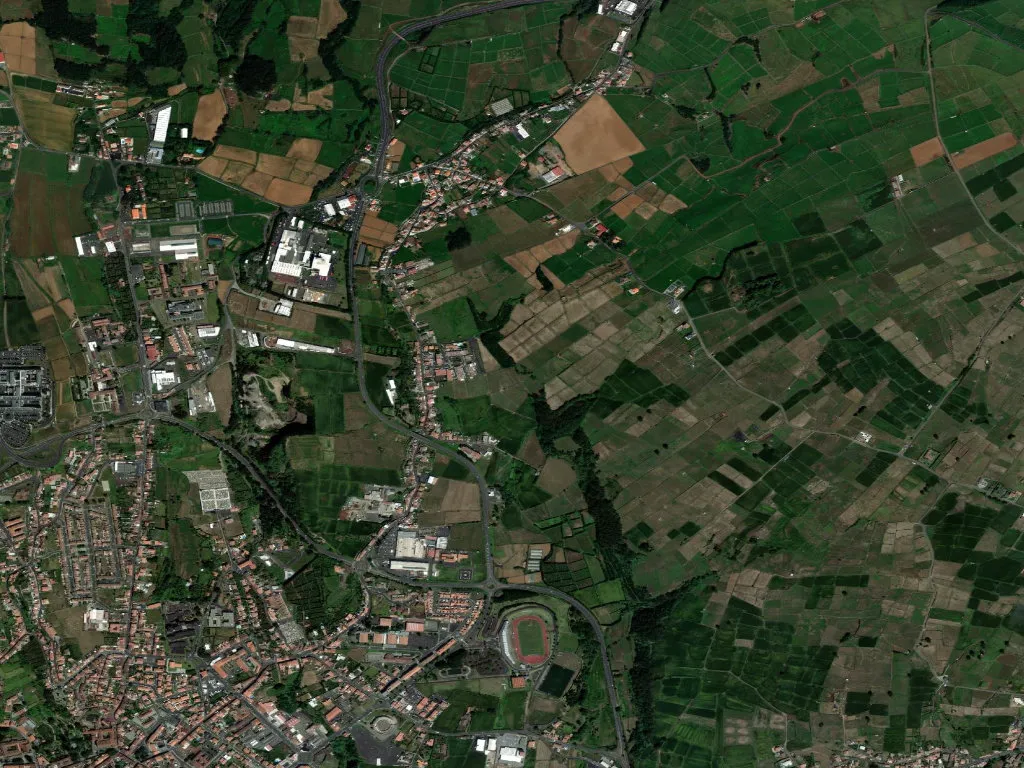
The cobblestones are uneven; every footstep clacks like a typewriter key. At 137 m above the Atlantic, São Bento sits on a wrinkled plateau where the wind arrives already softened by its crossing from the coast. Administratively it is a parish of Angra do Heroísmo, yet it keeps its own tempo—1,909 souls scattered across 1,016 hectares of pasture, volcanic-stone walls and low houses that hug the ground as if they remember the winter gales.
The geography of staying put
With only 184 people per km², loneliness is measured in fields, not metres. Dwellings are separated by cabbage patches, cow-lots that face the sea, and dirt tracks that join neighbours through gates painted indigo or sea-green. The elevation gifts the landscape a cinematographic sweep: southwards the ocean, and on crystalline days the perfect isosceles of Pico rises 50 km away like a distant warning pyramid.
Demography here is a tightrope: 243 children under 14, 337 seniors over 65. On weekday mornings the yellow Viação Terceirense school bus idles at crossroads while octogenarians shuffle along the verge, leaning on walking sticks or wheelbarrows piled with cryptomeria firewood. São Bento is not a postcard; it is a negotiation between generations and geography.
Atlantic wine, volcanic stone
The parish lies inside the Azores’ Protected Designation of Origin “Biscoitos/Graciosa/Terceira”, yet the vine is treated as a household pet. Pocket-handkerchief plots, walled against the wind, yield grapes that rarely reach a commercial label but reappear months later in clay jugs on kitchen tables. Verdelho and Terrantez ripen slowly under the salt-heavy clouds, producing sharp, iodine-tinged wines that are poured only at family suppers or the annual Espírito Santo festas when the parish hall smells of garlic-marinated beef and candle wax.
Stone is the other local vintage. Compact, bubble-free basalt—dark as fresh espresso—forms every wall, sill and drinking trough. There are no blowholes or calderas to gawp at, only the quiet evidence that the ground was once molten before human patience fenced it, planted it and fed it to cattle. The cows, in turn, graze on soil that is powdered ash, fattened by centuries of rain.
Seven kilometres, twelve minutes, a world away
The UNESCO-listed centre of Angra is a 12-minute drive down the EN5-2A. Commuters make the journey daily, returning at dusk to water vegetable plots and lock the gate on a life the city can no longer accommodate. Yet the psychological distance feels greater. Here silence still has mass; conversations happen across driveways; the smell of manure drifts seaward when the wind swings southwest.
You will find no brown-signed viewpoints, no gift shops. What São Bento offers is texture: the clash of pasture-green against stone-grey; the metallic clang of a loose gate; the soft percussion of cowbells drifting up from a hidden hollow. Walk the lanes at dusk and the Atlantic sets fire to the low clouds. In someone’s backyard a man stacks eucalyptus logs beside the smoking-house; the air tastes of resin and incoming rain.