Full article about Biscoitos: where lava corrals wine and Atlantic pools glow
Basalt-walled vineyards and tide-filled rock aquariums cloak Terceira’s north edge
Hide article Read full article
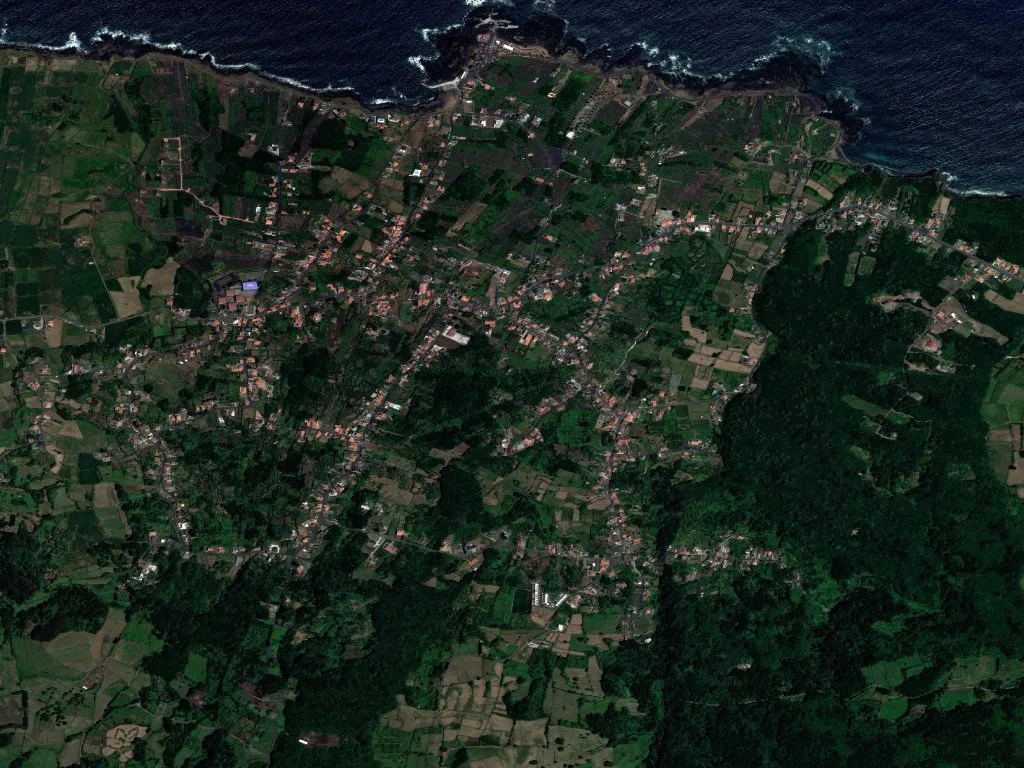
Atlantic wind slams into Terceira’s north coast, cannonading the basalt ramparts of Biscoitos. Between those iron-black slabs the ocean stitches its own aquariums: rectangles of water that flip from slate to tourmaline in the time it takes a cloud to cross the sun. The rock itself is frozen lava, hexagonal and jointed like a giant’s vertebrae—no mason could draft geometry this precise.
Vineyards inside lava walls
Look down from the Miradouro do Cume and the landscape resembles a dark mosaic: hundreds of stone corrals, each the size of a London back-garden, pinned to rust-red soil. These currais were raised, dry-stone by dry-stone, to cage the wind; inside, thermometers nudge three degrees warmer than the outside air, enough to nurse Verdelho grapes through Atlantic salt and winter drizzle. When harvest nears the entire parish smells like bruised pear and wet slate; tractors hauling wicker cesto baskets crawl between walls that haven’t shifted since the 18th century.
Sea on one side, lava on the other
Biscoitos perches 78 m above sea level, population 1 449, density one resident per football pitch. Silence is the default soundtrack—broken by a cowbell, a fishing rod clinking against basalt, the slow chug of a John Deere. Demographics read like an island elegy: 300 locals are over 65, only 211 under 14. Yet the place refuses stillness. At high tide families execute balletic leaps from natural diving boards; low tide reveals lagoas warm as bathwater where children practise breaststroke between urchin crevices. Off-season, hooded anglers colonise the outer rocks, motionless as cormorants, waiting for boca-negra to bite.
Knowledge passed at the wall
There is no interpretive centre, no audio guide. Instead, learning happens beside a wall: a grandfather demonstrating the low-prune that keeps salt spray off new buds; a grandmother wedging seaweed between stones for compost. The same family names appear on gravestones, wine labels and the parish council door—continuity you can taste in every glass of sharp, honey-tinged Verdelho. Logistics demand forward planning: one café, one winery open by appointment, zero cashpoints. What you get in exchange is unfiltered Atlantic life—no filter, no staging.
Late afternoon, when the sun drops through the channel between Terceira and São Jorge, light ricochets off the stone lattice like low-burning bronze. Wave percussion in the pools becomes metronomic. You leave with salt on your lips, vineyard soil under your nails, and the certainty that somewhere the essential still suffices.