Full article about Fontinhas: Terceira’s wind-sculpted plateau
Basalt pastures, Atlantic breeze and goat stew Sundays above Praia da Vitória
Hide article Read full article
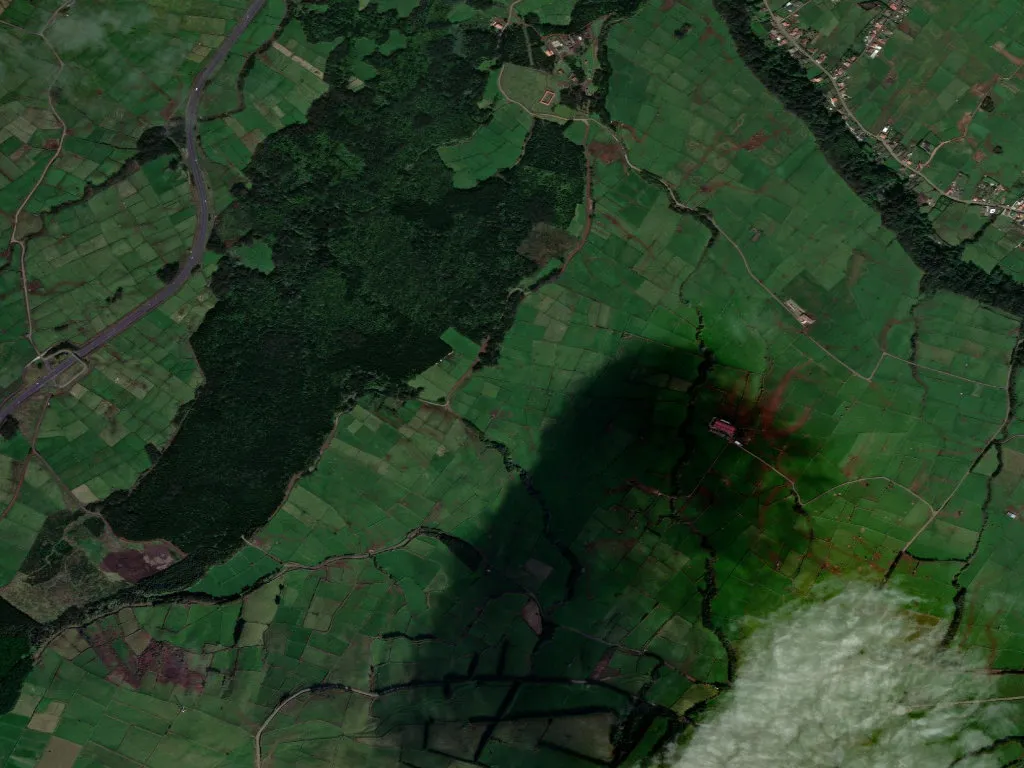
The road climbs in long, generous bends, skimming pastures whose greens shift like silk whenever Atlantic clouds drag their shadows across them. At 234 m above sea-level you spill onto a basalt tabletop that smells of wet grass and salt: Fontinhas, a parish of 1,529 souls occupying a rumpled 12 km² wedge between Praia da Vitória and the razor-backed ridge of Serra do Cume. There are no sign-posted viewpoints, no rota dos vulcões—only low volcanic walls stitching fields together and the faint iodine drift that reminds you the ocean is two miles away.
What the map leaves out
The plateau is a wind chamber; the breeze never quite drops, only changes key. Moisture seeps into the basalt, encouraging moss the colour of British racing green, while the soil—dark, friable, andesitic—feeds the dairy herds that still out-number people. Fontinhas sits inside the Azores Geopark, yet its craters are not postcard calderas but gentle depressions now grazed by young Holstein-Friesians. Among the 192 children who grow up here, the calendar is agricultural: March for sowing maize, September for lifting potatoes, October for shaking chestnuts from the hybrid Castanea sativa trees introduced in the 1950s.
Arrival & where to pause
Land at Lajes airport, take the EN3-2a towards Angra, and peel off after fifteen minutes. Public buses don’t bother; hire a supermini and park by the 1952 church of São Pedro, a modest whitewashed rectangle whose bell-tower is the tallest human-made object for miles. Beside it, Café Fonte Nova pulls espresso at 70 ¢ a thimble; chorizo-stuffed rolls sell out by ten. The only restaurant, O Pescador on the main road, does fish alcatra (a local clay-pot stew) on Wednesdays and Fridays, goat casserole on Sundays. Book ahead: +351 295 642 123. There are no B&Bs; overnight in Praia da Vitória, eight kilometres downhill.
Tracks without way-marks
From the cemetery a farm lane strikes north-west for 3 km to the Furnas do Pão de Ló, squat volcanic ovens where families still bake sugar-crusted sponge at weekends. Ask at the parish council for Dona Alice, 78, key-keeper; bring dough and dry laurel, she’ll demonstrate the peat-fire method. Two kilometres north, the Mata da Fonte is a 1960s cryptomeria plantation hiding a potable spring—fill your bottle. The circular route through the wood (5 km, 90 min) can disappear inside a rolling cloud in minutes; pack a jacket even in July.
What to take home
Mr Manuel’s quinta, left off the lane to Santa Cruz, sells still-warm fresh cheese at €8 a kilo, wrapped in foil, and three-month cured wheels at €12. The honey comes from the São Bartolomeu de Regatos co-op, harvested in mid-July when the island’s tilia trees perfume the air. If you’re self-catering in Praia, this is picnic gold.
Golden hour
Stay until the sun skims the ridge. When low light gilds the hedgerows and the Atlantic glints beyond the crater rim, Fontinhas reveals its quiet craft: a parish where distance is measured in cow-lengths and silence has body. The smell of wood-smoke drifts from chimneys, mixing with bruised grass and the faint metallic tang of basalt dust—an island lullaby you carry all the way back down the mountain.