Full article about Lajes: basalt-walled vines defy Atlantic gales
Walk the Achada Plain where stone corrals shelter Verdelho vines beneath Fort Santa Catarina.
Hide article Read full article
The Wind that Names the Place
The Atlantic wind skims sideways across the Achada Plain, forcing the Verdelho vines to crawl almost underground. Each low bush is tucked inside a hand-built corral of loose black basalt, the only defence against salt-laden gusts that can top 60 km/h in late spring. Step between two of those walls and the temperature lifts a degree or two; the stone has spent the afternoon absorbing sun and now releases it like a storage heater. Locals call the slabs lajes—the very plates of basalt that break through the pasture—and the parish took the word for its name.
Fifteen minutes’ walk to the east, the seventeenth-century Fort of Santa Catarina keeps watch over Praia da Vitória’s bay, its gun emplacements still angled toward the channel where privateers once prowled.
Stone in the Language
Look down and the ground explains itself: a jigsaw of hexagonal basalt left by the same fissure eruption that created the Terceira rift zone two thousand years ago. When settlers arrived in the 1450s they simply lifted the surface and restacked it as boundary walls; the technique is older than the parish records. At the centre of the village, the Mannerist mother church of St Peter rises with a gilded baroque retable and eighteenth-century blue-and-white tile panels. In a side chapel, a silver reliquary holds a single bone of the apostle—brought back from Rome in 1750 by a Terceiran sea-captain who traded two barrels of Verdelho for papal favour. Around the square, basalt houses are trimmed with dark-stained balconies; hydrangeas push through in June, their cobalt heads matching the azulejos.
Wine That Hides from the Weather
The Achada walking trail is only four kilometres, yet it crosses more micro-climates than most islands manage in forty. Between loose-stone dykes, the vines sit in shallow pits so the wind passes overhead. The system—called vinha de currais—is unique to the Azores and protected by European law; every metre of wall must be rebuilt by hand when it collapses. Knock on a farmhouse door just after ten in the morning and you may be offered a thimble-glass of straw-gold white: saline, volcanic, still slightly sparkling from malolactic fermentation. Ask where the vineyard is and your host will point to a patch of grass the size of a tennis court. Further along, the Ribeira da Areia (‘River of Sand’) once supplied volcanic grit for island mills; today it feeds a restored water-wheel that creaks into life only after winter rain.
Empire Soup and Liver Stew
Lajes tastes of two larders: the shallow inner sea and the wind-scoured pasture. Caldeirada here means cherne, congro and boca-negra simmered with tomato, sweet paprika and a bay leaf that has never seen a supermarket shelf. On feast days, vendors set up aluminium cauldrons of molho de fígado—beef-liver stew thickened with onion and allspice—beside the church steps. During Espírito Santo week, following Pentecost, the parish council distributes sopas do império: hunks of bread soaked in meat broth with mint, served from doorways to anyone who queues. Dessert is São Jorge DOP cheese, sliced thick as a paperback, with dark fig jam. If you arrive on 29 June, the eve of St Peter, every kitchen window exhales the anise scent of bolo de véspera, a cinnamon-flecked loaf baked for the procession.
Runways and Sea-Lanes
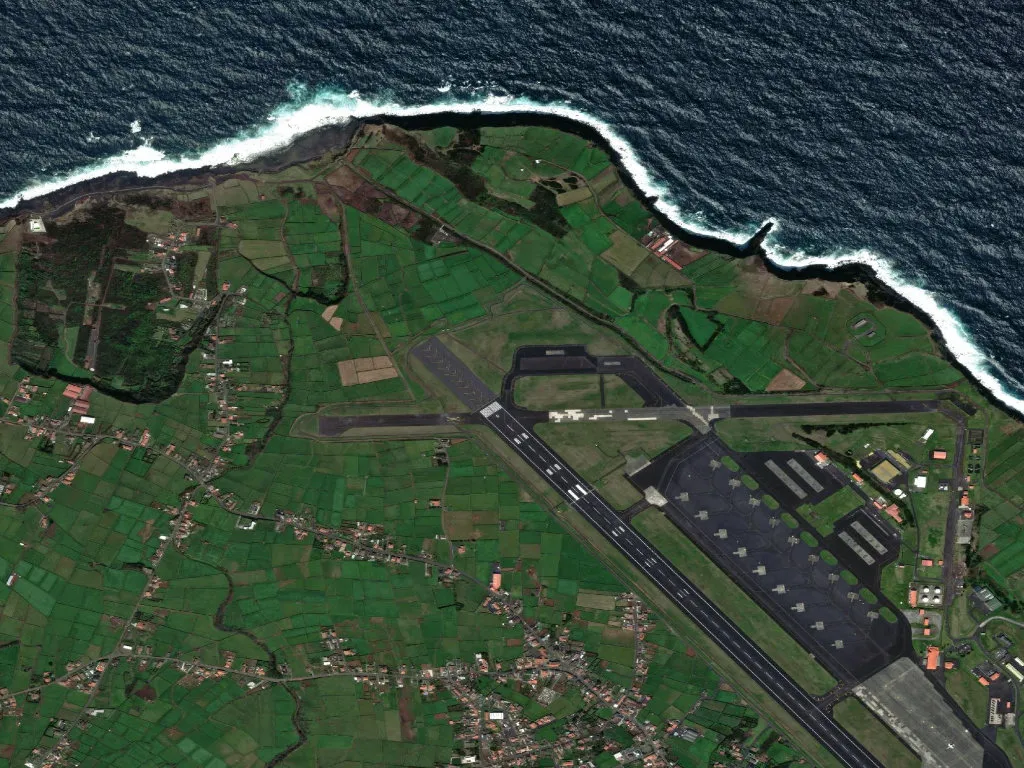
Local boys still grow up bilingual in Portuguese and NATO phonetic. In 1943 the British requisitioned the Achada plain for an airfield; by 1944 “Lajes Field” appeared in Allied flight logs as the last fuel stop before the Azores Gap. The 3,000-metre runway—now part of Portugal’s Air Base No. 4—hosts daily surveillance flights; the roar is simply background noise, like gulls. From the Miradouro do Facho you can trace the glide path down to the bay, then follow the coast until the basalt fractures into natural swimming pools at Porto Martins. The path takes fifteen minutes, but take reef shoes—the rock is greased with algae and unforgiving.
When the sun drops behind the fort and the wind finally pauses, the church bell strikes seven. The note carries across the vine corrals, flattening against the stone before it dissolves into the plain. What lingers is the smell of damp earth, sea brine and, if the calendar says late June, the caramel breath of cooling cake drifting from an open window.