Full article about Quatro Ribeiras: Azores Wine Grown on Lava
Verdelho vines crouch behind basalt walls in Terceira’s wind-sculpted parish
Hide article Read full article
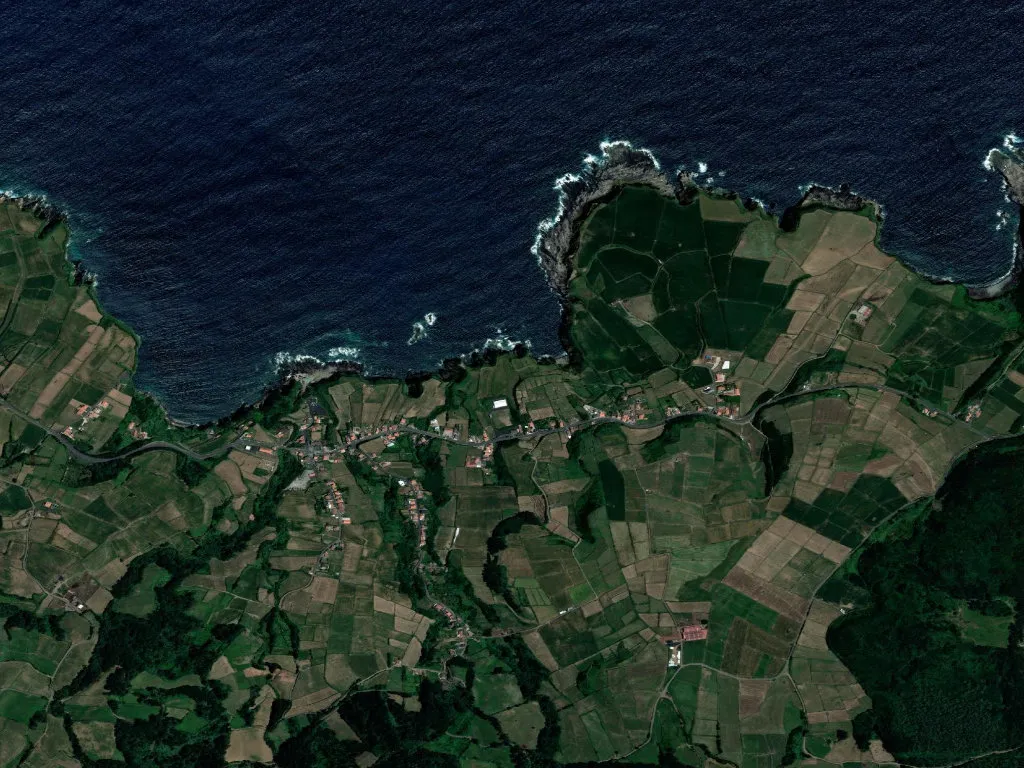
The Atlantic slams the basalt like a landlord who’s lost the key. At Quatro Ribeiras, on Terceira’s north-east lip, the shoreline is a torn edge of miniature bays and slick black stone polished by salt. Three hundred and twenty-two souls occupy the fifty-metre shelf between Serra de Santa Bárbara and the sea, giving the parish a population density lower than the Shetlands: twenty-five neighbours per square kilometre, scattered among cow paddocks and loose-stone walls that wander inland until the ground starts to climb.
Geography of streams and wind
“Four streams” is the tourist-board version; locals shrug and say there are more, but three sounds stingy and five sounds boastful. Whatever the count, the watercourses are modest, winter-shy, yet stubborn enough to keep vegetable plots and a handful of dairy cows alive through August. Fields align to their whim, roads detour around their valleys, houses crouch on the leeward side of whatever slope offers respite.
Because the wind is not literary licence. It arrives on the northerly timetable, smelling of iodine and kelp, and prunes every tree into a southward slouch. Build a wall without consulting it and you’ll build again next year; plant a row of vines without a cane-break and you’ll harvest kite tails.
Atlantic vineyards
Quatro Ribeiras sits inside the Azores’ UNESCO-listed wine micro-zone, one of Europe’s smallest and most inhospitable. The vineyards—mainly Verdelho, Arinto and the near-lost Terrantez—grow inside square, basalt-walled currais that double as windbreaks. Roots bore into fractured lava, berries stay small, skins thicken, acids stay feral. Harvest happens late, often in October mist, and the resulting whites taste of struck flint and brine, a liquid postcard from the edge. Locals open them for godparents, hangover penance or both.
Small community, private clock
Forty-five under-30s, sixty-one over-65s: the demographics read like a rural parish in Cumbria, only with louder surf. Daily rhythm is set by tide charts, milky dawn deliveries and the baker’s whim rather than any mainland timetable. The parish council still pins notices to a door; the café unlocks when the owner finishes feeding her chickens. After nine o’clock the only streetlamp competes with kitchen windows throwing yellow rectangles onto the black Atlantic. Drive slowly: village dogs escort strangers the full length of the tarmac out of professional pride, and no one has ever beaten them back.