Full article about Vila Nova: Basalt Walls, Salt Wind & Verdelho
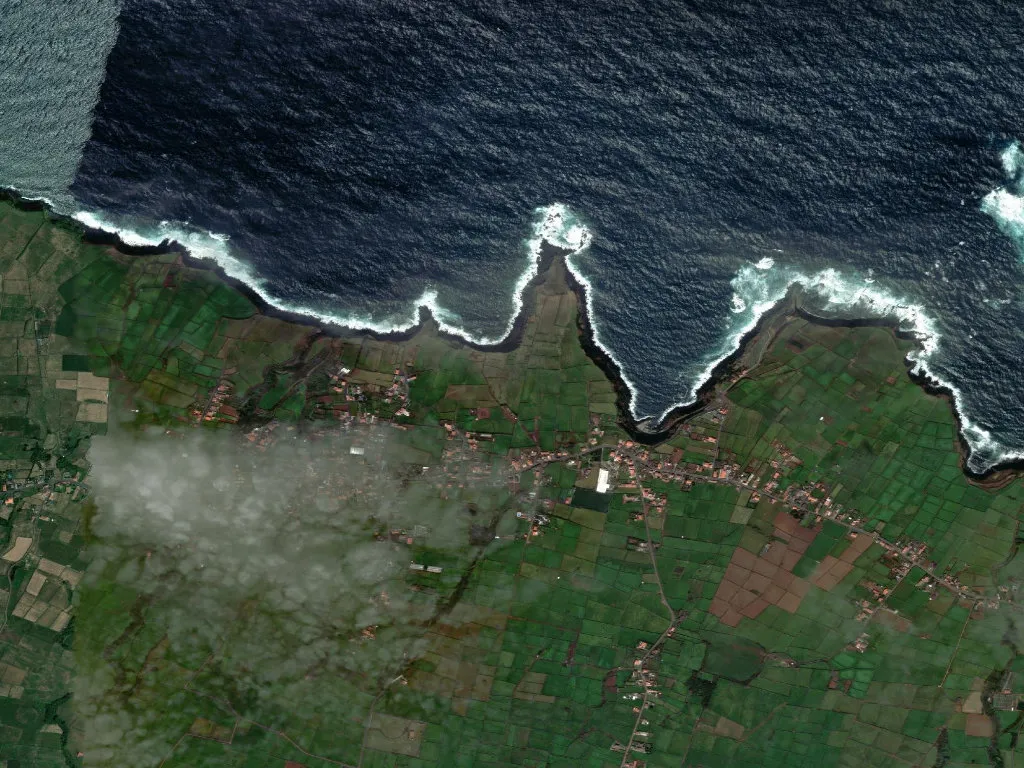
Stone-walled vineyards, cow-dotted meadows and Atlantic surf frame Vila Nova, Terceira.
Hide article Read full article
Where Basalt Walls Meet the Atlantic
The EN1-2A unfurls between shoulder-high walls of biscuit-dark basalt, and every gust carries a spray of salt that settles on the hydrangeas like frost. At 36 metres above sea level, Vila Nova is the first place on Terceira’s south coast where pasture wins a tentative arm-wrestle with the ocean. Its 1,513 residents still order the week by what needs planting, milking or mending, and by how loudly the Atlantic is hammering the lava reefs.
A Shoreline That Farms
Geology has given the village a split personality. Drive a kilometre inland and you’re among Dutch-flat meadows where dairy cattle graze within earshot of surf; turn back and vineyards sit in stone corrals designed to filter, not block, the briny wind. Those currais—black-stone rectangles first stacked in the 1600s—create pocket greenhouses for the Azorean varietal Verdelho, whose grapes pick up a faint metallic tang from the island’s young volcanic soils. The entire parish is a living exhibit of the Azores Geopark: every clod of chocolate-colour earth, every fissure hissing with sea spray, is Unesco-noted.
Demography tells a quieter story. With 333 residents over 65 and fewer than 180 under 14, the streets quieten when the school bus leaves for Praia da Vitória. What remains are the rhythms of husbandry: gates creaking at 06:00, tractors that still run on 40-year-old engines, the low murmur of men discussing milk yields over espresso cups the size of thimbles.
Between Vineyard and Tide
Wine is only part of the larder. In back gardens, wooden fumeiros exhale cryptomeria smoke over blood-red chouriço and alheira sausages; the local morcela is shot through with cinnamon and clove, a spice memory of the caravel days. Dinner, served when the light turns butterscotch, might be alcatra—topside of beef slow-poached in garlic, bay and a cup of island white—followed by bread that’s still baked in a communal wood oven fired once a week.
Walk the lanes at dusk and the soundtrack is almost Foley-perfect: the metallic chime of cowbells descending the ridge, canaries arguing from behind bamboo blinds, wind riffling through hedges of blue hydrangea that mark property lines older than the deeds themselves. The Atlantic lies at the end of every vista, but it’s the basalt walls—hand-hewn, moss-flecked, still warm from the day’s sun—that hold the village’s heat long after the stars come out.