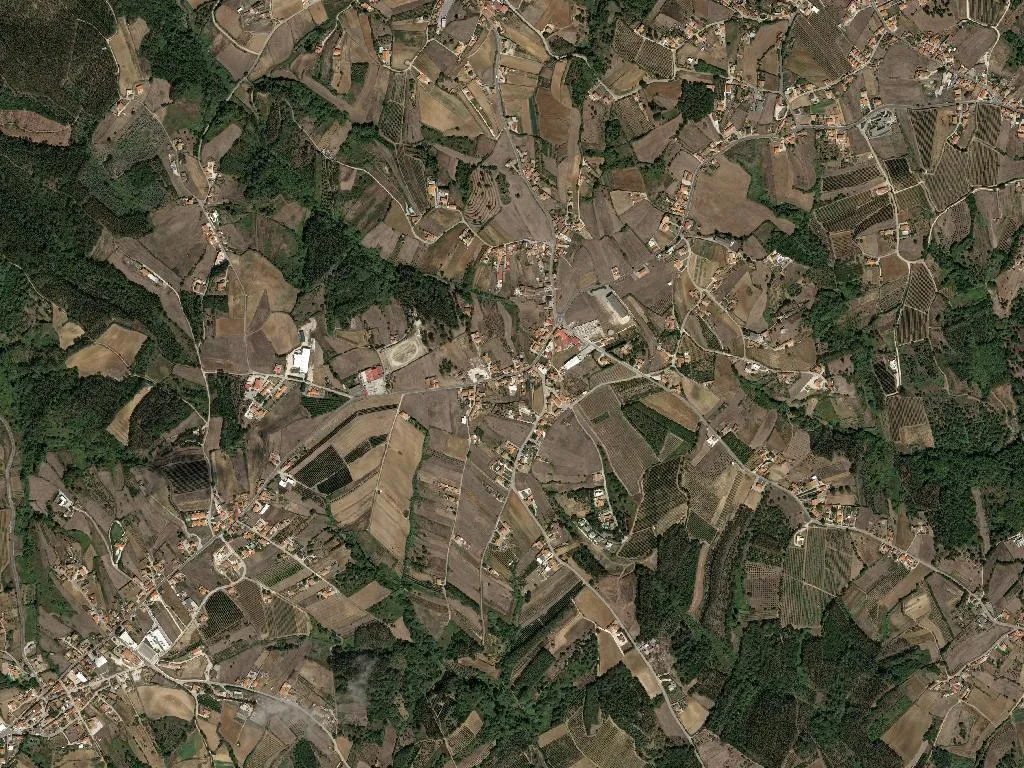
Full article about Bárrio: Dawn mist over Alcobaça orchards
Limestone scarps, Cistercian terraces and the scent of fermenting pears at 173 m
Hide article Read full article
First light over the orchards
Morning light slips between the branches of apple and pear trees, printing shifting shadows on the low schist walls. There is a constant smell of turned earth and over-ripe fruit hanging above Bárrio, a parish that sits at 173 m on the lip of the Serras de Aire e Candeeiros Natural Park. Silence here has mass – broken only by the far-off mutter of a tractor or the church bell that marks the hours without haste.
This is tree-fruit country. The Maçã de Alcobaça IGP and Pêra Rocha do Oeste DOP are not marketing footnotes; they are the true calendar. In spring the blossom turns the fields into a pale pink sea that ripples in the wind. By October the branches sag and the air thickens with the sugar of pears fermenting where they fell.
Between limestone and orchard
The Natural Park begins literally at the end of the lane, and its white stone backbone shapes every view. Bárrio occupies the tension zone between the hostile limestone escarpment and the irrigated plain of the Oeste, where water is generous enough for intensive horticulture. Ancient olive terraces claw up the scarps while rectangular orchards fill the valley floors, a negotiation between rock and soil that has taken eight centuries to settle.
The West Portugal Geopark, which includes the parish, can quote you Jurassic sea floors and Miocene coral reefs, but the more legible story is anthropogenic: terraces hacked out with pick and wedge, streams channelled into levadas, grafting techniques imported by Cistercian monks. Spread across 1,501 hectares, 1,411 residents still leave room for each smallholding to own its own hush.
Monastic footprint
Alcobaça’s UNESCO-listed abbey is only 12 km away, yet its shadow reaches this far. Until the 1834 dissolution, Bárrio lay inside the abbey’s colossal couto – a theocratic estate the size of Rutland. The monks’ planned grids of orchards, their water law and their grafting know-how still dictate the cadastral map. If you walk the Caminho de Torres – a quiet spur of the Portuguese pilgrimage route to Santiago – you follow the same lanes the lay brothers used to haul fruit to the abbey cellars. Way-marking is discreet; you share the track with wheeling red-rumped swallows and the occasional farm dog, not tour groups.
What the season gives
Menus are dictated by what carries the DOP or IGP seal. Olive oil comes from century-old trees on the drier slopes; the liquor you are offered after dinner will almost certainly be Ginja de Óbidos e Alcobaça, a sour-cherry fire-water aged in oak that local grandmothers prescribe for every ailment from heartbreak to gout. There is no tasting-menu theatre: lunch is whatever the quinta picked that morning, cooked with the restrained hand the monks taught.
In the village grocery, fruit is still weighed by hand on cast-iron scales. The owner, who has worked behind the same wooden counter for four decades, wraps each apple in brown paper before she writes your name in a ledger for the monthly bill. She will know whose orchard it came from and whether the pears were windfalls or pole-picked.
By late afternoon the katabatic wind arrives, sliding off the limestone ridges with the scent of rosemary and thyme. Shutters bang, a single streetlight flickers on. Bárrio folds into itself without fuss, the way a well-run library closes – no drama, simply the day’s business complete.