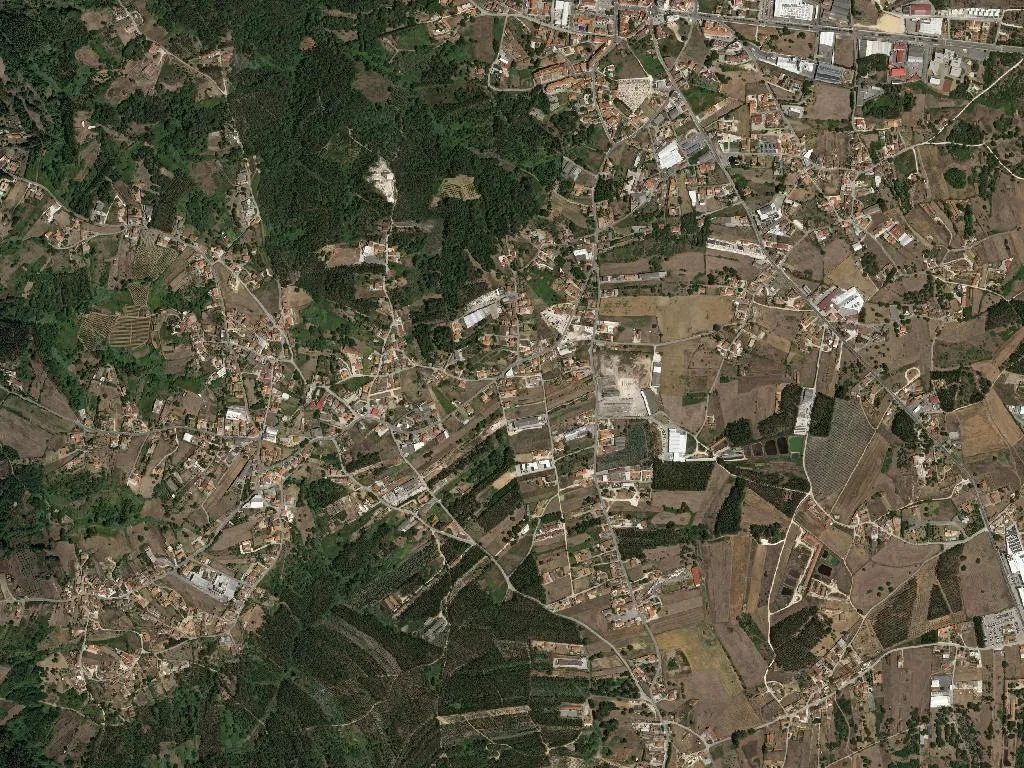
Full article about Benedita: fossil-studded orchards above Alcobaça
Morning cider-sweet air, monks’ lanes & €4 olive oil at the mill gate
Hide article Read full article
The limestone holds the orchards
At seven sharp a produce lorry rattles over the pavement outside the pastelaria. Apple crates skid, a few split, and the morning fills with bruised-fruit sweetness, the green bite of fermenting pears and the faint smoke of olive prunings smouldering in nearby groves. Benedita sits 200 m above sea level; winter air clamps around fingers already numb from picking.
Population 8,480, area 29 km² – dense for the countryside, yet no dormitory suburb. Tool-and-die shops, joineries and four bakeries keep the streets alive. The old N8 bisects the parish, delivering commuters to Lisbon in 45 minutes, so plenty live here and work there, then reverse the journey at dusk.
Name and the monks
The place first appears in a 1258 charter as “Benedicta” – a nod to St Benedict – but the real power behind the fields was 7 km away at Alcobaça’s Cistercian abbey. The monks staked out holdings, lanes and even parish boundaries; locals still say “I’m going to the town” when they head to Alcobaça.
São Pedro’s parish church rose again after the 1755 earthquake. Inside, 1780 gilded carving glints above a wooden high altar faux-marbled in smoke and ochre. Sunday 11 a.m. mass packs the nave; to the left, a corkscrew stair climbs to the choir where schoolboys practise guitar for funerals, their chords drifting down like slow incense.
What the ground gives
Limestone is everywhere: walls fray, stones pop loose, and between the orchards you can prise out oyster fossils – this seabed surfaced 180 million years ago. Forty per cent of farmland is fruit trees. Alcobaça apple (IGP) is picked from September to November; Rocha pear follows from August to October. Holdings are large – 200 ha here, 150 ha there – worked by a handful of growers. Three stone mills still press Ribatejo-DOP olive oil, selling it at the door for €4–5 a litre.
What you eat
Thursday means lamb stew at O Celeiro on the main street – €12 with house wine. Leitão da Dona Ignez at Forno da Vila spends three hours over eucalyptus wood: glass-crackling skin, ruddy pepper sauce. Central café does toast spread with homemade bacon-jam; €1.50, eaten standing at the zinc counter.
Pastelaria Moderna has turned out custard tarts since 1952 using the same laminated dough (80 céntimos). Dona Amélia’s 250 g pots of egg-yolk conserve cost €4; at Tasco do Zé you can sip ginja from a dark-chocolate cup until 10 p.m. for a single euro.
Walk and sleep
The Trilho dos Moinhos is an 8 km figure-of-eight beginning beside São Pedro. Yellow way-marks climb through carrasco oaks to three roofless windmills that still pivot to the Atlantic breeze. Views spill down the Alcoa valley; allow 2½ hours and carry water – no cafés on the ridge.
Casa do Caminho hostel offers twelve beds (€15 with breakfast), a guest kitchen and laundry; August fills with walkers tracing the Torres pilgrimage from Tomar to the coast.
São Pedro’s eve, 28–29 June, starts with a 9 p.m. procession and ends at 1 a.m. when the fire brigade launch a backyard firework display. Sardines are grilled in the schoolyard – €5 covers bread, wine and a smoky plateful; neighbours bring sweets.
How to arrive
A8 motorway, exit 18 (Benedita/Alcobaça), then 6 km on the N8. The nearest station is Alcobaça-Cela, 8 km away. Rede Expressos runs Lisbon–Benedita three times daily (1 h 45, €12). Park free in Largo do Comércio; the covered market trades Monday and Wednesday 8 a.m.–1 p.m., and the rota for Saturday-night pharmacy duty is posted on the parish-council door.