Full article about Patchwork of Wheat, Olives & Abbey Memory
Explore União de Coz, Alpedriz e Montes: olive-oil estates, Manueline churches, orchards and river-rinsed meadows beneath serrated Serras.
Hide article Read full article
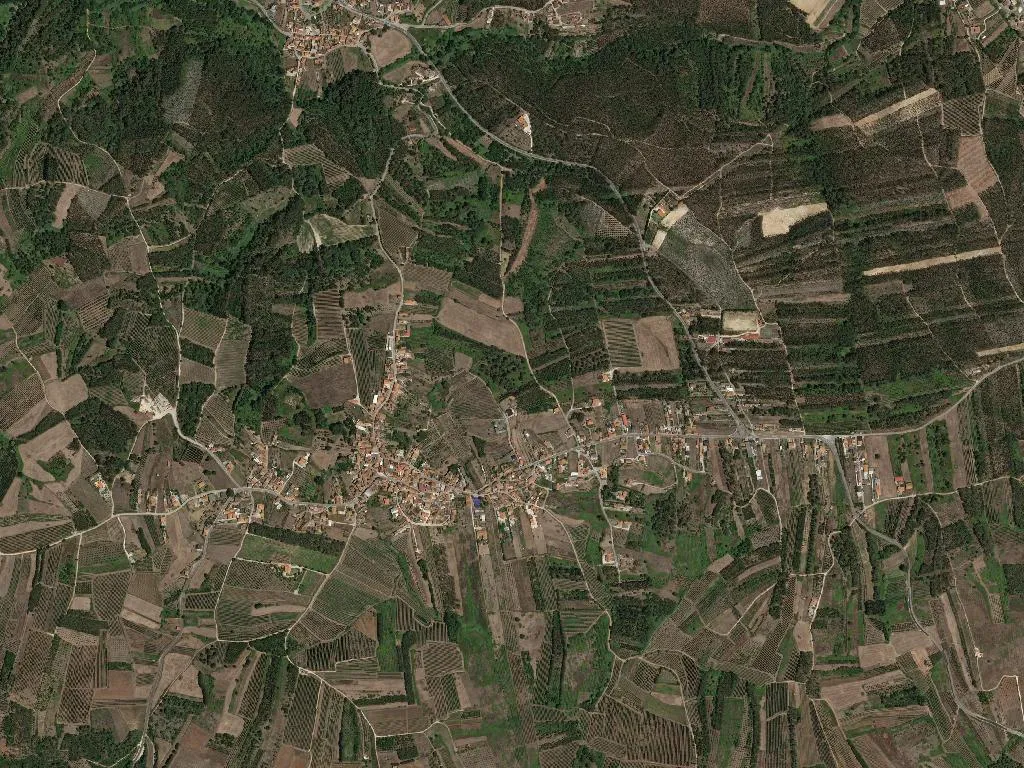
The creak of wooden blades against dry wheat still echoes like a spoon scraping the bottom of a pan. In Coz, Alpedriz and Montes, the fields are stitched together like a patchwork counterpane: olive groves the colour of a washed-out tea-towel, orchards laid out in checked table-cloth squares, and meadows the River Alcobaça rinses daily as if wiping down a bar. At only 109 m above sea level, the horizon billows like an ill-made bed between the green of cultivated ground and the serrated limestone of the Serras de Aire and Candeeiros – the place where good earth ends and stone begins, the way a loaf gives out and only crumbs remain.
What the monks started
For centuries these three villages fed the Cistercian abbey at Alcobaça. The monks rode out to fill their larders here, and the land still remembers the obligation. Coz – its name taken from the Latin cautes, land that snaps the plough-share – grew up around wheat, while Alpedriz married into olives five hundred years ago and never filed for divorce. Coz’s sixteenth-century mother church squats in the middle of the village like a patriarch at table, its Manueline and baroque details quarrelling amiably across the façade. In Alpedriz, the golden altarpiece inside São Pedro catches the late sun like a savings account paying unexpected interest. Montes, the smallest of the trio, remains a faded hand-me-down – worn, but ours.
Trees that outlasted the kings
Alpedriz’s centenarian olives stand in conference, trunks corkscrewed, bark lightning-ripped, each carrying a personal memory of drought and hail. Between September and December the estates open for DOP olive-oil tastings: liquid that tastes of grass cut yesterday and almonds toasted on a wood-fired oven. In the orchards below, Alcobaça apples and Rocha pears spend the summer swelling like children waiting for baptism before they are allowed on to the table. Some farms still let you pick: twist, don’t tug, or you’ll get the same scolding the neighbour gives.
A footpath through three centuries
The Trilho dos Moinhos links four stone ruins where Atlantic winds once turned millstones the way Maria Albertina worked her whisk. The twelve-kilometre loop strings together village cafés: cross a perfect Romanesque hump-back bridge, duck under a dripping moss-bearded spring, steady yourself against schist walls that stand by custom rather than cement. Near the parish council sits the council’s best-preserved eighteenth-century granary, raised on granite stilts like a table laid for mice. At the northern edge the trail collides with the Serras de Aire e Candeeiros Natural Park – bare limestone, clints and grikes like dropped scaffolding, Bonelli’s eagles hovering overhead like pump attendants checking the price of petrol.
Pot and oven
Purslane soup with a poached egg is the culinary equivalent of a grandmother’s hug: green, hot, no frills. Sunday still means lamb stew and cozido, especially when the Lisbon son comes home and mater wants to prove she hasn’t lost her touch. Saints’ days – Sebastian in January, Peter in late June, the Conception in August – bring processions, open-air masses and parish dances where clay bowls of thick soup circulate like gossip in a tasca. Coz’s little cakes and Alpedriz’s toucinho-do-céu – sugar and yolk in the exact ratio of someone counting coins at month-end – survived the dissolution of the monasteries the way shop-soiled buttons survive a closing sale. Wash them down with ginja from Óbidos or Alcobaça, IGP, alongside goat cheese and mountain honey, and you’ll forget the A8 ever existed.
On the night of 23 June, cork logs blaze in front of Montes church for the São João fire. Flames flare like umbrellas in a gale; the smell of burnt resin clings to clothes like party perfume, and the heat drives the valley damp away – a memory that refuses to be photographed, only worn on the skin.