Full article about Évora de Alcobaça: pears, monks & micro-climate magic
Cistercian geometry carved orchards of Pêra Rocha into limestone ridges above Alcobaça.
Hide article Read full article
Dawn over the orchards
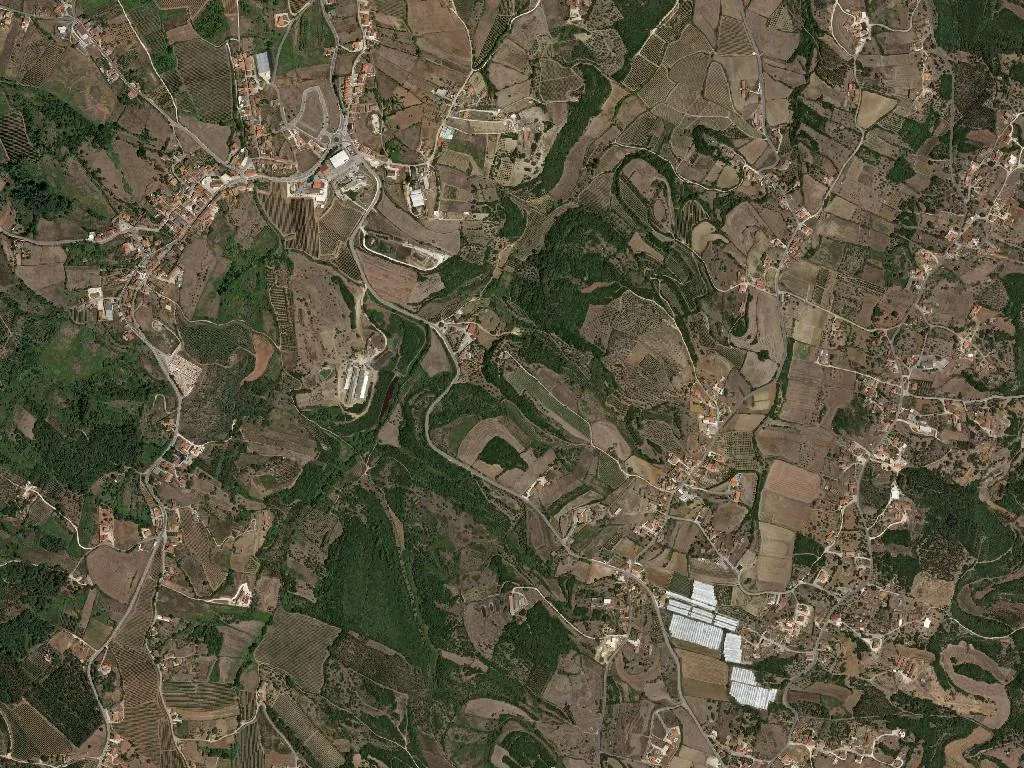
At first light the air carries the scent of wet basalt and bruised pear skin. On the lower slopes of the Serra de Aire, 130 m above sea level, branches of Pêra Rocha droop like chandeliers, each fruit still wearing a collar of dew. The grid is literal here: every second parcel of land is planted with dwarf pears, the rows so straight they could have been drawn by the monks who arrived in 1153 and refused to build on uneven ground.
White-habited engineers
Dom Afonso Henriques donated this sweep of scrub and limestone to the Cistercians so they could raise Alcobaça, seven kilometres south. The monks brought more than prayer books: they brought the plough, the spirit level and an almost Cartesian sense of order. Dry-stone levadas still carry spring water from the ridge to the vegetable terraces; field boundaries follow the same 12th-century survey lines, invisible from the lane but unmistakable on Google Earth. Évora de Alcobaça never bothered with a castle—its defences were turnips and bookkeeping.
Four thousand souls are spread across 42 km², a density low enough that every house can keep its own cabbage patch. Locals call it “o pé de meia” – the savings sock: even teachers and pharmacists cultivate a strip of land, trading lettuces for favours and ensuring the supermarket is a convenience, not a necessity. When the harvest arrives, the parish council simply declares which Monday the café will close. No one argues.
A taste protected by law
Pêra Rocha do Oeste DOP is more than a label; it is a syllabus. Clay-limestone soils, Atlantic night breezes and 900 years of grafting know-how give the pear its granulated crunch and a sweetness that arrives in two waves. The same micro-climate ripens Maçã de Alcobaça IGP, the apple that still smells of the blossom it left six months earlier. Inside restored stone cellars such as Adega dos Avós, grandparents teach grandchildren the difference between a whip-and-tongue and a cleft graft over small glasses of Ginja de Óbidos e Alcobaça—Morello cherry liqueur thick enough to leave stained-glass legs on the glass. Olive oil from the same press carries a DOP seal that predates the euro.
There is no tasting menu, only what was picked yesterday. Knock at the right door and Dona Amélia will serve porc leg slow-roasted in a bread oven fired with old pear wood; the crackling shatters like caramelised mica. She cooks when she feels like it, which is usually when she hears an English accent mispronouncing “bom dia”.
Limestone ridges and salt spray
Drive east for 20 minutes and the world turns to karst: the Parque Natural das Serras de Aire e Candeeiros rises bone-white, its cliffs full of dinosaur footprints. Head west and you meet the Atlantic at Nazaré, where the same swell that produces 30-metre winter monsters laps gently against toddler-friendly beaches in summer. Évora de Alcobaça sits on the hinge between the two, its lanes part of the Caminho de Torres, the Portuguese feeder route to Santiago. Pilgrims following the scallop-shell way find their feet soothed by the scent of pruned pear wood and the shade of olive trees planted when Wellington was still in Portugal.
Check-in, then slow down
Forty rural houses—stone cottages, manor wings, a converted hayloft with fibre-optic wifi—now take guests who leave Lisbon at breakfast and are picking lemons by lunch. The draw is not the marble of Estremoz or the waves of Peniche, both less than an hour away, but the deliberate lack of programme. You can spend a morning watching an irrigation gate open and close, or walking a 6-km loop that never leaves orchard shade. If someone mentions “activities”, they mean sharpening secateurs.
Dusk arrives with wood smoke and the low hum of a single tractor. The temperature drops five degrees in minutes—mountain air remembering the sea. Bring a jumper; the mist that slides down the valley at twilight is the same one that once made Roman cartographers write “hic incipit oceanus” somewhere just west of here.