Full article about Pine-Scented Pataias & Martingança Hide Jurassic Cliffs
União das freguesias de Pataias e Martingança near Alcobaça offers pine forests, Cistercian quarries, coastal boardwalks and stone villages scented with re
Hide article Read full article
Pataias & Martingança: the scent of pine meets Jurassic stone
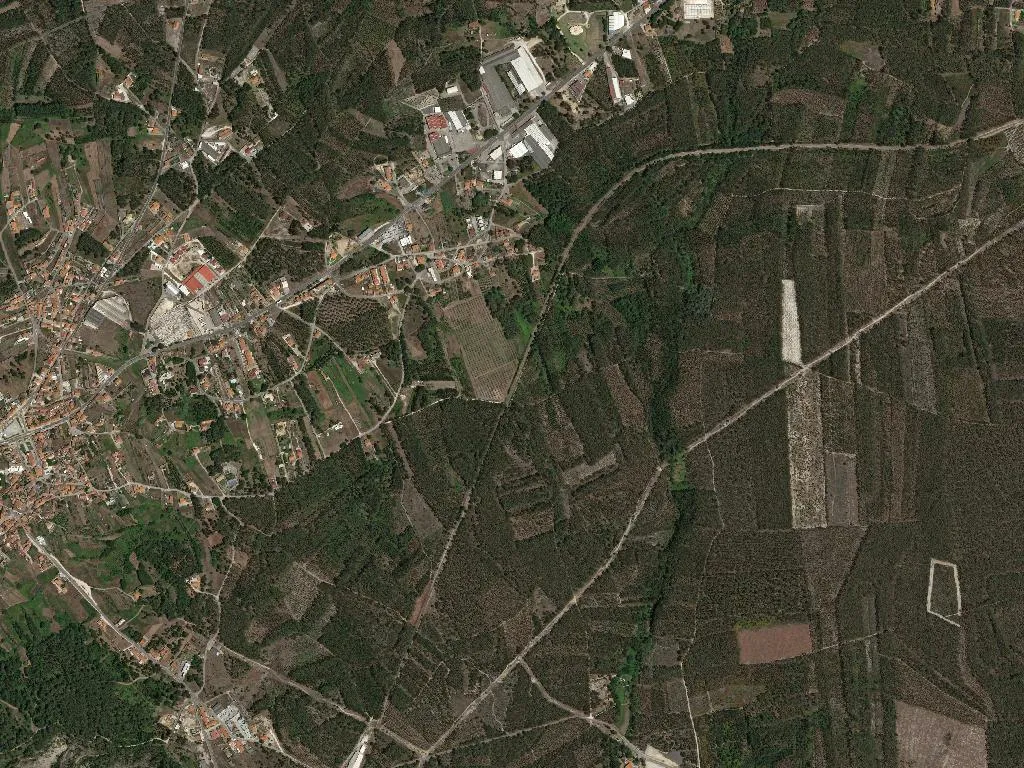
The smell of hot pine resin hits before any road sign. One moment you’re on the N8, wondering whether the sat-nav has finally surrendered; the next the windows are down and the air tastes of turpentine and warm needles. This is the Alvas de Pataias, a 3,000-hectare block of maritime pine that feels bigger inside than it looks on the map. Sunlight is sliced into lances by the canopy, landing on a carpet of ochre needles that muffles every footfall. At just 104 m above sea-level the forest shouldn’t feel alpine, yet the temperature drops five degrees beneath the pines and every footstep releases a low note of damp bark and fungal earth.
Tenth-century stone still carries an echo
Pataias began as a way-point between the Atlantic salt-pans and the limestone massif of Serra de Aire. By AD 950 the village already had a small monastery—hardly more than a chapel and a hostel—catering to traders hauling fish inland and marble coast-ward. Martingança, three kilometres east, stayed obstinately rural, its horizon defined by orchards rather than steeples. The 2013 merger of the two parishes into a single administrative unit did little to blur their temperaments: Pataias still faces the road, its cafés arranged along the EN8 like birds on a wire; Martingança folds in on itself, cobbled lanes ending abruptly in cabbage fields and low stone walls built from the same Jurassic limestone that pokes through the turf.
That stone built the Cistercian abbey at Alcobaça, 15 minutes south. When Bernard of Clairvaux’s monks raised the monastery in 1153 they quarried here, and the abandoned galleries still gape like black mouths in the undergrowth. One of them, Mina do Azeiche, has been repurposed into a 3.2 km linear walk that starts beside a twentieth-century brick-kiln and ends at a cliff-top viewpoint over the Atlantic—an unexpected slice of coast-to-interior drama compressed into a one-hour stroll.
Boardwalks, quarries and a cliff that opens to the sea
The parish lies inside the Serras de Aire e Candeeiros Natural Park and, since 2022, within the UNESCO-designated Oeste Geopark. Three way-marked routes decode the landscape for visitors. The Paredes da Vitória boardwalk (8.7 km) skims the top of a fossil-rich reef, the timber path lifting you just high enough to notice how the vegetation changes from Mediterranean maquis to Atlantic fern as the altitude drops by a barely perceptible 50 m. Rock roses give way to gorse; the breeze picks up a salt edge.
Mina do Azeiche is shorter, stranger. Ten minutes in, the temperature falls again as you step into the quarry corridor—15 m walls of damp limestone exhaling a cellar-cool breath. Swallows stitch the sky overhead; somewhere in the canopy a red squirrel scolds, tail flicking like a metronome. The species is native here, thriving because the forest is managed for resin first, timber second, leaving plenty of mature pines for dreys.
Where the path meets the cliff the trees simply stop, as if someone has drawn a line. Below, the limestone has been undercut by the Atlantic into a series of sea-arches and blow-holes. On a spring tide the spray rises 20 m, salting the pine needles and making the air taste of iodine and resin—an accidental duet between ocean and forest.
Orchard and press: what the land trademarked
Low-density settlement—77 people per km²—has preserved smallholding culture. Four protected-origin foods overlap here: Pêra Rocha do Oeste pears, Maçã de Alcobaça apples, Ginja de Óbidos & Alcobaça sour-cherry liqueur, and Ribatejo olive oil. The orchards are not the manicured grids of Kent; they are loose mosaics of pear, apple and ancient olive, the understorey grazed by sheep whose bells clunk like slow clocks. Come late October the lanes smell of bruised fruit; farmers park pickups at 30-degree angles to keep the tyres off the fallen pears that ferment into a heady cider-sweet vapour.
Ginja is the county’s calling-card. The cherry itself is small, almost black, with a tannic snap that survives even when macerated in aguardente and brown sugar. In Pataias the liqueur is poured from unmarked bottles kept behind the bar counter, often served with a sour-cherry bobbing in the glass like a dark planet. Ask for “com elas” if you want the fruit; “sem elas” if you prefer the liquid alone.
Where to stay between pine and stone
The accommodation stock is modest—116 units ranging from self-catering cottages to three rural guesthouses—but that is proportionate to demand. Most visitors are Portuguese families who book the same house for the same two weeks every August, plus a trickle of cyclists riding the Caminho de Torres, a branch of the Santiago network that crosses the parish on its way to the coast. Twenty minutes west on the A8 delivers you to the monastery town of Alcobaça; twenty minutes east and you’re in the medieval walled village of Óbidos. Pataias & Martingança works best as a three-day base: mornings on the boardwalks, lunch of grilled squid in the fishing village of Nazaré (25 min), afternoons in the orchards, evenings on a bar terrace with a glass of ginja and the resinous night air.
As you drive out, headlights picking up the white scar of limestone where the squirrel sat earlier, the forest releases one last breath of warm pine. It is the smell of a borderland—Atlantic weather grinding against Mediterranean stone—and it lingers on your clothes long after you’ve re-joined the motorway, a reminder that some geographies are best measured by scent rather than miles.