Full article about Turquel: smoke, stone & subterranean orchards
Breathe ginja fumes, trace Cistercian walls, then slip from blossom to coal-dark mines in Alcobaça’s
Hide article Read full article
Smoke, stone and silent water
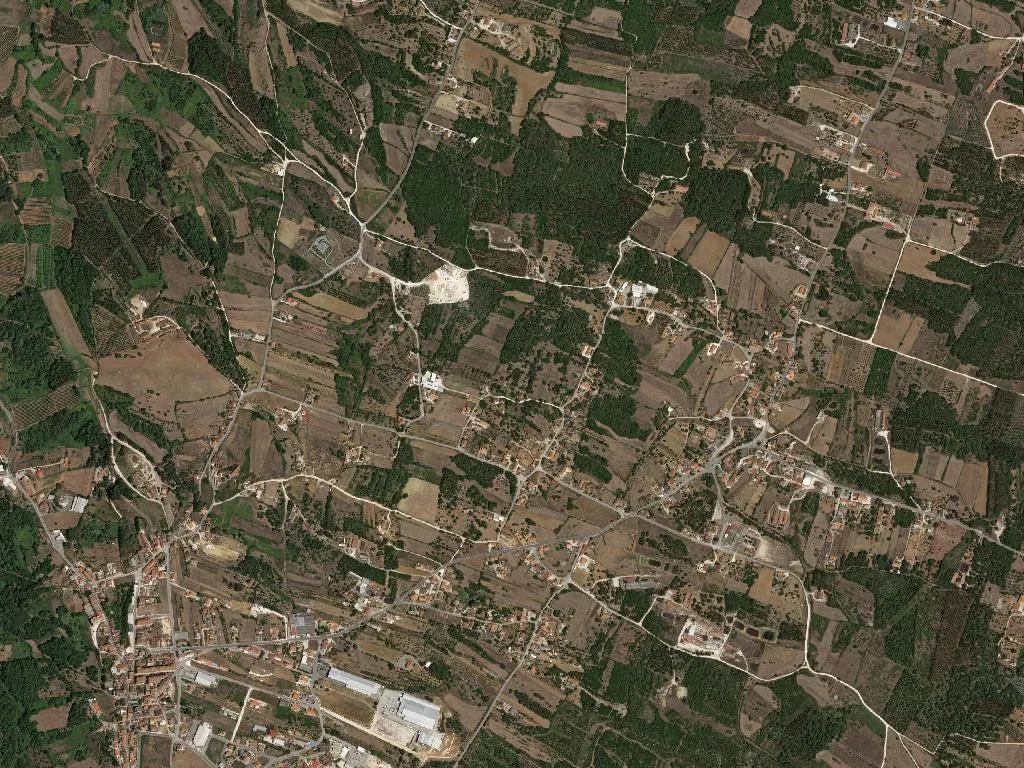
Turquel wakes to the scent of woodsmoke drifting from chimneys and the warm, marzipan whiff of ginja cherries fermenting in oak casks. At the centre of the village a granite mill-stone, two metres across, turns without haste inside the 200-year-old olive press, squeezing a last shimmer of oil from November’s fruit. Around it the lanes corkscrew downhill in uneven cobbles until they meet the Alcoa valley, where water slips between dry-stone walls and cork oaks older than any republic. Limestone is everywhere—outcrops in orchard corners, lintels above doors, sudden sink-holes that swallow winter rain and echo like empty bells.
The white monks’ blueprint
The place owes its grid to Cistercian surveyors who rode out from Alcobaça abbey in the twelfth century. They called the site turricula—a little tower—after a watch-post that once guarded the road between the Atlantic cliffs at Nazaré and the limestone escarpment of Candeeiros. The farms they laid out—Cova da Onça, Lameirão, Gafa—still carry the names and the measurements: stone couples (single-storey cottages) aligned on an east-west axis, stone drinking troughs set exactly one monk’s stride apart. When the monasteries were extinguished in 1834 the crown sold the land, yet the boundary walls remain, waist-high and immaculate, as if the brethren might return for vespers.
Coal seams under the orchards
Between the wars Turquel lived a double life. Above ground, apple and pear boughs screened a secret: a lattice of galleries sunk 80 m into the limestone where men mined low-grade coal for the cement works at Leiria and Alhandra. The Casal de Vale de Ventos pit once shifted a hundred tonnes a day; today its mouth is a black oval lost in heather, the spoil heaps softened by wild gorse. Very few corners of southern Europe let you step so casually from blossom to subterranean drift—proof that even the gentlest-looking landscape can keep a soot-dark ledger.
Flavours of the couto
Lunch at Zé Manel’s tavern begins with a thimble of ginja served in a dark-chocolate cup that collapses on the tongue—the same trick the monks used to smuggle spice past abstemious abbots. The menu is a ledger of their fast-day ingenuity: kid stew scented with pennyroyal, sardine and coriander bread soup, lamb rice cooked in the communal oven on Friday nights. Conventual sweets follow the same equation of egg yolk, sugar and confession: Santa Clara pastries, so thin you can read a psalm through them, and toucinho-do-céu, literally “bacon from heaven”, a slab of almond marzipan that predates the Reformation. On Saturday mornings the market folds under striped canvas: Alcobaça apples with PGI status, Rocha pears stacked like artillery shells, and the first cloudy green oil from the communal press, thick enough to coat the back of a spoon.
Stone and water trails
A three-kilometre footpath, the Levada do Alcoa, shadows the monks’ irrigation canal from Turquel to the abbey gates, shaded by poplars and willows that keep their leaves all winter. Branching west, the Solancis trail climbs through dry-stone terraces where the only sound is the cork groan of a tawny owl. At Cabeço do Vento a limestone bluff delivers a hawk’s view across the Serra de Aire: a grey ocean of karst rippled with fossilised oyster beds 150 million years old. The parish sits inside the Aire-Candeeiros Natural Park and the wider West Geopark—look carefully at any trackside slab and you’ll find ammonites pressed into the stone like prehistoric currency. Yellow arrows of the Torres Way, a lesser-spotted Jacobean route, guide pilgrims on towards Óbidos; their scallop shells are scratched into the whitewash of village wells.
Dusk arrives with the six o’clock bell. Inside the mill the last jet of oil hits the clay bowl, green as crushed emeralds. Outside, the valley exhales woodsmoke once more, and the Alcoa keeps its low conversation with the stones.