Full article about Almoster: where nuns once ruled and olives still drip gold
Almoster in Alvaiázere hides cloister ruins, DOP olive oil and three hill chapels whose feasts scent the air with fig and gunpowder
Hide article Read full article
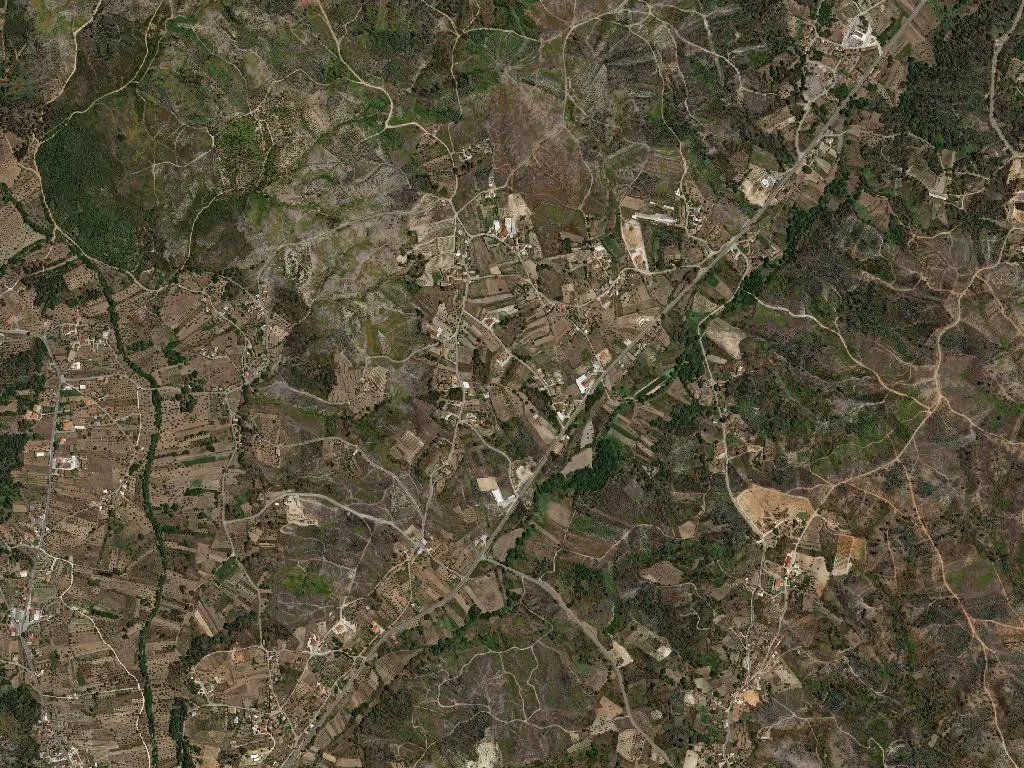
The bell of São Salvador strikes the hour across a valley that smells of damp earth and wild olive. In Almoster the note carries unhindered, rolling over silver-green terraces until it reaches the hamlets of Ariques, Candal and Ponte Nova two kilometres away. Somewhere below, the Nabão river glides unseen, its breath rising to soften the iron-rich soil that stains farmers’ boots the colour of rusted ploughshares. At 179 m above sea-level the village spreads along a fertile trough first planted with olives by the Arabs, whose golden oil still earns the protected DOP seal of Ribatejo – a rare Portuguese denomination that predates the EU itself.
Why the village is called a monastery
The name is a giveaway: Al-Munasterium, “the monastery”, a souvenir of Iberian Arabic that survived the Reconquista. Yet the place owes its lasting identity to a Christian lady-in-waiting. In 1289 Dona Berengária Aires – governess to Queen Saint Isabel – founded the Convento das Bernardas on the southern slope. For five centuries the nuns ran mills, ovens and a scriptorium, binding the local economy to the liturgical calendar. Their cloister is now a ruin of custard-coloured limestone, but the chapter house still stands, incorporated into a private quinta whose owner will unlock the door if you arrive just after Vespers.
A parish mapped by chapels
Almoster reads like a medieval triptych. The parish church crowns the ridge; downhill, the Igreja Velha keeps watch beside a 300-year-old fig whose fruit bursts in August and perfumes the evening air. Three satellite hamlets complete the sequence: São Tiago in Ariques, Santo André in Candal, Nossa Senhora da Conceição in Ponte Nova. Each keeps its own feast day, its own procession route. On 30 November Candal carries the relic of Saint Andrew to the threshing floor; eight days earlier Ponte Nova fires rockets for the Immaculate Conception; two Sundays before August ends the main village honours the Sacred Heart with a brass band and a supper of chanfana (goat stewed in red wine and olive oil) served under fairy-lights strung between plane trees.
Market day, 23rd
On the twenty-third of every month the parish square surrenders to commerce. Hawkers from Minho lay out linen, while the baker from Alvaiázere arrives with a van full of broa de milho still warm from the wood oven. The April fair is the largest: wickerwork carts, hand-pressed cider, saddles stitched on site. The basket-makers work only in winter, splitting brown-green willow along the grain, weaving ribs tight enough to carry olives without bruising the fruit. Their craft is no heritage performance; it is simply what has always been done when the trees are bare and the lagar falls quiet.
Oil, bread and the Camino
The Central Portuguese Way cuts straight through the village, way-marked with the yellow scallop that guides walkers from Lisbon to Santiago. Pilgrims pass walls built without mortar, past hives painted Wedgwood blue, past centenaries whose trunks have twisted into living amphorae. At the cooperative mill you can taste oil pressed within four hours of harvest – pepper at the back of the throat, cut grass on the nose. Locals drizzle it over dark rye, sprinkle it with flor de sal and eat standing up, watching the road for the next backpack.