Full article about Pelmá: Slate Bones & Olive Shadows in Alvaiázere
Serra ridge village where centuries-old olives drip peppery oil onto schist thresholds
Hide article Read full article
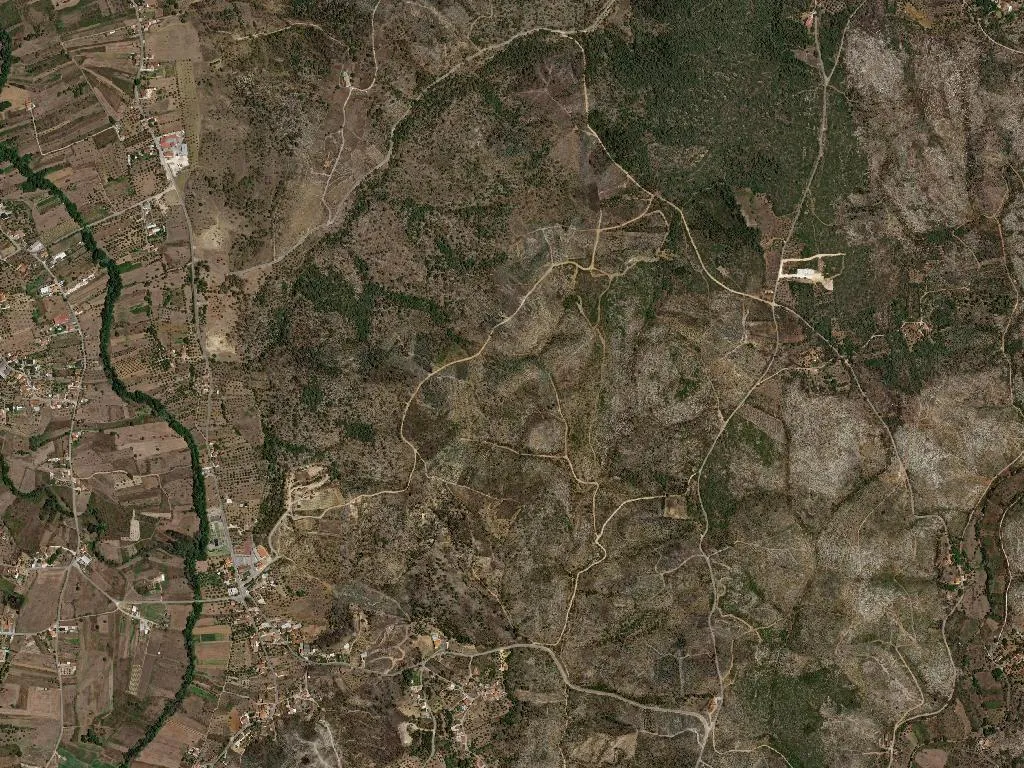
The cobbles grate beneath your soles – uneven slabs polished by centuries of shuffling feet. Pelmá unrolls across the lower ridges of the Serra de Alvaiázere, 637 souls scattered through 30 sq km of olive groves and cork margins where slate pushes through the topsoil like shoulder-blades. At five o’clock, when the sun tilts, the olive shadows stretch across the beaten-earth yards like long fingers feeling for something lost. The air smells of dry earth, of oak logs ticking in hearths, of new olive oil seeping from the hydraulic press in Zé Manel’s mill – the one on the bend where the scent clings to the stone walls even in the months when the machines are still.
Olive oil & old stone
Half the landscape is given over to olives certified under the DOP Azeites do Ribatejo. The oil is weighty, green, peppery at the back of the throat; it carries the heat of the slopes it grew on. Some of the trees were already mature when the monarchy fell in 1910. Walk into Dona Alice’s back garden and you’ll find one whose trunk three adults still can’t encircle. In the surviving traditional lagares – Sr Joaquim’s at Canada da Serra is one – the crushed-fruit smell is so dense it settles on your skin like a second cologne.
Everything else is built from what came out of the ground. Schist walls terrace the inclines; granite doorframes are rebated for hinges carved in situ. Houses turn their backs to the north wind, face south to drink the light, crouch close to the seasonal streams. At Fonte da Ribeira the water issues so cold that women still bring laundry in plastic baskets, slapping sheets against the mirrored stone.
The Portuguese Way & engineered quiet
The Central Portuguese route of the Camino de Santiago cuts straight through. Pilgrims arrive dust-coloured, boot-soles flapping, and Pelmá offers what it has: water from the public fountain, shade of the olives, silence that feels deliberate. There are six parish-run guest rooms – no boutique touches, just cotton sheets, cricket lullabies and breakfast at the kitchen table: caldo verde poured from a copper pan, black-pork bifana, tomato rice. Antonio, who lets two rooms above his stone house in Aldeia de Cima, pours medronho firewater while recounting conscription in Angola, measuring every syllable as if words were paid for by the gram.
Tracks radiate from the settlement like capillaries. Follow one and you’re soon alone on a spine of land, cork oaks giving way to dwarf oak and genista that turns the hillsides yellow each April. The silence isn’t absence but subtraction: a distant tractor shredding chard, the click of a gate whose hinge wants oil, wind riffling last year’s leaves.
The mathematics of the everyday
There are no ticketed monuments, no weekend festivals in Pelmá. Life is visible in miniature: women shelling fava beans into green-rimmed bowls, men sharpening hoes under open sheds, cats sleeping on walls still holding the day’s heat. Commerce is residual – Café do Carmo opens at seven, serves espresso for 60 céntimos and hosts a daily nine-o’clock sueca card school – so most errands mean the 11 km run to Alvaiázere for diesel, bread, paracetamol.
Subistence plots stripe the lower slopes: dark cabbages, cane frames for runner beans, terracotta pumpkins. The bell in the single-nave church marks civic time – three, six, nine – and the stone floor inside is scooped into shallow depressions by generations of kneeling. In mid-August the temperature free-falls from 30 °C to 18 °C in the half-hour after sunset; wood-smoke starts to ribbon from the chimneys, and the only reply to the fading bell is the hillside itself, returning the sound smaller, thinner, as though the land were answering back.