Full article about Alvorge: Where Silence Weighs on Pine-Scented Ridges
Limestone chapel, moss-soft walls and pilgrim boots crossing a village that time forgot
Hide article Read full article
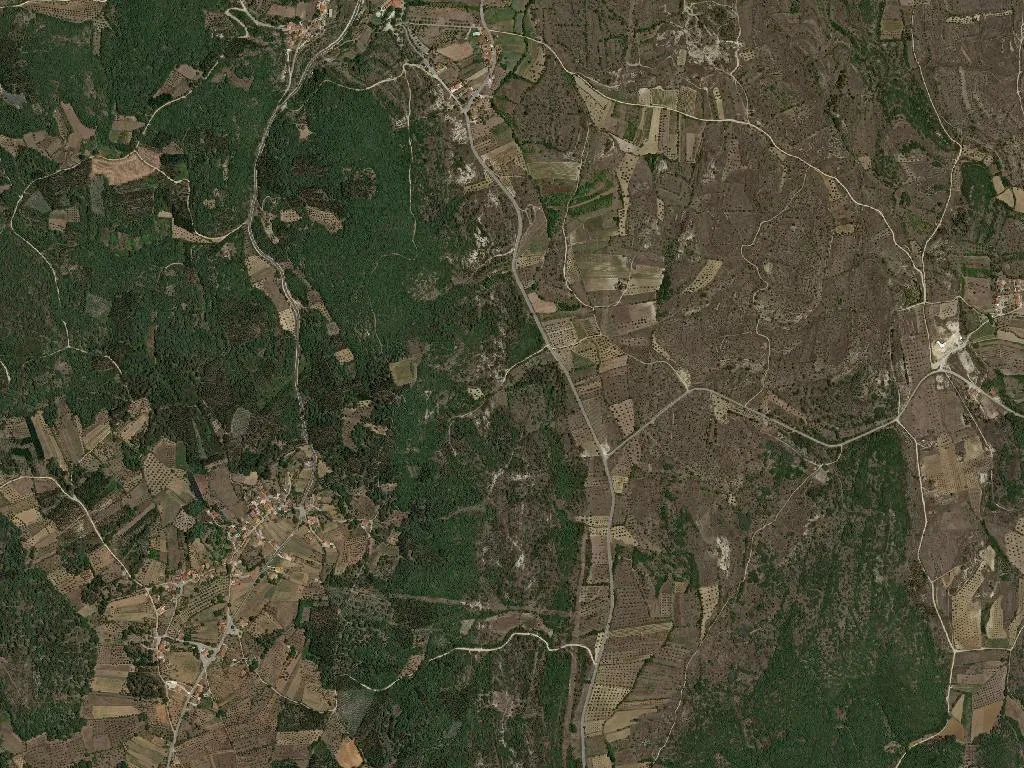
The cracked tarmac rises through pines and scatterings of oak until Alvorge terraces into view — schist and lime-wash houses propping one another up, ochre roofs, low walls surrendering to moss. Silence here has weight, broken only by the wind that combs the 223-metre ridge and the occasional dog barking somewhere down the valley. No hurry. No crowds. Just 1,051 souls spread across forty undulating square kilometres where forest rules and hamlets cling to hand-cut clearings.
Stone that remembers
At the parish heart stands the only listed building — the chapel of Nossa Senhora da Guia, scheduled in 1977 — its limestone blocks worked by hands long gone, stubborn against weather in the way that rural Beira architecture always is. Around it, the oldest houses repeat the formula: thick walls, purse-lipped windows, straight-lintelled doorways where shadow pools even at noon. Generations of boots have burnished the granite thresholds.
The demographics tell their own story: 407 residents are over 65; only 70 are under 15. Alvorge’s primary school, three classes strong in the 1990s, now teaches eight children on an “open school” timetable. The cafés — O Pão Quente and Snackbar Central — still open at the same hour, manned by the same faces since 1983. Yet stubborn life persists: eighteen tourist lodgings — cottages and modest villas — hint that outsiders are beginning to recognise what locals have always known: a density of fewer than 27 people per square kilometre is not emptiness; it is room to breathe.
Pilgrim tracks
Alvorge straddles two Santiago routes: the Central Portuguese Way and the Fatima detour. There are no hostels, no neon arrows, but walkers pass — heavy boots on the calçada of Rua da Igreja, rucksacks creaking, eyes fixed on the next ridge. They refill bottles at the marble fountain in Praça da República, swap a dozen words with Sr António watering his vegetable plot beside the defunct water-mill, then vanish. Their trace lingers: a footprint in iron-red soil heading towards the N345, a forgotten staff leaning against the cemetery wall.
Forest dominates every sense. Two and a half thousand hectares of maritime pine — intercut with Celtejo eucalyptus — release resin that thickens in the heat. Between trunks, Arouquesa cattle graze the Casal do Rei pastures; barbed wire rusts; dirt tracks link Mitrena to the Moorish spring of Fonte da Moura in a geometry only locals can read.
Life without a stage
There are no “typical” restaurants, no DOP-branded souvenirs. Gastronomy lives behind front doors: chanfana (goat stewed in red wine and clay) slow-cooked by Dª Fernanda on Rua das Flores; chouriço and salpicão smoked by Sr Joaquim in Aldeia Nova since October; Saturday bread still baked in wood ovens by the cultural association. To taste any of it you need time, a 7 a.m. perch in Snackbar Central when the first loaves arrive, and the slow accrual of trust.
Evening light strikes the façades of Rua do Norte and the 1758 mother church. Shadows lengthen, blackbirds tune up, and wood-smoke from Adufe and Raiva fireplaces signals supper. Alvorge yields nothing quickly. Walk the CM535 towards Ansião, pause at São João spring where women scrubbed clothes until the 1970s, accept that beauty here does not shout. It is in the schist’s grain under your fingers, in the cool damp rising from the Alvorge stream at dusk, in the echo of your own footsteps along Rua da Escola where only the wind answers back.