Full article about Baroque bells drift over Avelar’s olive terraces
Avelar, Ansião: baroque bells, 1258 charter, Santiago pilgrims, rosemary-scented air—slow Portugal at 271 m
Hide article Read full article
Three measured strokes from the baroque tower of Santo Estêvão skim the November air and roll downhill until the Avelar brook swallows the last vibration. Between the olive terraces the low sun drags shadows as sharp as sickles; two women, elbows resting on the still-cold granite of the 1782 calvary, pause their gossip while a drift of burnt-cork smoke from nearby chimneys braids with the peppery scent of olives spread out to dry on the cooperative mill’s racks. Nothing here feels rehearsed: at 271 m the altitude itself slows the pulse of the day.
Stone memory
Avelar’s charter dates from 1258, yet its name—probably from the Latin Avelarum, “place of the bees”—hints at an older story told by the wild rosemary that keeps local hives busy. King Afonso Henriques handed these slopes to the Knights of Christ in 1169, seeding the medieval scatter of hamlets, but the village assumed its present outline only after the 1755 earthquake obliged them to rebuild the parish church. Inside, side-chapels remain in perpetual twilight where wax ex-votos flicker beneath a polychrome St Stephen. Out in the fields a 1694 wayside shrine to St Sebastian and a handful of stone granaries still testify to the wheat economy that once paid tithes here.
Footsteps to Santiago
Since 2012 Avelar has sat on the Central Portuguese route to Santiago and, more quietly, on one of the feeder paths to Fátima. Mid-morning you will meet pilgrims on the granite bridge refilling plastic bottles at the public spring, scallop shell sewn to backpack, chestnut staff clicking on the cobbles. Awarded “Aldeia de Portugal” status in 2021, the settlement preserves its low-whitewash houses with iron-banded doors and internal yards where hens pick among scarlet pelargoniums. Spread across 83 km², only 1,929 inhabitants remain—23 per km², one of the lowest densities in the council—so vegetation is left to its own devices: alder and willow clog the narrow valleys, cattle graze unhurried, and vegetable plots are still hoed by moon-calendar.
Olive oil, goat stew and firewater
Between October and December the cooperative mill and three smaller private presses run day and night; some still use granite millstones turned by mules. The fug of crushed olives hangs over the entire village, and if you arrive while the malaxer is churning you can taste oil straight from the press—astringent, emerald, tasting of raw artichoke. Local dishes follow the grove and the garden: lamb stew scented with wild marjoram and pennyroyal, mint-and-black-eyed-pea soup, kid roasted in a wood oven until the skin crackles. On 3 May the parish feast sees chanfana—goat braised in red wine and spices—simmered in clay pots over cane-tripods, served with wheaten bread baked in domed loaves. At November’s Chestnut & Wine fair producers bring pumpkin jam, walnut biscuits and small-batch medronho brandy coaxed through copper stills older than the republic.
Limestone horizons
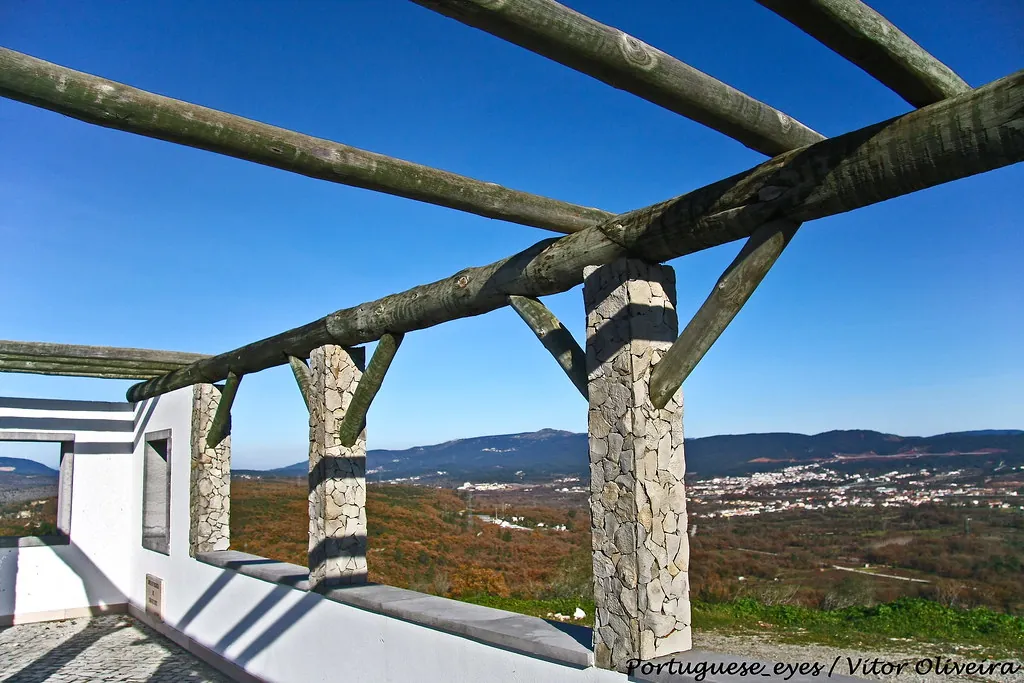
The signed “Caminhos do Avelar” loop (8.3 km) sets out from the picnic field and climbs to the parish high point where the view opens onto the sheer karst of the Serra de Aire and Candeeiros; on clear winter days the dark green ribbons of pine along the ridge look close enough to touch. Down by the brook, where reed beds slow the current, kingfishers and Iberian azure-winged magpies appear in the late gold of afternoon, turning the water-meadows into a living tapestry of ochre and green.
Nightfall is sudden. The lanes empty; only yellow rectangles of kitchen light spill onto schist walls as families gather around solid pine tables. Somewhere below, the brook keeps its low monologue, and the damp chill rising from the valley brings the smell of moss and wet earth—an ancient aroma in a place where water still sculpts stone and time is reckoned by bells, not clocks.