Full article about Dawn over Pousaflores: schist, smoke and slow time
Pousaflores, Ansião hides granite streets, schist chimneys, 802 souls, pilgrim arrows, olive-oil eggs and a valley clock set to wood-smoke
Hide article Read full article
The granite setts still hold the dawn chill when the first soles strike the main street of Pousaflores. By half-past seven, the 802 residents already know who queued at Sr. Joaquim’s café for the crusty pão cacete. Long shadows slide across schist walls; a single plume of wood-smoke rises straight up – proof that the wind has not yet shouldered over the ridge at 288 m.
A Way Station That Refuses to Hurry
Pilgrims on the Central Portuguese route to Santiago or the quieter branch to Fátima drift through, following the yellow arrow painted on the gable of Dona Rosa’s house – the same house where she was born in 1934. Density here is 31 neighbours per km²; meeting another backpacker is excuse enough to compare blister dressings. The eight guest rooms are absent from any booking engine – they live instead in word-of-mouth: “the blue door past the trough, where the hens lay eggs fried in estate olive oil”.
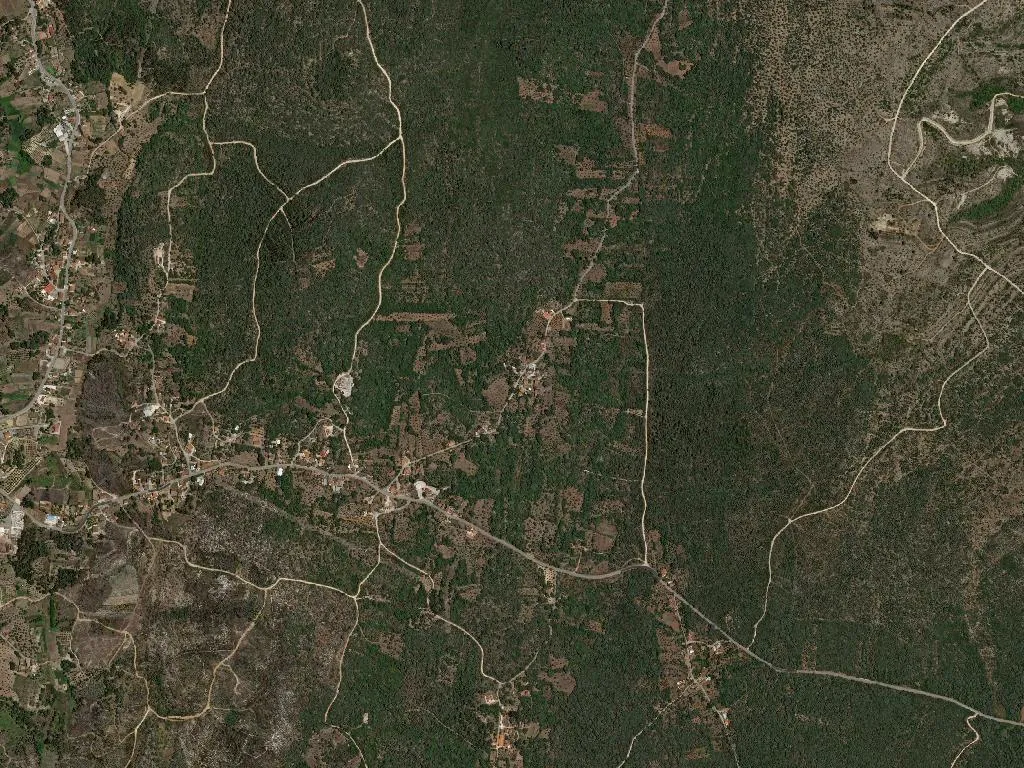
Topography dictates temperament. Over 2,527 ha of softly folded valleys, the Pousaflores stream threads into the Nabão, its flow tuned to the agricultural calendar. Maritime pines now cloak the slopes, planted after 1930 when Salazar’s Forest Service re-seeded the uplands. Before that, the hills were open scrub for transhumant flocks that left Caiaço in May and returned in October – a rhythm António, 78, still recalls trailing behind his grandfather.
The Arithmetic of Ageing
Fifty children and 319 retirees tell the demographic tale without a spreadsheet. The 1953 primary school enrols twelve pupils; in 1978 it held 147. The day’s social peak is 11:30, when Mass at the 1897 Igreja de Nossa Senhora da Conceição ends and men drift to the only bar. Post arrives at 14:30; the doctor parks outside the council office every Tuesday. That is the cadence.
There are no restaurants. Dona Albertina’s grocery will warm your packed lunch if her mood allows. Ze Manel’s basement is the village smokehouse: chouriço curing since November from the pig killed on St Martin’s day. Rye bread still emerges from the communal oven, fired five times a year – baptisms, festivals, a wedding – using dough Céu learned from her mother, who learned from a grandmother who could no longer name her teacher.
What Endures
At 18:30, low sun strikes whitewash and the village seems to hover between centuries. This is not nostalgia; it is the physical awareness of a place running on a different calendar. The year is counted in processions: 15 August, Nossa Senhora da Assunção, when expats fly home and the population doubles. Walkers carry away the percussive sound of their own footfalls on cobbles where, in 1974, PIDE straw files were burned. Those who stay – the 802 – wake each dawn to an unobstructed horizon and a night sky still dark enough for every star to register, just as it did in 1941 when blackout orders erased streetlights and German aircraft droned south towards Lisbon.