Full article about Golpilheira: Pear-Scented Village Above Batalha
Walk orchard lanes where Pêra Rocha pears sway, pilgrims rest and café cards shuffle
Hide article Read full article
The scent arrives first
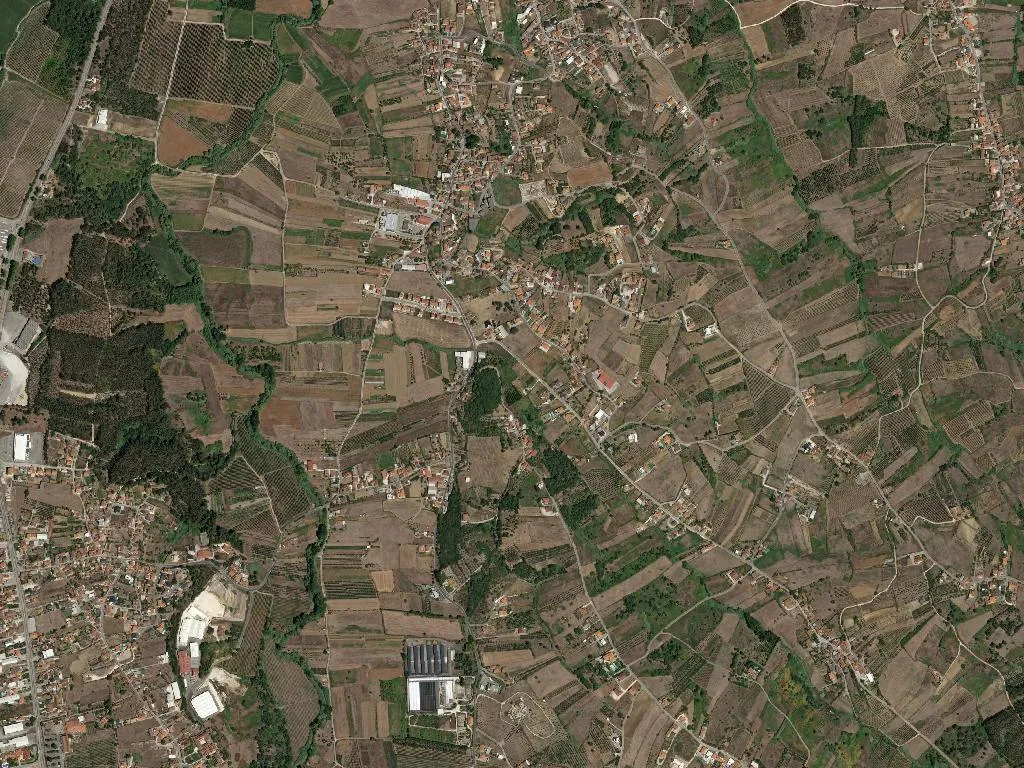
Ripe pear drifts over the brow of the hill before you see a single tree. In the orchards that quilt Golpilheira, Pêra Rocha do Oeste – the DOP-protected western pear – hangs so heavily that the branches sketch arcs against the sky. At 74 m above sea level the land rolls rather than rises, a liminal swell between the limestone massif and the coastal plain.
The parish covers barely five square kilometres, yet supports 1,447 souls and a complete micro-economy: café, mini-market, primary school, post office. The great monastery at Batalha is ten minutes away by car, but coach parties rarely stray this far. Density is civilised: 286 inhabitants per km² – enough to keep the bakery ovens hot, never enough to clog the lanes with traffic.
What happens here
Apple and pear dictate the tempo. Alcobaça-branded apples blossom in April; Pêra Rocha harvest runs August to October. By 7 a.m. fruit is tipping into grading belts at the local co-op; by 7 p.m. the same crates are crossing the Spanish border bound for Tesco or Carrefour.
The Caminho de Torres, a lesser-spotted branch of the Portuguese pilgrim network, cuts straight through the orchards. Walkers find four licensed beds (three cottages, one farmhouse room) at €35 a night, monastery close enough to cycle, far enough to escape the coach-park soundtrack.
Who stays
More than a fifth of residents are over 65; another 13 per cent under 14. The Central café deals cards for the retired at 9 a.m.; the school releases its small riot at 4 p.m. Most working adults commute to Batalha’s hotels or stone-carving workshops, then retreat to village houses that trade for roughly €800 per m² – half the price of a townhouse in the centre.
Getting here
Leave the A1 at Leiria, follow the IC2 to Batalha, then peel off onto the EN1-2 for 4 km. Buses stop at Batalha; from there a taxi is €8. Without wheels you’ll rely on neighbours – which, round here, is exactly the point.