Full article about Reguengo do Fetal
Explore Reguengo do Fetal in Leiria: watch clay spin at Olaria da Levada, walk Roman paving, tour working water-mills and taste fennel soup.
Hide article Read full article
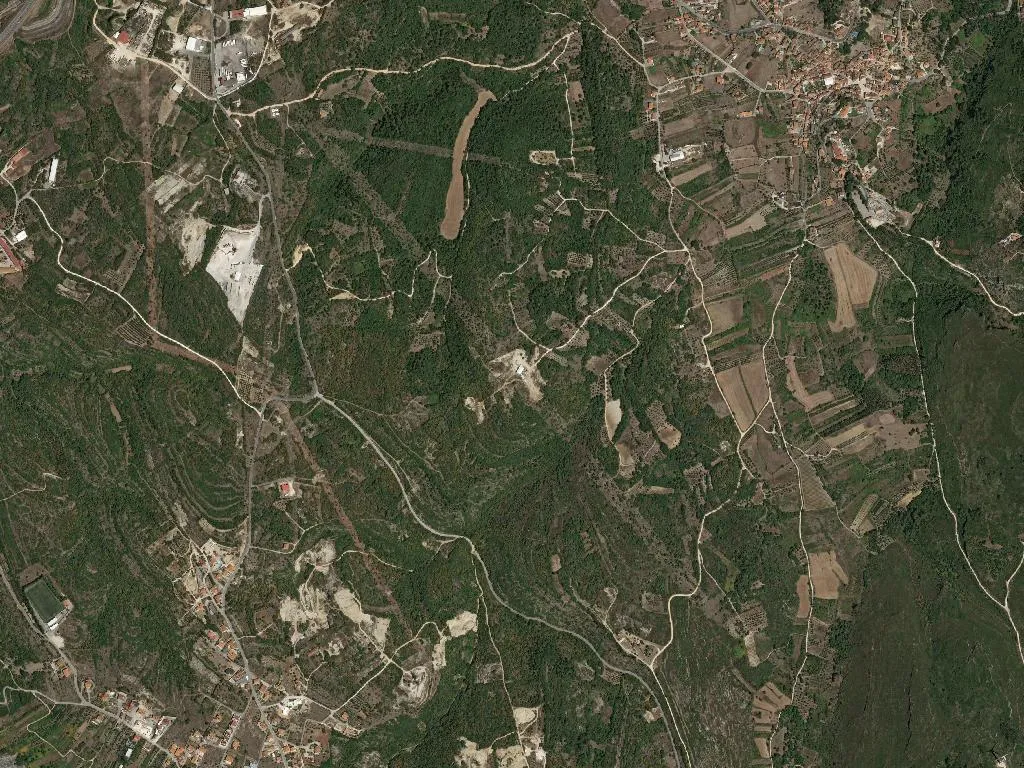
The thud of clay on the potter’s wheel at Olaria da Levada still echoes the same rhythm it has for decades. Beneath oak boughs, the Levada stream slips downhill from Cabeço da Atalaia toward orchards of pêra-rocha planted in the 1970s. On paper the parish numbers 1,907 souls, yet by Saturday lunchtime every verge along the N356 is claimed by a parked car.
Crown land and a Manueline charter
The name first surfaces in a 1285 royal survey: “reguengo” signalled land held directly by the crown; “fetal” nods to the carpets of ferns that flourish in the damp hollows. Reguengo do Fetal became a separate civil parish in 1836, carved from Batalha, and its pillory stone has stood beside the churchyard since 1935. The 1977 land reform broke up the great estates; today small vegetable plots share the red limestone soils with industrial olive groves whose silver-green geometry marches across the ridge.
Baroque carving, tin-glaze and water-driven stones
Inside the mother church, gilded angels spiral round an 18th-century retable, and blue-and-white azulejos recount the miracles of the Virgin. A mile away, the chapel of Carvalhal fills every first-October Sunday with the smell of fennel-scented “challenge soup” served after a romaria mass. Three restored water-mills now form an open-air museum (Wednesdays and Saturdays only); their paddles still turn, grinding local maize for visiting school groups. On the skyline, the Atalaia windmill—resupplying the builders of Batalha Monastery until 1954—has lost its sails but gained a viewing platform that frames the limestone escarpment of Serra de Aire.
Roman paving and pilgrim stamps
A stretch of caminho romano, part of the coastal route to Santiago, enters the village over a single-arched bridge, skirts the mills and then strikes west toward Aljubarrota. At the interpretation cabin you can buy an up-to-date topographical map and have your credencial stamped. The signed “Mill Trail” begins by the church door, loops seven kilometres through olive terraces and meadow, and takes a slow walker ninety minutes. Bedspace for through-hikers is basic: two spare rooms behind the grocery-café on Rua da Igreja—ask for Dona Lurdes.
Goat stew, corn bread and mould-pressed biscuits
Friday lunchtime is chanfana day at O Cantinho, where the kid is simmered overnight in black clay pots sealed with red wine; you must book before Wednesday. The crusty broa de milho comes from the wood-fired oven at Levada, sold between 7 and 9 a.m. while the loaves are still smoking. Reguengo biscuits—cinnamon-scented dough pressed into hand-carved wooden moulds—change hands at the bakery for four euros a dozen, the recipe passed mother-to-daughter since the 1880s. In November the local cooperative welcomes volunteers for the olive harvest; helpers leave with half a litre of cold-pressed oil and purple fingers.
A market that refused to die
Every third Monday, dawn traffic on the national road slows to a crawl for the livestock fair: hens in cane baskets, tractors with dew on their paint, gossip exchanged over plastic cups of ginjinha. Records show only two cancellations—1810 (French dragoons) and 2020 (a different invasion). There are no hotels; visitors sleep in villagers’ spare rooms advertised on handwritten cards in the café window. Bat-watchers can arrange a torch-lit descent into the Levada mine, home to a colony of bent-wing bats; contact the parish council for the key.
When the Atalaia windmill cuts a black silhouette against the fading sky, the scent of fresh bread drifts up the slope and the road to Batalha empties. Reguengo do Fetal slips back into its quiet, deliberate heartbeat, the wheel of the potter still turning beneath the oaks.