Full article about Alvorninha: Where Cidery Orchards Outnumber People
Alvorninha, Caldas da Rainha: walk the Camino between IGP apple groves, sip coffee under plane trees and sleep where only 68 souls share each quiet km²
Hide article Read full article
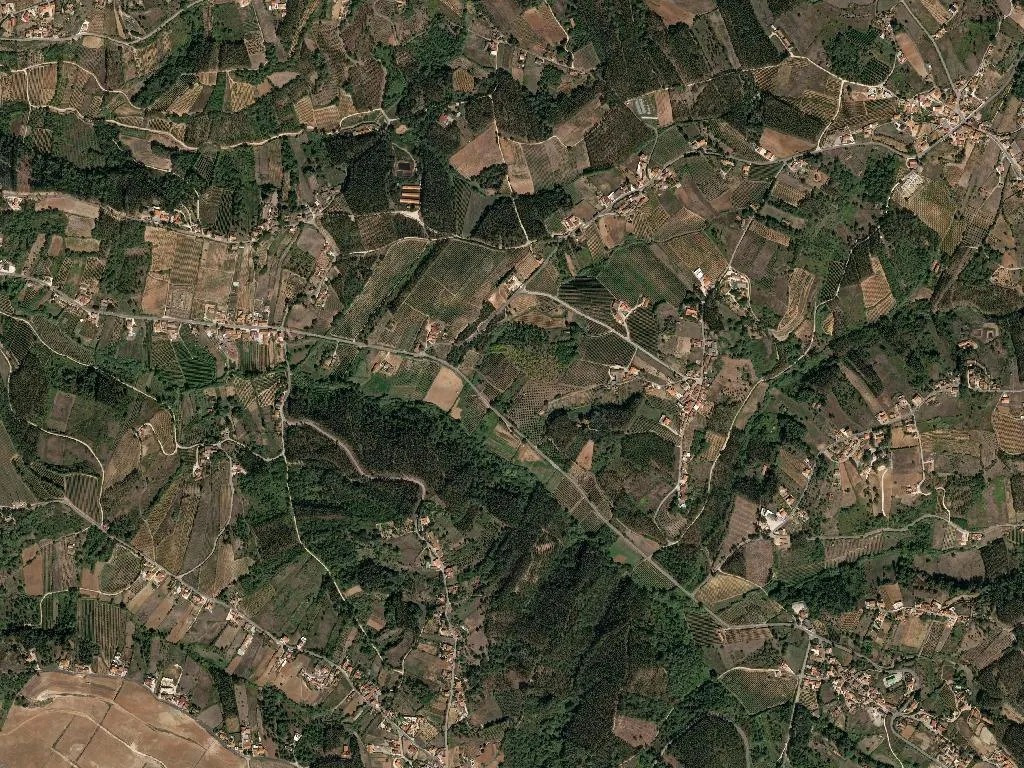
The EM587-1 municipal road uncoils between orchards laid out like chessboards, and the first thing that strikes you is the hush – not silence, but the particular quiet of a place whose soundtrack is dictated by tractors and thrushes rather than traffic. Alvorninha sits 85 m above sea level on a gentle coastal-plain swell, 15 minutes inland from Caldas da Rainha. Its 2,646 souls are scattered across 39 km² of loam and leaf, giving a density lower than that of the Scottish Highlands.
Apples, pears and passing pilgrims
Every hectare here earns its keep. Geometric rows of apples and pears supply two of Portugal’s most strictly policed appellations: Maçã de Alcobaça IGP and Pêra Rocha do Oeste DOP. Come October the air carries a cidery sweetness and wooden crates stack up like ammunition boxes beside the lanes. There is nothing picturesque about the scene; instead, dignity lies in the neatness of the pruning cuts and the absence of wasted ground.
The Portuguese Coastal Way of St James cuts straight through the parish on the stage between Salir do Porto and São Martinho do Porto. Backpackers emerge from eucalyptus shade, nod a weary greeting and pause at the 1732 wayside cross outside the mother church, Igreja Matriz de Nossa Senhora da Apresentação. Alvorninha offers no hostels or souvenir stalls, just the essentials: a stone bench under the plane trees, a working fountain in Praça da República, and the unspoken permission to slow your pulse before the next 23 km.
Demography measured in quiet
Census 2021 tells the familiar west-interior tale: only 260 residents under 14, while 828 are over 65. At 68 people per km², farmhouses stand well apart; conversations stretch across gates rather than pavements. Inside Bar O Pires on Rua Dr. José Caeiro, time is measured in coffee grounds and the slow click of the dominoes table. The parish council lists just 36 licensed guest beds – a rounding error compared with nearby Óbidos – which suits visitors who want a launchpad for the recently UNESCO-anointed Oeste Geopark rather than a pillow mint.
What the valley tastes like
The menu is short and circular. Ginja de Óbidos and Alcobaça IGP – a sour-cherry fireside liqueur – appears in thimble-sized glasses at the Central Bar, usually at 11:58 a.m. as an excuse to prolong lunch. Bravo de Esmolfe apples and Rocha pears travel 200 m from Quinta do Pinheiro’s orchard to Saturday’s open-air market, where Dona Lurdes sells small-batch jam from the same fruit. Conventual “fruit cakes” – bolinhos de fruta – have been lightened for modern palates, but the ingredients still carry passports.
Evening light skims across potato and maize rows, throwing long shadows from the cork oaks that have marked boundaries since the charter of 1182. A green John Deere trundles home along the EM587-1, raising a tawny haze that settles on the cooperative winery founded in 1962. Alvorninha asks for no spotlight; it is content with the muted thud of apples being loaded onto Frutas Norte lorries, the clang of the Francisco Arnoldo cork factory gate at 6 p.m., and the unarguable weight of soil that has fed its people since Afonso Henriques donated the land to the Cistercians in 1158.