Full article about Salir de Matos: where stone walls breathe orchard time
Limestone light, Rocha pears and Camino fossils in Caldas hinterland
Hide article Read full article
The measure of morning
Sunlight slips through the single-pane windows of low white houses, printing crisp rectangles on the limestone cobbles below. Salir de Matos wakes at the pace of people who still divide the day by light and livestock. Between the coastal plain and the first limestone folds of the Serra dos Candeeiros, the parish keeps time with the orchards: April’s Rocha pear blossom, October’s apple freight.
Daily geography
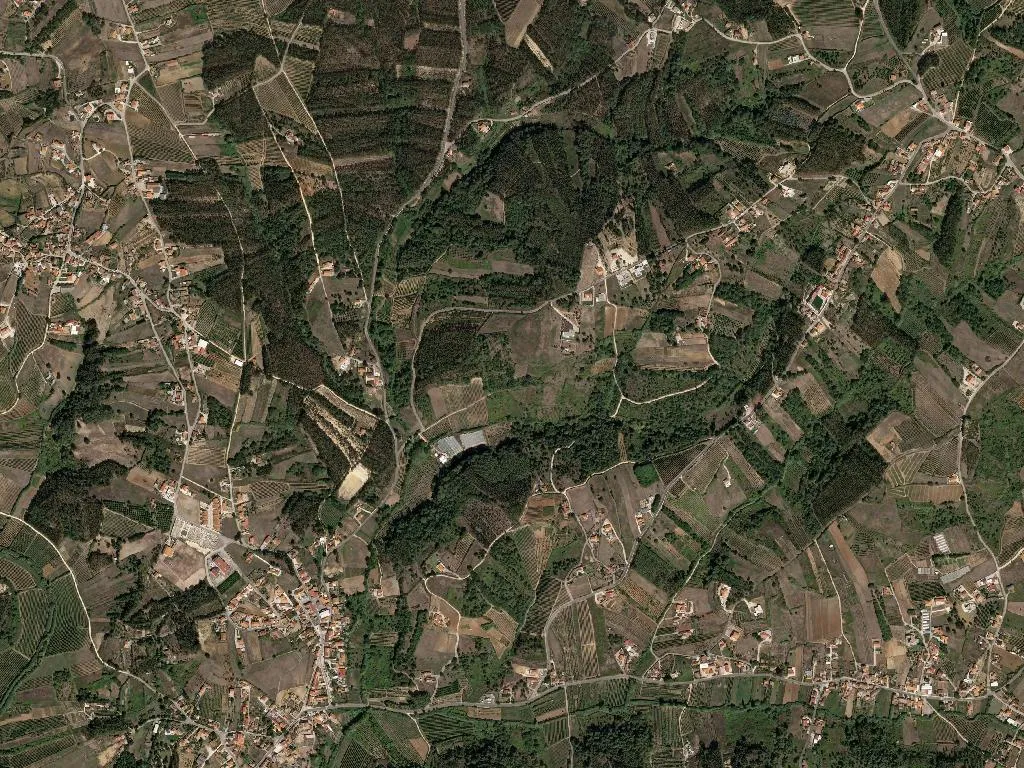
2,459 hectares are parcelled into a patchwork of walled vegetable plots, pine and olive. Trunks corkscrewed by centuries of frost mark field boundaries older than the roads. Children learn the bus timetable by heart and reappear at dusk, shoes dusted red. Pensioners trade seats on the concrete bench beneath the jacaranda, recalling when land was reckoned in jeiras—one man, one day, one furrow.
Stone that remembers
Local stone, sawn from quarries at the edge of the Geopark Naturtejo, sheathes both chapel and farmhouse in the same honey-cream that darkens to burnt sugar when the sun hits. Portal stones carry chiselled dates: 1893, 1911, 1934. On summer afternoons the walls radiate stored heat; in winter they hold it, so the houses seem to breathe.
Taste of the Oeste
Rocha pears mature under Denominação de Origem Protegida status, their grainy sweetness drawn from the limestone soil and the Atlantic breezes that sneak inland. Alcobaça apples share the same terroir, trucked to Lisbon markets before dawn. In larders, glass demijohns of ginja from Óbidos wait for Sunday lunches—ruby liquor sipped from thimbles, the prelude to caldeirada.
Footprints and fossils
The Portuguese Coastal Camino cuts straight through the parish, waymarks painted on telegraph poles. Pilgrims tread across former seabed: oyster shells and sea-lilies frozen in the rock, souvenirs from 150 million years ago. Locals point them out with the same nonchalance a Londoner shows the Shard.
Where to stay
Twenty-six properties—cottage conversions, lofted barns, a single modernist cube—rent by the night. Expect blackout-quiet broken only by a neighbour’s rooster, breakfast fruit picked the previous evening, and Caldas da Rainha’s supermarkets ten minutes away when you run out of decent coffee.
As the sun tilts, pine tops flare bronze and the air cools, carrying the scent of watered earth. Shadows stretch across the orchards, the church bell counts seven, and the village folds itself away. Tomorrow will begin again with the same pear-by-pear calibration of time, older than any wristwatch.