Full article about Castanheira de Pêra: Surf Waves & Silent Chestnut Groves
Ride Europe’s only chlorine surf, trace 1912 hydro-weirs and taste granite-pressed olive oil.
Hide article Read full article
When the River Ran the Machines
A slate-grey cliff cups the wave pool like an amphitheatre. Every 90 seconds a piston drops, the water bulges, and a waist-high swell travels 60 m until it explodes against the schist. A boy in a lemon-coloured rash vest kicks out, drops down the face, and for three crisp seconds rides Portugal’s only artificial surf before the ripple fizzles into foam. Around him, chlorine drifts uphill and collides with the scent of warm pine needles—an olcollision engineered nowhere else in Europe.
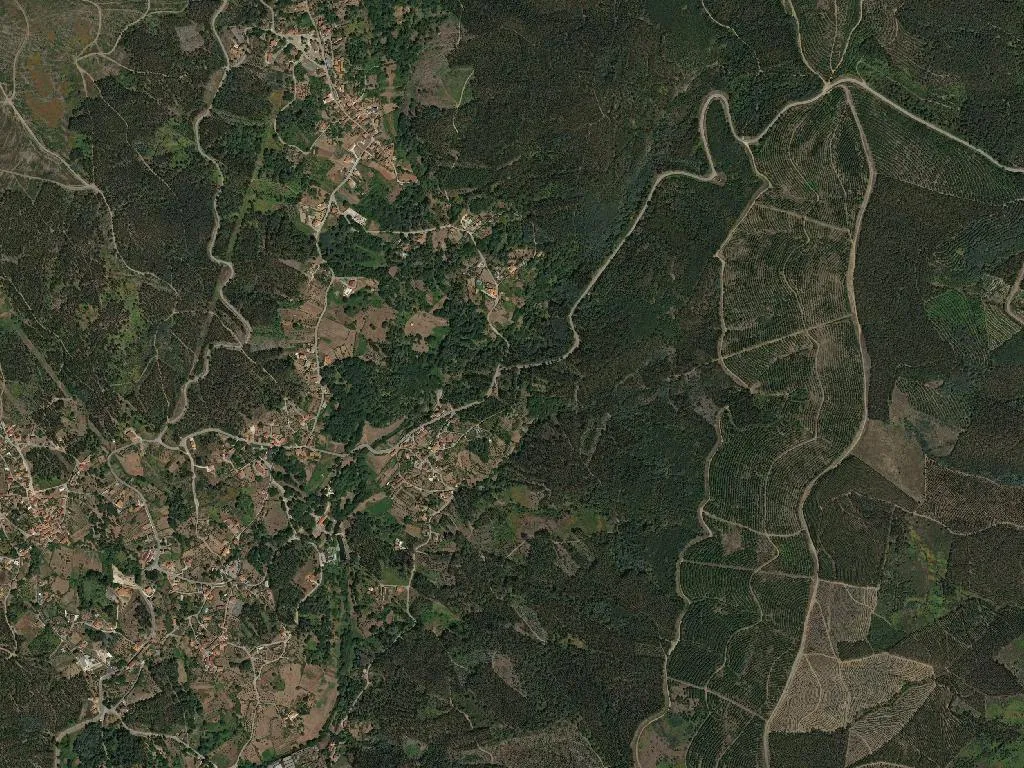
Castanheira de Pêra is built along a single water-thread, the Ribeira de Pêra, that slips through town at 400 m above sea level and exits 3 km later over a sequence of granite weirs. The parish—created in 2013 when Castanheira de Pêra swallowed the smaller village of Coentral—is one of only six places in Portugal where the municipality and the civil parish are the same thing. The administrative curiosity is matched by demographic sparsity: 2,645 residents spread across 66 km² of chestnut coppice and maritime pine, a 17% decline since 2011. Empty houses outnumber occupied ones; the silence between the church bells feels deliberate.
Water that Once Paid Wages
Follow the river uphill and you meet the Retorta hydro-electric station, commissioned in 1912 by local industrialist Manuel Diniz Henriques to power the wool looms downstream. Turbines still spin inside the brick turbine hall, fed by the same 43 m head that once drove millstones. Two weirs above the station—Açude dos Rapos and Açude do Fojo—deliver textbook masonry curves; their spillways throw up rainbows even in August. The Rota da Água e da Pedra threads past them, a 7 km footpath where royal ferns grow shoulder-high and the air tastes of wet iron.
Higher still, the oil press at Lagar do Corga has been crushing olives since the 17th century. Two circular granite stones, 1.8 m across, still bear the dark stains of countless harvests; the building is now a modest museum where you can taste cornbread baked in a wood-fired oven and topped with DOP Beira Baixa olive oil pressed less than 5 km away. Chanfana—goat stewed for four hours in red wine and smoked paprika—arrives at table in a black clay pot whose lid is sealed with bread dough to keep the steam in. The dish originated during the 1832 cholera outbreak when villagers sterilised both meat and crockery in one cauldron; today it is identity on a plate.
Warp, Weft, Whistle
The brick chimneys of Albano Morgado & Filhos rise beside the N236. Inside, 1927-vintage Hattersley looms still weave pure wool for clients such as Burberry and Loro Piana; 72% of production is exported. Tours (book 48 h ahead) walk you past dye vats the colour of peacock feathers and through a finishing room where teasels—real thistle heads mounted on wooden cylinders—raise the nap on vicuna-blend coating. The 12 o’clock whistle that once summoned 600 workers now calls 90; the smell of lanolin lingers in the canteen coffee.
Ice, Processions, Echoes
Snow is not metaphor here. The Serra da Lousã ridge behind the village tops 1,200 m and holds its white cap well into March. On the first Sunday of August pilgrims climb to the ermida of Santo António da Neve for a dawn mass that starts by candlelight and ends in full sun. Inside the Museu Casa do Neveiro you’ll see the wooden sledge—6 m long, 40 cm wide—that carried 80 kg blocks of ice down to the coast before refrigeration. The Rancho Folclórico “Neveiros do Coentral” still sings the sled-men’s call-and-response in woollen waistcoats dyed with walnut hulls.
Boardwalks above the Green Silence
The Passadiços da Ribeira das Quelhas hang 1.2 km of pine planking above a gorge of emerald pools. Dragonflies stitch the air; the water temperature at Poço do Poio is a steady 14 °C even when the valley above hits 38 °C. Below the boardwalk, Praia Fluvial do Poço Corga offers picnic tables under white willows and a granite changing hut built by the parish council in 1953. Five minutes downstream, the wave machine at Praia das Rocas fires again: same rhythm, same cliff, same momentary conviction that the Serra has been coaxed into the Atlantic.