Full article about Aguda: Where Silence Outnumbers People
Serra da Lousã hamlet breathes at 416 m with 909 souls, Romanesque stone and fog-bound pines.
Hide article Read full article
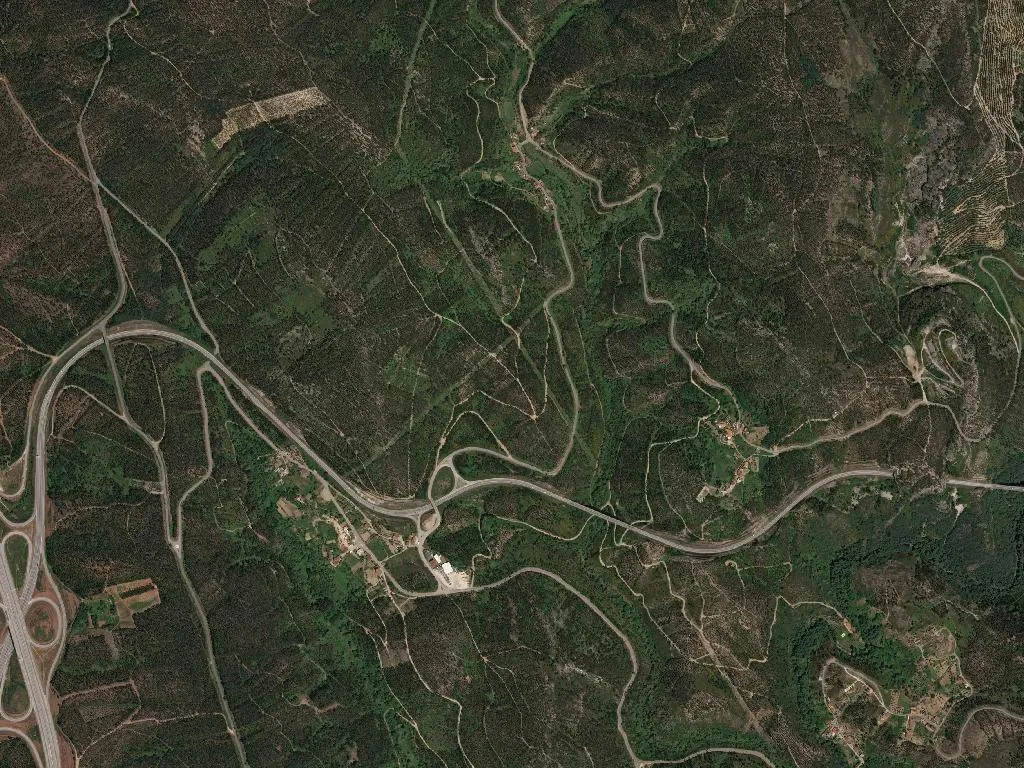
The road climbs, hairpin after hairpin, until the air thins at 416 m and your lungs notice the difference. Aguda hangs on the western slope of the Serra da Lousã, its schist walls the colour of wet earth, its silence broken only by wind that rifles through the valleys. In this single parish—4,000 near-empty hectares—population density works out at roughly one person every four football pitches. You feel it in the shoulders: horizons breathe slowly here.
Nine hundred and nine residents are scattered across a granite-and-pine topography where tracks dead-end against boulders and clearings suddenly reveal heather the colour of burnt sugar. Demography has tilted: 306 residents are over 65, just 80 are under 14. The imbalance is written on the landscape—shutters latched tight, lime-wash flaking, vegetable plots still measured by hand spans memorised in childhood.
Stone that remembers
The only building on Portugal’s public-interest register is the 12th-century Igreja de São Pedro, though locals simply call it “the church”. Its Romanesque portal survived every wildfire that has scorched these slopes—most recently 2017’s inferno that stopped 3 km short. The marble capitals are carved with vines and what looks suspiciously like a Norfolk terrier; guidebooks ignore them, but the stone has watched conscripts leave for Mozambique, Lisbon, the Renault factory in Boulogne-Billancourt, and now return with Surrey-registered SUVs.
Ten dwellings are signed up as tourist accommodation: not developer conversions but grandchildren who refused to let grandad’s house implode. Guests arrive because a cousin mentioned the silence or because they tracked down a great-grandfather’s birth certificate. Advertising is still a sheet of A4 inside the bakery window and, half-heartedly, a Booking.com listing that never appears before page six.
Weather with a memory
At this altitude the climate keeps its own diary. Dawn fog erases the world; pines become charcoal smudges, the path a guess. Summer heat clocks in late and leaves early, as if the sun punches a timecard. Winter brings Atlantic cold that noses under doors; wood-smoke rises in perfect parallel lines, a sight that convinces first-time visitors they’ve taken a wrong turn and ended up in the Serra da Estrela. Meteorological data confirm it: Aguda records identical January minimums to Guarda, 200 km north-east and 500 m higher.
There are no starred restaurants; you eat in tascas down in Figueiró or in kitchens where the television stays off. Winter means chanfana—goat braised in black pottery with red wine and enough garlic to frighten vampires—while Easter brings kid scented with bay from the garden. The neighbour’s tinta-barroca blend routinely outscores €30 Douros at blind tastings, but is poured from an unlabelled bottle that’s kept beside the wellingtons.
Geography of the everyday
Walking here is to calibrate effort: every ascent registers in the quadriceps, every summit pays out views that ripple west until the Atlantic appears as a silver hairline. Nature is not spectacle but constant companion—the hush of invisible water between stones, resin warming on pine bark, the rasp of schist under fingertips. Granite thresholds gleam where generations have shuffled to mass or to the fields; wooden doors groan on iron hinges last oiled during the 1974 revolution. The church bell still strikes the hours for those who measure time by it rather than by smartphone.
Aguda offers no logistics, no selfie payoff. What it does offer is the acoustic luxury of hearing your own footsteps echo back from stone at dusk, when low light turns every cobble into a miniature sundial and the air smells of cold leaf and woodsmoke—proof that some parts of Europe still run on a calendar set by seasons, not algorithms.