Full article about Arega: torchlit schist lanes above the Zêzere
Iron-ore scree, ruined mills, sponge-cake smoke—summer rituals in a 721-soul Lousã village
Hide article Read full article
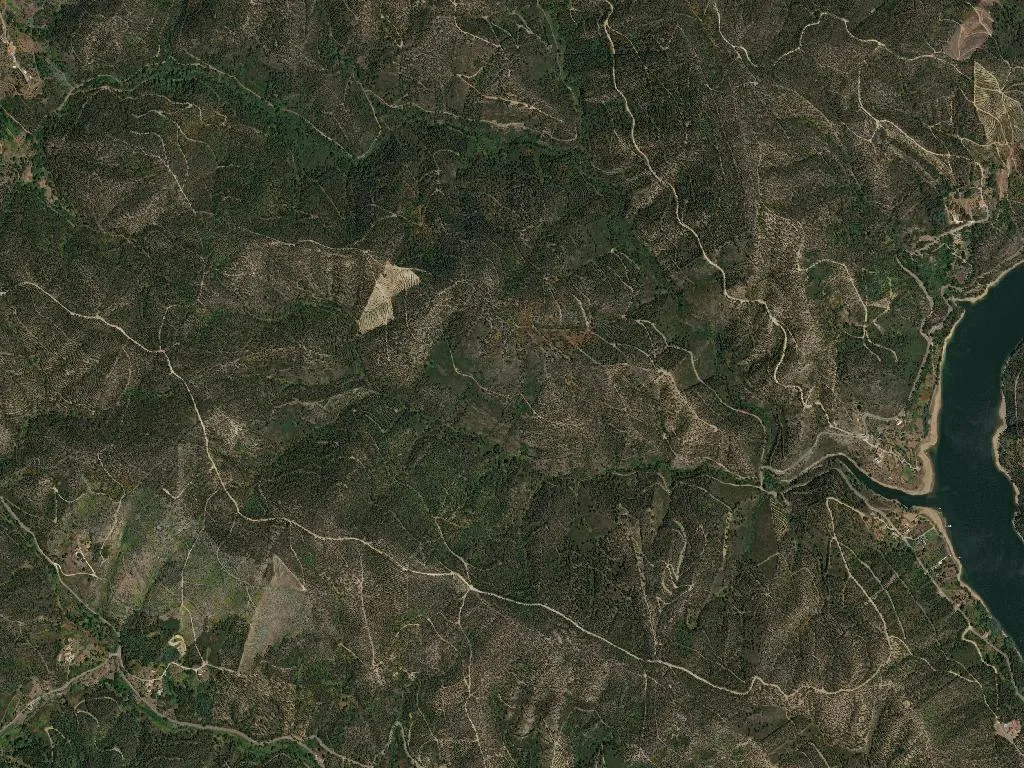
Dark schist walls drink the late-summer sun. The stream slips beneath a single stone bridge and widens into smooth basins where village boys arc into the water, knees to chest, sending ripples across their reflections. Arega counts 721 souls spread over 25 per km²; the parish road climbs to 310 m before surrendering to the Serra da Lousã ridge and the Zêzere valley.
Church, mines and mills
The parish church dates from the 1700s, Victorian tiles added later. Inside, a gilded baroque altarpiece glints against whitewash. A mile downstream, the ruined water-mills of Ferrarias da Foz de Alge still hold their cast-iron axles; dragonflies stitch the air between fallen stones.
North-facing slopes were once scored with iron adits—Quinchosos and Mina à Fontinha concessions registered in 1913. Ore was bagged, loaded onto mules and walked to the foundries of Figueiró dos Vinhos until the seams closed in the 1950s. Debris is visible if you look for rust-red scree among the pines.
August night, January dawn
On Assumption Eve the village street becomes a slow river of torchlight. Locals wear linen smocks and carry hoes, flails and olive baskets behind a statue of Nossa Senhora da Assunção. Afterwards, sardines hiss over vine-prunings, red wine is poured from white porcelain jugs, and wedges of Arega sponge-cake—eat the same day or it sulks into dampness—are passed from hand to hand.
At Epiphany, singers start the Janeiras rounds before sunrise. Knock, and you’ll be offered a glass of medronho firewater, a biscuit stamped with a pressed rose, and an orange for luck.
Kid, bean and honey
Wood-oven kid: three hours until the skin blisters like parchment. It arrives with sautéed greens and potatoes that taste of smoke and rosemary. Lamb stew is scented with rockrose and finished with walnut cakes glued together with rosemary honey—lick your fingers or regret it.
Mill Trail
A four-kilometre loop marked yellow-and-white sets out from the church, drops to the mill ruins, climbs through stone-terraced olive groves to Ferrarias, then glides home. Autumn carpets the path with chestnut husks; wild boar shuffle at dusk. Carry water—there is no café, only the sound of your own breath and the river below.