Full article about Campelo: Where the Wind Forgets to Stop
Nine granite houses cling to a 598 m ridge above Figueiró dos Vinhos, breathing flinty air.
Hide article Read full article
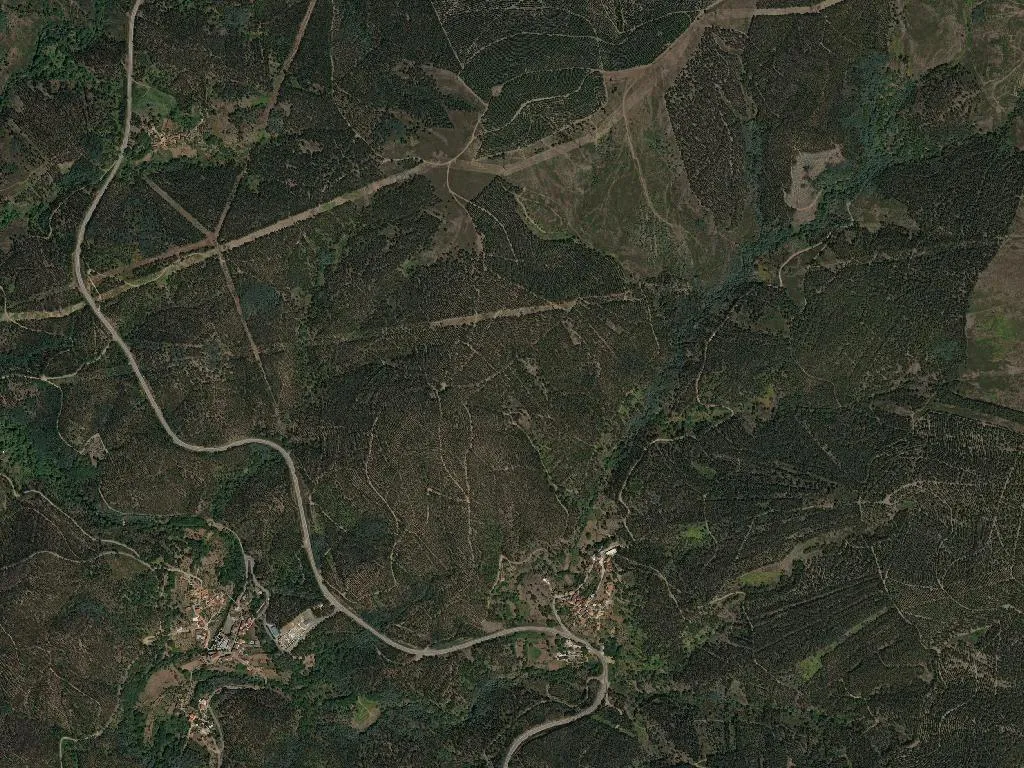
The lane corkscrews upward so tightly that pine boughs polish the paintwork. First the scent of hot resin, then a slap of eucalyptus, then nothing at all. At 598 m the air dries and acquires a flinty edge that rasps the throat. Suddenly the trees step back: a tawny clearing scattered with nine houses, each set in its own scalp of compacted earth where the wind circles and finds no one to greet.
Sums that refuse to add up
The civil parish still claims 191 souls, yet half now sleep elsewhere. Those who remain share their birth years with the centenarian olive trees that continue to give oil. Thirteen children race between the stone benches of a primary school that shut five years ago; inside, Dona Amélia tins tomatoes in August and fires the communal bread oven when the weather behaves. The arithmetic is brutal: six pensioners for every child, all of them able to recall when the village had a café, a stationer, a bouncing football on the only tarmac.
Schist ridges slide into narrow valleys; the rock shudders under midday heat and turns treacherous in rain. When the fog drops, even the 1748 church tower – a white cube that survived the tempest of ’96 – disappears. The wildfire scars are not merely black: they are ground in which fear has been sown. In 2017 the flames halted fifty metres from the last house, and on northerly days you still catch the note of scorched timber riding the breeze.
Uphill, downhill – a job description
To live here is to develop steel-calfed twins. Sr Joaquim’s vegetable patch demands a quarter-hour climb up schist steps slick from December to March. His cabbages grow head-down toward the valley as if plotting escape. Water arrives via clay irrigation pipes that crack at night, the sound a telegram: “Someone still lives.”
Granite walls keep the ghost of wood-smoke in their pores. In abandoned pigsties grandad’s tools hang from rusted nails – a hoe with a splintered shaft, a scythe no one has sharpened in a decade. Windows boarded with planks conceal the things no one wishes to see: a floral sofa, a calendar forever open at September 2019, a half-emptied bottle of aguardente.
What remains when everything drifts away
The postman appears on Tuesdays and Fridays, though not reliably. Bread must be fetched from Figueiró dos Vinhos before eight o’clock or you go without. Sat-nav fails so often that delivery drivers ring from the town below: “I’m on my way – stand outside.” At dusk, when the light snags on the cypresses of the cemetery, the silence is thick enough to slice with a fish knife.
Yet some days the valley exhales. When João flies back from Luxembourg in August, the scent of chouriço roasting on coals drifts uphill, laughter ricochets between terraces, and Dona Amélia appears with a tray of steaming rice cakes. The thirteen children – who somehow seem thirty – treat the stream as if it were the Amazon. For one night Campelo ceases to be a dot on the map and becomes the place where time liquefies, slipping through fingers while someone retells the story of the porch that bore the weight of snow in ’54.