Full article about Figueiró dos Vinhos: bells echo over schist roofs
Dawn peels through pine-dark slopes, azulejo chapels and a 1755 bridge still grooved by ox-carts
Hide article Read full article
Slate and bells
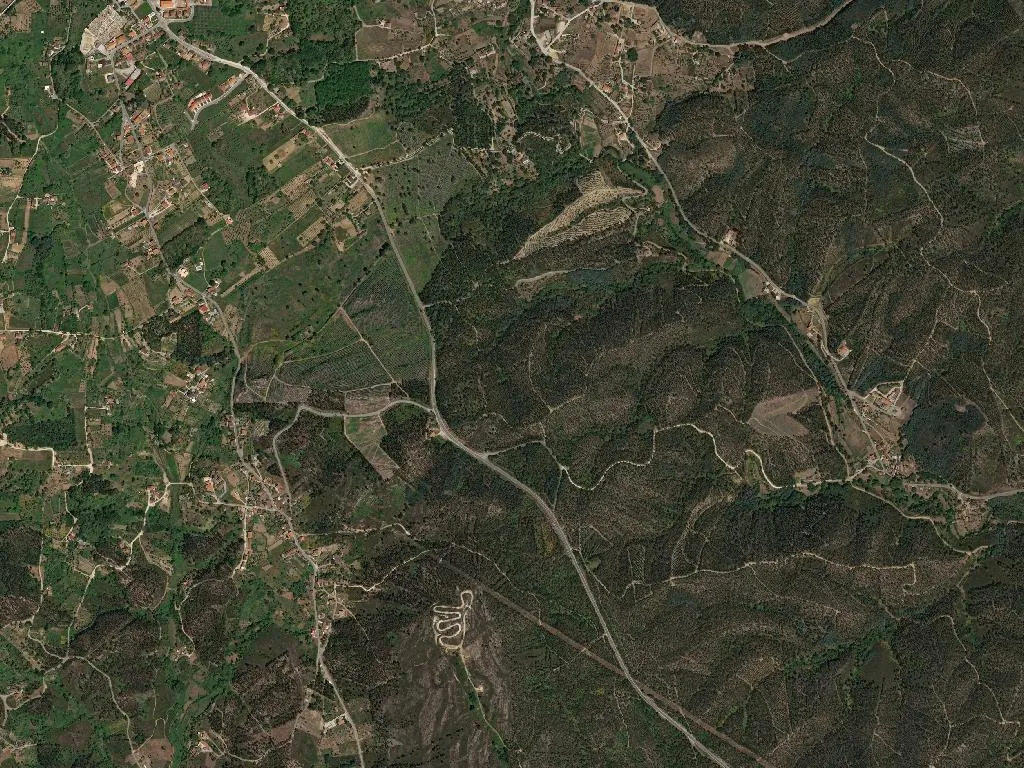
At 432 m the air is thin enough to carry sound cleanly. Dawn in Figueiró dos Vinhos begins with a single bell, then three, the notes rolling down lanes of polished cobble still slick with dew. Grey schist pushes through the pine-dark slopes like bone through skin, and the first breath you take carries resin, wood-smoke and something metallic from the river below. The village is small—3,460 souls—but the geography makes it feel vertical, stacked in red-roofed tiers that catch the low sun like copper pans.
Two parishes, one ledger
Since the 2013 reorganisation the civil parish of Figueiró dos Vinhos has swallowed its scatter-rural neighbour Bairradas, yet each keeps its rhythm. The centre retains a tight 18th-century grid; Bairradas dissolves into smallholdings where the nearest neighbour is a hectare away. Demography tilts elderly—1,200 residents over 65, only 336 under 19—which explains the mid-morning hush and the 42 registered guesthouses: silence is the new commodity. Check-in is at the parish council counter, where the clerk still stamps papers with a brass seal dating from the Salazar era.
Stone that remembers
Three plaques, three centuries. The mother church, begun 1712, rises in coarse granite block; inside, gilt woodwork glints like wet sand. São Sebastião chapel, deep in Bairradas, shelters a complete set of blue-and-white 1740s azulejos depicting the plague saints—tiles cool enough to rest a cheek against in August heat. Half a kilometre downstream the Ponte de São Cristóvão, a hump-backed schist bridge finished in 1755, still takes the weight of tractors; its parapet carries the grooves of cart-wheels that pre-date the earthquake.
The business of living
Commerce clusters on Rua Dr. Francisco Silva: one bakery that fires at 4 a.m., a butcher who knows every client’s cholesterol count, a café where the espresso is poured through a 1960s Brasilia machine. Wednesday is market day in Praça da República—no gastronomic theatre, just spring onions tied with twine, honey in reused beer bottles, and a single farmer who sells parsnips most of Portugal has forgotten how to cook. The cooperative Adega de Figueiró shifts red blends for €3 a bottle; the label shows the now-vanished fig and vine terraces that gave the town its name.
Arriving, leaving
The EN2, Portugal’s answer to Route 66, bisects the village on its way from Chaves to Faro. A weekday Rede Expressos coach stops outside the fire station at 07:45—45 minutes to Coimbra, 25 to Leiria. Park on Rua 5 de Outubro; no meter, no app, no traffic warden. If you stay for dusk, watch the west-facing walls ignite, schist turning rose, then bronze, then the colour of burnt paper while wood-smoke drifts uphill and the bells mark the hour louder than any phone.