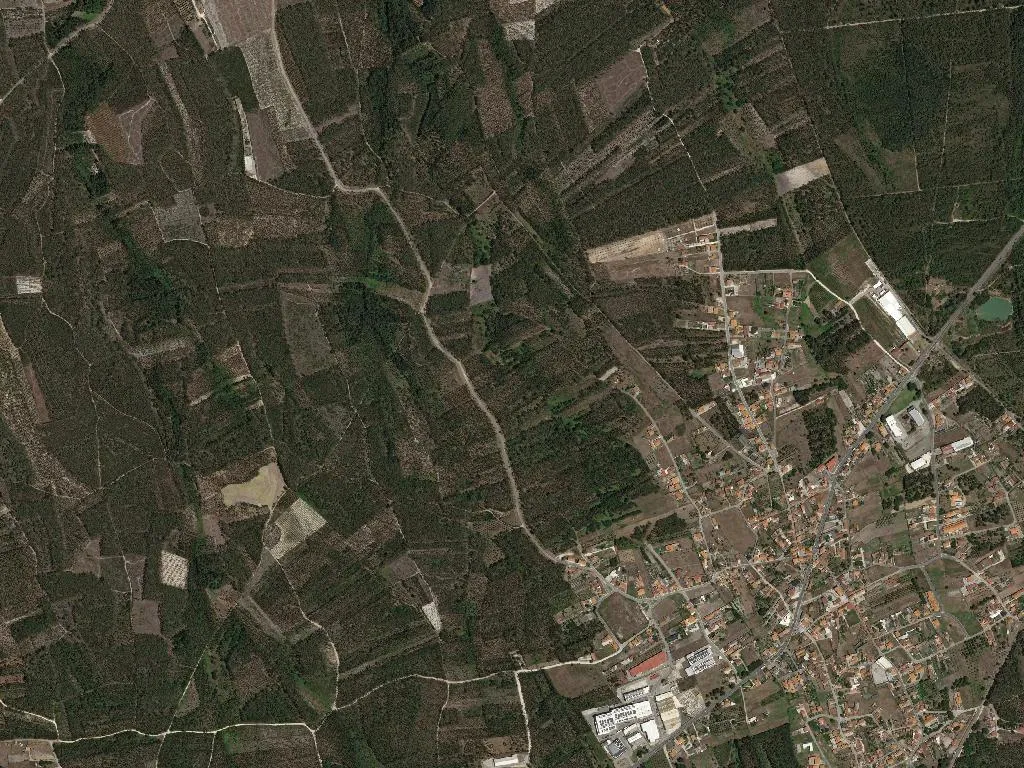
Full article about Moita’s hush: granite cross, orchard breeze, manor cat
Hear fig-leaf time tick by the 1628 cross, taste Alcobaça apples outside the nameless manor
Hide article Read full article
The stone cross that refuses to pose
A granite cross has stood at the junction since 1628, but it makes no bid for your attention. Sunday’s football rebounds off the base while mothers outside the parish hall quarrel over the price of butane. Next door, the chalk-white Igreja de São Tiago catches the morning light; when the sun clips the tower the south doorway shivers like water in a pan. The bell strikes the hour, yet time is reckoned less by Vodafone than by the slow slide of fig-tree shadows across the churchyard gravel.
From Saint Cucuphas to Saint James
The parish used to answer to São Cucufate – a name teachers still dodge in primary-school geography. The official switch to São Tiago never quite took; locals simply say “I’m going to the church” and leave it at that. Inside, darkness smells of candle stubs and camphor-lined wardrobes. Saints James, Martin, Anthony and Vincent arrived as refugees from shuttered chapels or as payment for vows kept. The 1697 pulpit survives: the priest climbs its steps the way you mount a kitchen stool to change a bulb – one hand on the rail, eyes on the treads.
The Carvalhais house and the memory of manor days
Halfway down Canada dos Carvalhais a manor house forgets to announce itself. No plaque, no name – just a rust-sprung gate, flaking shutters and a tabby cat that pays rent in mice. Two generations ago the owners moved to Lisbon; their grandchildren appear only in August to shake the olive tree and square the bills. Architecture books call it “manor style”; reality calls it a dripping roof and an uncovered well. Yet the place still serves: hide-and-seek headquarters for ten-year-olds, backdrop for the caretakers’ grandchildren to whisper, “That’s where the boss used to live.”
Between Alcobaça apples and Rocha pears
No harvest festival, no prize-winning produce – just orchards ribboning the road with apples bearing the Alcobaça DOP and pears stamped Pêra Rocha do Oeste. Pull over and the grower will tell you before you open the door: “Rocha’s tasting good, but the price is an insult.” Plots are pocket-handkerchief size, many still irrigated by narrow trenches; the only new colour comes from the black-plum tunnels that have appeared lately. Want fruit? Be on Sr Artur’s quinta before eleven; afterwards you’ll find him in the café slamming down the queen of clubs at sueca.
Way-marked but unruffled
The Portuguese Coastal Caminho weaves through the village, yet even the hens ignore it. A bleached yellow arrow crawls across the cemetery wall; a wooden sign promises “Albergue 2 km” but delivers two bunks in a room behind the cake shop. Pilgriffs smell of rain-soaked nylon and ask for water at the hand-pump; someone immediately pushes a coffee and a toasted ham-and-cheese across the counter – “I’ve walked too, I know how it hurts.” No legends are recited; the farewell is a simple “bons caminhos”, followed by silent bets on whether the stranger’s knees will hold as far as the next parish.
When the sun drops, the cross turns ink-black against the sky. Children are called in, Zé’s mongrel sniffs the irrigation puddles, the churchyard reverts to stone and quiet. Moita does not request guided tours or selfies; if you stop, it is enough that you feel how cold the granite is, notice how the wall leans with four centuries of fatigue, and understand that this is still a place where life happens – not a postcard waiting to be sent.