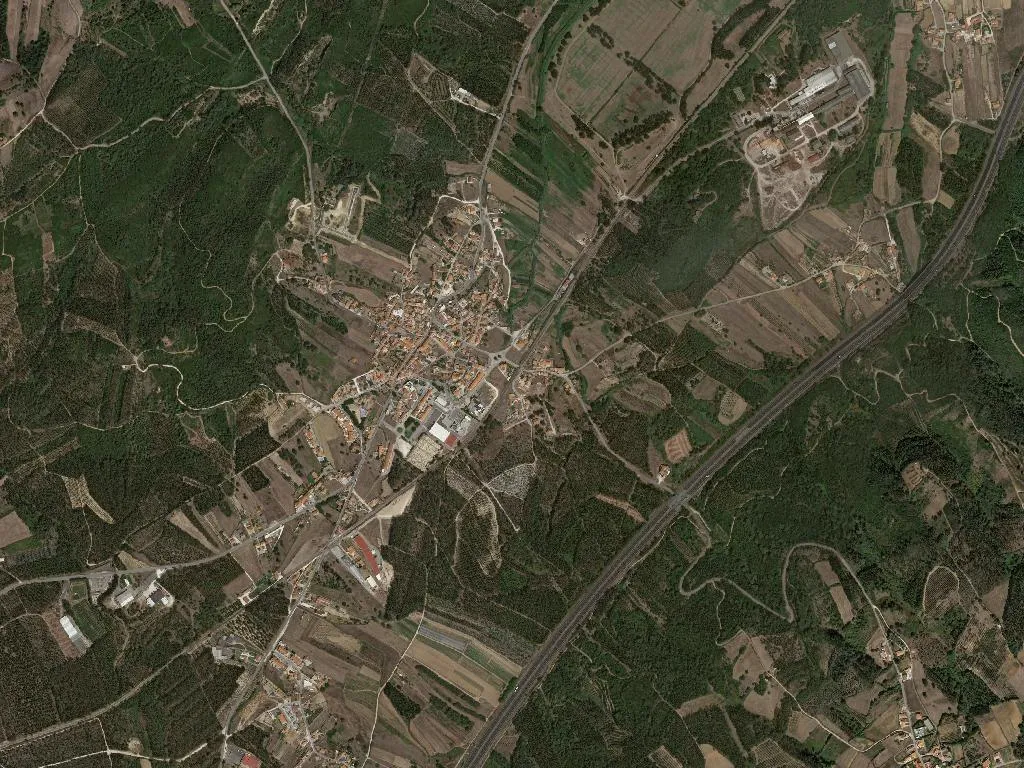
Full article about Famalicão: Fossil Fields & Atlantic-Seasoned Pears
Famalicão, Nazalicão, Leiria hides Jurassic fossils, orchards sweetened by Atlantic breezes and a 16th-century church on the Coastal Camino.
Hide article Read full article
Twenty-five metres above sea level, daylight arrives before the surf. It pours over low vineyards and orchard rows of Rocha pears, the DOP fruit that sweetens within sight of Atlantic rollers yet never tastes saltwater. Famalicão inhales the ocean on the wind; microscopic crystals settle on the skin of apples and the waxy leaves of kale, a reminder that Nazaré’s cliffs are only 12 km away.
The parish stretches across 20 km² of gentle folds—limestone ridges left by 175-million-year-old seas. After heavy January rain you can prise fossilised cockles from the pasture beside the lane to Valado; Ze Manel’s field turns into an open-air museum for an afternoon. Otherwise the land is given over to smallholdings: whitewashed single-storey houses, maize cobs drying on wrought-iron gates, vegetable plots edged with reeds. Of the 1,664 residents, more than a quarter are over 65, so the rhythm is set by tractors and rosary bells rather than the surf forecast.
Stone tracks and Santiago footsteps
The Coastal Way of St James crosses the parish on its approach to Porto. Walkers emerge from the pine ridge at dawn, boots powdered with ochre dust, and register the shift from Atlantic roar to skylark song. There are no crowds, no souvenir stalls—just the irregular crunch of gravel, the occasional request for water. Turn right at the blue-and-yellow house; Sr António fitted an outdoor tap specifically for pilgrims, providing it’s turned off afterwards.
The only building on the national heritage list is the 16th-century Igreja de S. Miguel. Its Manueline doorway is weather-beaten, the bell-tower square and practical; Mass is held monthly, weddings even less often. Yet the church still anchors the village skyline, its stone the same honey colour as the cliffs at São Martinho do Porto.
Earth in the pot, salt in the pan
The kitchen here is split between what the soil gives and what the cod boats once brought back. Caldo de nabos simmers with locally raised chouriço; dried cod is stewed with chickpeas, coriander and a splash of the light red wine made down the road in Turquel. Rocha pears and Alcobaça apples (both PGI) are sold from the boots of cars on the N8. In October Dona Rosa parks her yellow Citroën at the junction for Alcobaça: five-kilo paper sacks, honesty box, fruit still warm from the sun.
Accommodation is limited to 87 beds—rooms above cafés, a converted hayloft, two smart villas with infinity pools that look embarrassingly out of place. Best value is the first-floor room in Dona Ilda’s house at Casais de Além: iron bed, crocheted bedspread, sea view if you stand on the chair. No breakfast, but she’ll lend you a bowl for the peaches you bought yesterday.
Low light, long shadows
Population density is 72 per km²—half that of the English Lake District. The single café unlocks at 07:00, shutters again by 20:00, unless Zé Carlos is in a mood to stay open. His bica is short enough to make you blink; the aguardente comes in unlabelled bottles, either “ours” or “from over the hill”. Evenings are measured by the slant of light on terracotta roofs, by the slow fade of colour in fields of lucerne. The Atlantic is close enough to silver the night air, distant enough to let the land keep its own voice.
Famalicão offers no giant waves, no medieval pageant. It is simply a place where the sky keeps changing its mind and the silence has texture—an interlude of earth and salt between Nazaré’s drama and the monastery town of Alcobaça, useful for travellers who prefer their Portugal without a soundtrack.