Full article about Valado dos Frades: where monks drained the sea from soil
Visit Valado dos Frades near Nazaré to see Cistercian water channels, 1891 railway station and farmed marshland glowing with lettuces.
Hide article Read full article
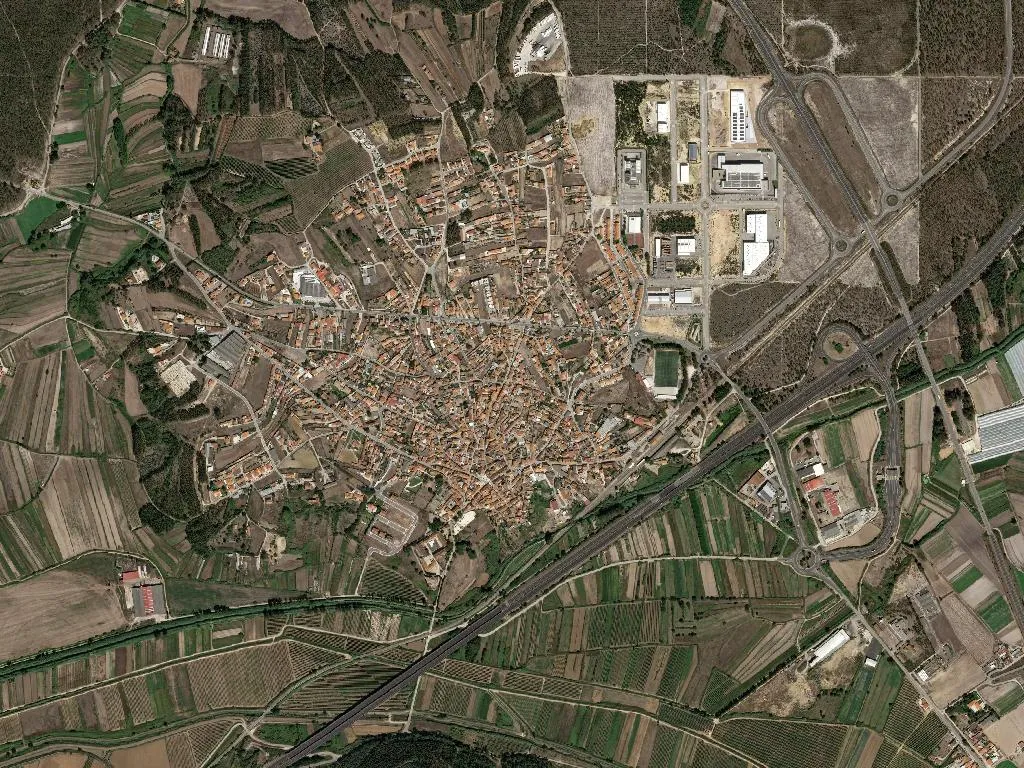
The train exhales as it halts. Beyond the carriage window, the coastal plain unrolls like a linen tablecloth, scored with ruler-straight ditches where water the colour of oxidised silver slips between reeds. Atlantic light—sharp, saline, only minutes from the shore—bleaches the lime-washed houses, ignites the kitchen-garden lettuces and leaves the curved terracotta roof tiles gleaming after rain. Valado dos Frades moves to two pulses: the hush of the ocean you can’t yet see and the quiet industry of earth that was once marsh.
When monks taught the land to breathe
The name is a two-word archive. Valado derives from valada, a field girdled by drainage channels; dos Frades points to the Cistercians of Alcobaça who, from the 1200s, turned tidal slob into granary for their immense monastery estates. In 1259 Abbot Estêvão Martins issued the first foral, a charter that coaxed settlers to what was then simply Herdade do Rio de Moinhos. By 1296 the Granja do Valado was one of ten abbey farms, distinguished by something revolutionary: a Hydraulic and Agricultural School in the outbuildings of Quinta do Campo where lay brothers taught the arithmetic of gradients, the carpentry of sluices, the calendar of spring tides.
Eighteenth-century Abbot Manuel de Mendonça—distant cousin of the prime minister who rebuilt Lisbon—completed the last great drainage, replacing swamp with wheat. When religious orders were dissolved in 1834, the Spanish banker Manuel Yglesias bought the estate at public auction; his great-grandchildren still farm here. It was Yglesias who lobbied for the Lisbon–Figueira da Foz railway to bend westwards, so the 1891 station you step onto today is a monument to Victorian ambition paid for by Iberian capital.
Touchable pasts
Long before the monks, Romans trod this shoreline lagoon. In 1780 a plough cracked open a marble sarcophagus dedicated by one Avicena Silvano to his mother Dúcia, its lid carved with Apollo and the nine Muses—now a highlight of Lisbon’s National Archaeology Museum. Fragments closer to home lie in the grass: the apse of the vanished Igreja de Santa Maria da Valada, pre-dating the present parish church of São Sebastião (1780), and the slag-heaped site of the Ferraria dos Coutos, a medieval forge fuelled by pine-charcoal from the Leiria forest.
São Sebastião itself is modest—wooden barrel-vaulting, 18th-century gilt still intact—but the real textbook is Quinta do Campo, reborn as an agroturismo. Walk the granitic cloister turned courtyard, sit in the chapel whose frescoed St Bernard faces a working threshing floor, sleep where lay brothers once copied irrigation manuals. Thick walls admit no heat; windows frame the vegetable plots like Dutch still-lifes.
Tastes caught between surf and soil
Dawn brings a van bumping over the level crossing: yesterday’s sardines from Nazaré harbour, glistening like newly minted coins. Inside the village bakery, dough is slapped onto the marble bench at 4 a.m.; by seven the first pão de milho is cracked open, steam mixing with espresso fumes. On Wednesdays Maria do Carmo parks her Renault 4 outside the café and unloads tomatoes so thin-skinned they split at a glance, their scent equal parts greenhouse cane and Atlantic salt.
At “O Frade” (the joke is unavoidable) Sr António simmers caldeirada for precisely two hours—tomato, onion, piri-piri and the last of the monkfish head—until the sauce sticks to the blue-and-white tiles like memory. The wine list is short: local Encruzado white from Quinta do Campo’s own small vineyard, bottled under wax-sealed glass that could pass for inkwells.
Wayfarers and lingerers
Valado dos Frades lies on the coastal variant of the Caminho de Santiago; way-marked arrows guide hikers across the vegetable chessboard towards the lighthouse at Nazaré where the big-wave season begins in October. Most walkers push on, but those who stay discover a parish of 2,823 souls spread over 1,851 level hectares—an electorate younger than the national average yet still outnumbered by retirees (780 over-65s to 323 under-30s). The response has been calibrated: 67 tourist lodgements—converted haylofts, glass-walled villas, a pair of railway carriages—scattered among working smallholdings, so the sound of a rotavator at dusk competes with the splash of a pool filter.
Near the level crossing, José Manel still irrigates his cabbage rows by hand, opening earthen sluices at 6 a.m. while herons argue overhead. Mist lifts; the Atlantic reasserts itself in one long white whistle from the 07:43 to Lisbon. Water threads down the monk-cut ditches, murmuring the same lesson taught eight centuries ago: given patience, marsh becomes bread.