Full article about A dos Negros: barley silk & ginja air
Limestone orchards, whisper-quiet lanes, Atlantic-cooled harvests above Óbidos
Hide article Read full article
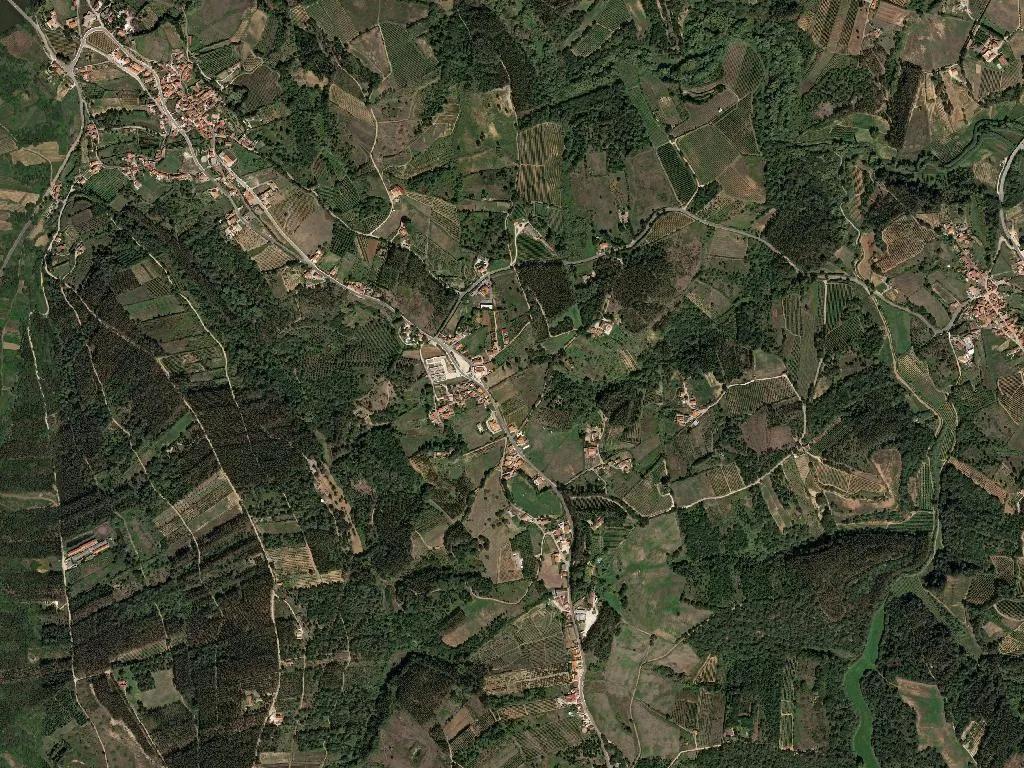
The road through A dos Negros runs ruler-straight between fields that shift colour like silk in a breeze – emerald when the barley is young, burnt umber when the wheat bows for harvest. At 142 m above sea level the land unfurls without interruption; only scattered stone pines mark the edge of one smallholding from the next. Atlantic air arrives unseen, a cool hand on the back of your neck even at midday in July.
A land between two stories
This is the western shoulder of the Óbidos municipality, inside the UNESCO-branded Oeste Geopark where limestone outcrops are fossil diaries of an ancient seabed. The same calcium-rich soils now feed three protected crops: the crisp-fleshed Pêra Rocha do Oeste DOP pear, the tart Maçã de Alcobaça PGI apple, and the thumb-sized ginja cherry that will reappear later as syrupy liqueur in a chocolate cup. Orchards are laid out with military precision; from the roadside the rows look like green barcodes scanned by the eye until they dissolve into haze.
Covering 1,749 ha and home to just 1,456 people, the parish has a population density lower than the Scottish Highlands. Low white houses appear every few hundred metres, some with 1950s ceramic nameplates, others freshly rendered in sharp render and glass. Behind them chickens pick through logs stacked for the winter – rural credit cards cashed in advance of cold Atlantic nights.
Generations in balance
Demography here reads like a parish newsletter: 175 children under 14, 435 residents over 65. On weekday mornings the loudest noise is a lone John Deere or the church bell striking the hour from its modest belfry. Towards dusk the asphalt lanes become slow-motion runways: neighbours walk dogs, exchange produce in paper bags, pause at a gate to argue about football or rainfall.
Accommodation is scarce by design – twelve self-catering units, a handful of rooms above cafés – which keeps tour coaches circling the walled town of Óbidos 8 km away. For visitors that is the point: A dos Negros is a place to store luggage, borrow a bicycle and disappear into field tracks that GPS still mislabels.
Open-air routine
There is no checklist of sights. Instead you calibrate time by light and labour. At 07:30 a tractor drags a plume of gulls behind it; by 09:00 the sun has burnt off the valley mist and pears glow like lanterns. Mid-afternoon heat sends dogs under parked cars; at 18:00 shadows lengthen and the air smells of wood smoke and bruised basil.
Meals appear without fanfare: a just-picked pear sliced at the kitchen table, roasted apples served from a wood-fired oven, a thimble of ginja offered by a widow who remembers when the liqueur was payment for field hands. If you want a restaurant you drive to Caldas da Rainha; if you want theatre you watch cloud shadows race across wheat.
Walk the dirt tracks south-west and you reach the Óbidos lagoon, where kayakers glide past flamingos that have flown in from Africa. Turn north and the land tilts gently towards the medieval aqueduct that once carried water to the citadel. Either direction confirms the same quiet negotiation: the Atlantic on one side, limestone hills on the other, and between them a scatter of white houses deciding, day by day, how modern they care to become.