Full article about Gaeiras: Where Apricots Once Dried on Sacking by the N114
Village of 2,363 souls, its limestone walls still warm from cart wheels and orchard fruit.
Hide article Read full article
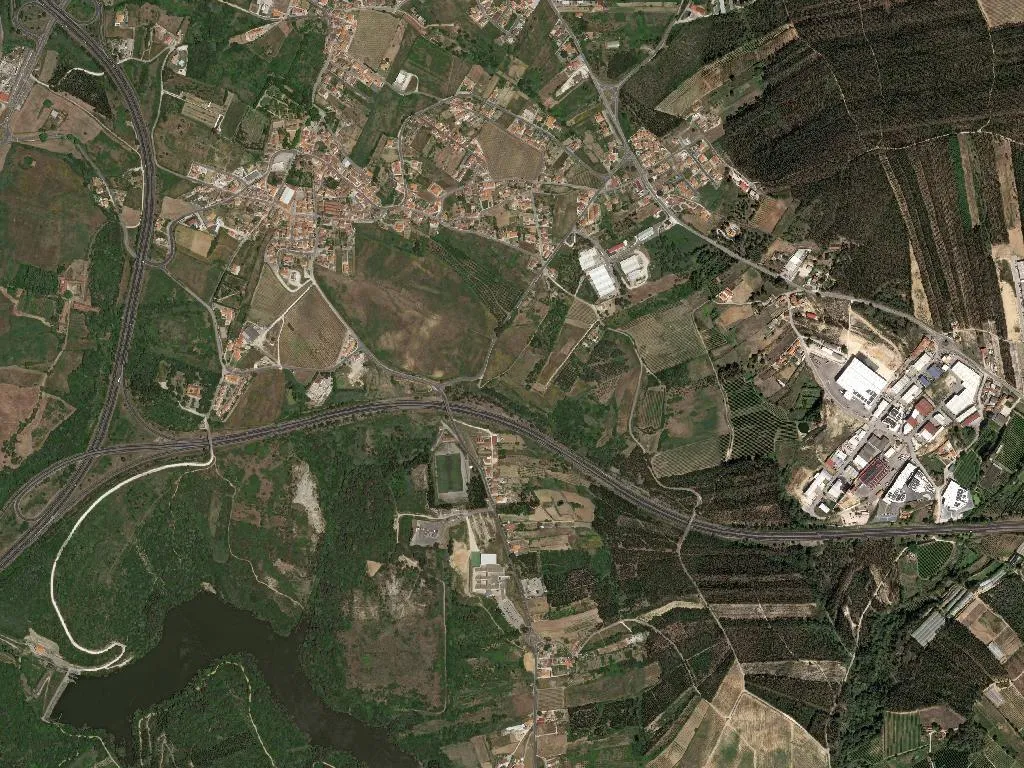
The N114 that bisects Gaeiras still carries the weight of carts that once stopped here out of necessity, not curiosity. Farriers reset shoes, millers haggled over wheat, and market women spread apricots on sacking. At dusk the village doesn’t sink into pastoral hush; instead you hear the low, constant pulse of 2,363 people living at roof-top level, 127 m above sea level, exactly halfway between the Atlantic and the sandy interior of Portugal’s West.
Seven monuments that still clock in
Listed protection covers seven buildings: one National Monument and three of Public Interest, yet none are cordoned off. Manueline doorways frame chipped plywood front doors, 16th-century crossroads shrines are repainted every spring by whoever complains first, and satellite dishes bloom above stone lintels. The beige-grey limestone that pokes through the fields—part of the wider West Geopark—was quarried to build the walls you lean against while waiting for the bus. History here isn’t displayed; it’s under your fingernails.
Fruits with a postcode
Three protected names root Gaeiras in the surrounding orchards. Pêra Rocha do Oeste, dense and faintly granular, ripens in long back-gardens that abut the national road. Ginja de Óbidos e Alcobaça—small, sour cherries—end up as velvet-black liqueur sipped from dark-chocolate cups, a habit Prince Henry the Navigator’s monks would recognise. Maçã de Alcobaça, picked in late August, carries just enough malic bite to stop it collapsing into sweetness. In the single-aisle groceries these fruits sit beside loaves baked in stone ovens whose crusts crack like thin ice.
Between two demographies
The parish totals 10.3 km², giving a population density of 229 people per km²—enough to keep the primary school open but not enough to fill the evening bar. Children—346 under 14—play football in the churchyard while 553 residents over 65 occupy the plastic chairs outside the café, comparing arthritic fingers and rainfall figures. Fourteen guest beds—scattered through converted stables, convent attics and one modernist cube—are booked mainly by cyclists tracing the Óbidos lagoon loop who prefer the smell of wood smoke to boutique scent diffusers.
Come nightfall the shops rattle down their shutters, limestone absorbs the last light and releases it slowly, and the road that once fed the village becomes a corridor of long shadows. Somewhere a pear falls, audible only because traffic is scarce and history, here, still keeps ordinary hours.