Full article about Olho Marinho: where pears ripen above the Atlantic wind
Visit Olho Marinho in Óbidos municipality for pear-scented lanes, Geopark orchards and village kitchens that cook straight from the tree
Hide article Read full article
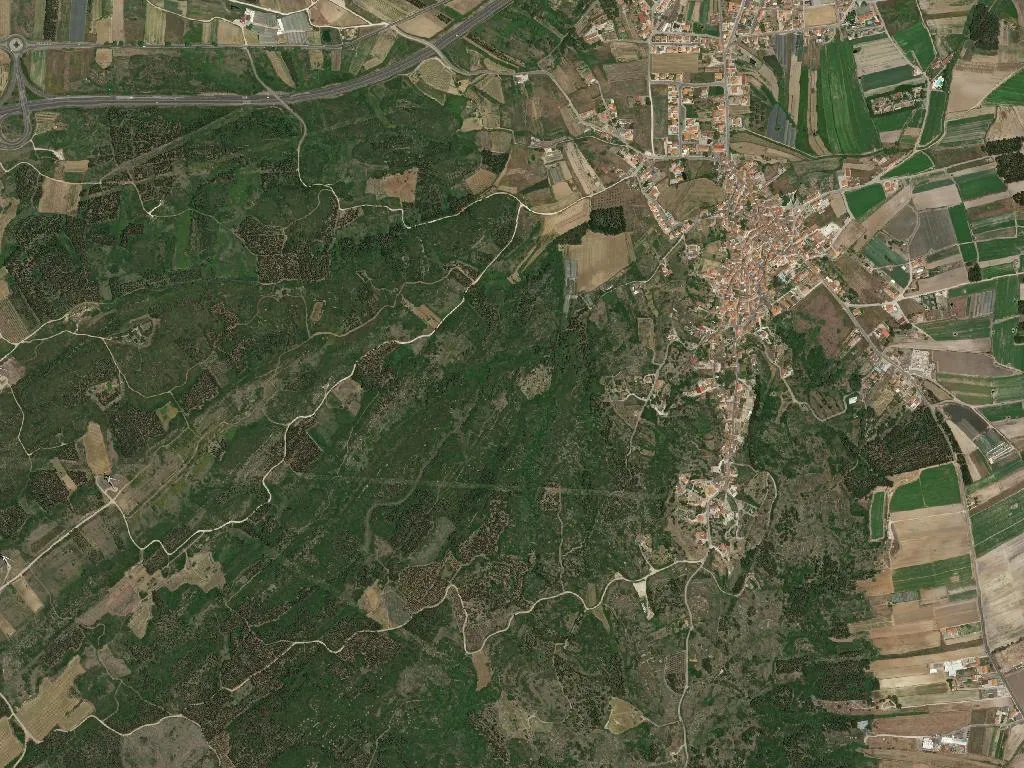
The wind arrives unchallenged across open fields, carrying the scent of newly-turned soil and, every so often, a faint sweetness from the pear rows. At 88 metres above sea-level the horizon is drawn in ruler-straight stripes: brown furrows, blocks of orchard green, the grey slash of a tarred lane that slices the parish into uneven geometry. Olho Marinho spreads over 1,811 silent hectares inside Óbidos municipality, far enough from the coach-party swirl of the castle town for the calendar to be set by blossom and harvest, not by souvenir timetables.
Orchards with protected names
The village sits inside the UNESCO-listed Geopark Oeste, yet the accolade that really matters to residents is printed on the side of every packing crate: Pêra Rocha do Oeste DOP, Maçã de Alcobaça PGI, and Ginja de Óbidos e Alcobaça PGI. Between June and September the low canopy of trees sags with fruit; at dusk the trunks glow like burnished copper while tractors creep home, raising pale curtains of dust that hang momentarily in the angled light. That is the cue for Sr. António to water his vegetable plot before supper, moving the hose with the unhurried precision of fifty years’ practice.
Space is the dominant texture: 75 inhabitants per km² leaves room for detached houses to breathe, for hens to scratch in loose earth, for vegetable beds to survive the age of supermarkets. Of the 1,361 residents recorded in 2021, 373 are over 65 and only 152 under 14; demographics shape the soundscape—cafés busiest at lunch, benches outside the bus stop occupied at twilight, silence settling soon after the evening news. In winter the drone of cathode-ray televisions leaks through mosaic-tiled living rooms earlier still.
A kitchen tuned to the seasons
The cooking is an edible ledger of what the land yields. Pêra Rocha—crisp, juicy, faintly sharp—ends up in cinnamon-scented roasts, weekend jam pans, or simply eaten sun-warm from the tree. Ginja cherries, more often linked with the fortified shots served in chocolate cups up the road in Óbidos, are also steeped here in aguardente for three months until the liquid turns garnet-black and delivers its sweet-bitter jolt. Cold months belong to pork-and-cabbage stews, thickened with potatoes and mopped with Alentejo-style bread that still emerges from three private wood-fired ovens; Dona Albertina’s is ready Wednesdays and Saturdays, but you order on Monday or go without—her oven is only just big enough for the village.
Bedrooms between the rows
Fourteen registered lodgings—mostly self-contained cottages and one orchard room—offer an antidote to the coast’s rental sprawl. There are no waffle-weave robes or curated book nooks, just wide windows that frame the Atlantic sky, gravel terraces where you can eat under a star-drained canopy, and the singular luxury of zero traffic. The 07:00 tractor counts as local colour; pack ear-plugs or embrace it.
Light shifts quickly here. By late afternoon shadows stretch like elastic between the pears and the habitual wind drops to a whisper. Distant theme tunes, an intermittent dog, the squeak of a gate being shut before total darkness—nothing more dramatic. Olho Marinho makes no promises of revelation; it simply continues, steadily, the way fruit swells and friendships endure without announcement.