Full article about Usseira: windmill whistles above Óbidos lagoon
Walk Roman arches, taste warm corn bread at Santa Luzia’s feast amid pear orchards.
Hide article Read full article
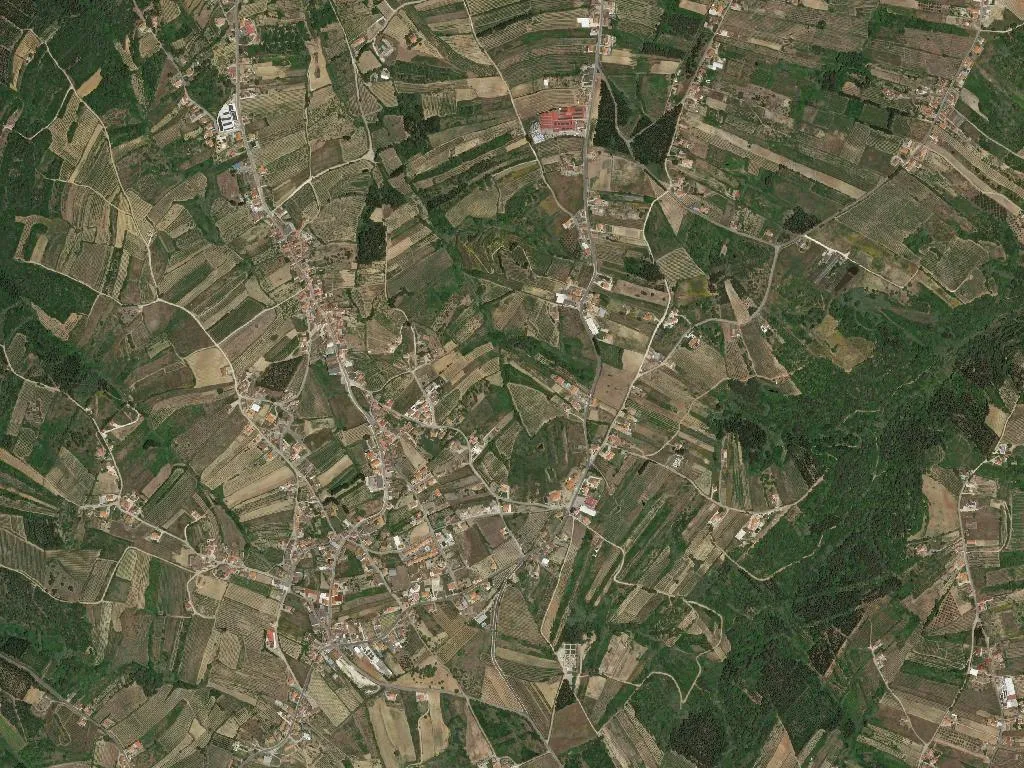
The first thing you hear is the wind. Not the Atlantic draught that buffets Baleal’s surf boards fifteen minutes away, but the high-plateau wind that combs through rows of Rocha pear and Alcobaça apple, rattling the loose blades of the only surviving windmill and making the stone walls whistle. From 168 m above sea-level the land tilts north to the Berlenga islands and south to Óbidos lagoon, a sheet of cobalt you can sight from almost every lane. Officially, Usseira has existed only since 1989—when it was hived off from the parish of São Pedro—yet its low white houses, Roman pavement stones and 12th-century capitals pre-date most of the kingdom.
A 16th-century water bridge still in work
Dowager-queen Catherine of Austria ordered the Aqueduto da Usseira built around 1570 to carry spring water six kilometres to Óbidos’ fountain inside the walls. Three of those kilometres march across open countryside in perfect Romanesque arches, now lichen-etched and echoing. Start at the signed lay-by on the CM1147, walk the sheep track that hugs the masonry, and you reach the Porta da Senhora da Piedade in 45 minutes—arriving, like the water, by gravity alone. The spring still flows; ferns uncurl around it even in August.
Santa Luzia’s stone pulpit and December feast
The parish church sits square in the middle of the settlement, its interior plain except for a 17th-century stone pulpit believed to have been salvaged from the dissolved Benedictine convent in nearby Gaeiras. On the second Sunday of December the feast of Santa Luzia turns the forecourt into an open-air refectory: mass at 10.30, then procession, brass band, and long oil-cloth tables loaded with corn bread still warm from wood ovens, smoked chouriço sliced by pocket-knife, and shots of ginjinha—Morello-cherry firewater—handed from neighbour to neighbour.
Apples, pears and chocolate cups
Look for net bags hanging from farm gates: Rocha pears €2–3 a kilo, Alcobaça apples the same. The cooking is unmistakably rural-West: mint-scented soup to start, then lamb stew thickened with apple, or a plate of cozido only served on feast days. Grandmothers still roll walnut biscuits and orange tarts, yet the flavour that identifies the parish is Óbidos ginjinha, now protected by IGP status, served either in a dark-chocolate shot glass you can eat afterwards (€1) or drizzled over queijadas (€0.60). After the December pig-kill the communal bean stew appears—feijoada da matança—eaten slowly while the wind rattles the door latches.
Breathing space between ridge and lagoon
Usseira gives you what tourist-thick Óbidos cannot: horizon. Way-marked rural lanes dip to the Vale dos Arcos, climb to the ridge, then drop again to the lagoon’s reed-fringed margin. Population density is 132 people/km²; many tracks remain pressed earth. Within a quarter-hour you can be on the links of Praia D’El Rey, on a surfboard at Baleal, or tasting crisp Arinto in a Lourinhã vineyard—but stay put and the rhythm is set by blossom, harvest, and the late-afternoon cold that sends you hunting for a wool coat.
Where to bed down
Quinta do Arneiro has four doubles from €70, breakfast included; reserve on +351 262 959 395.
Trail tip
PR1 is an 8 km signed loop to Óbidos lagoon and back; allow 2 h 30 min and carry water—no cafés en route.