Full article about Graça, Pedrógão Grande: granite silence above the pines
Walk 35 ridge-top miradouros where resin-scented wind carries only blackbird song and wood-smoke
Hide article Read full article
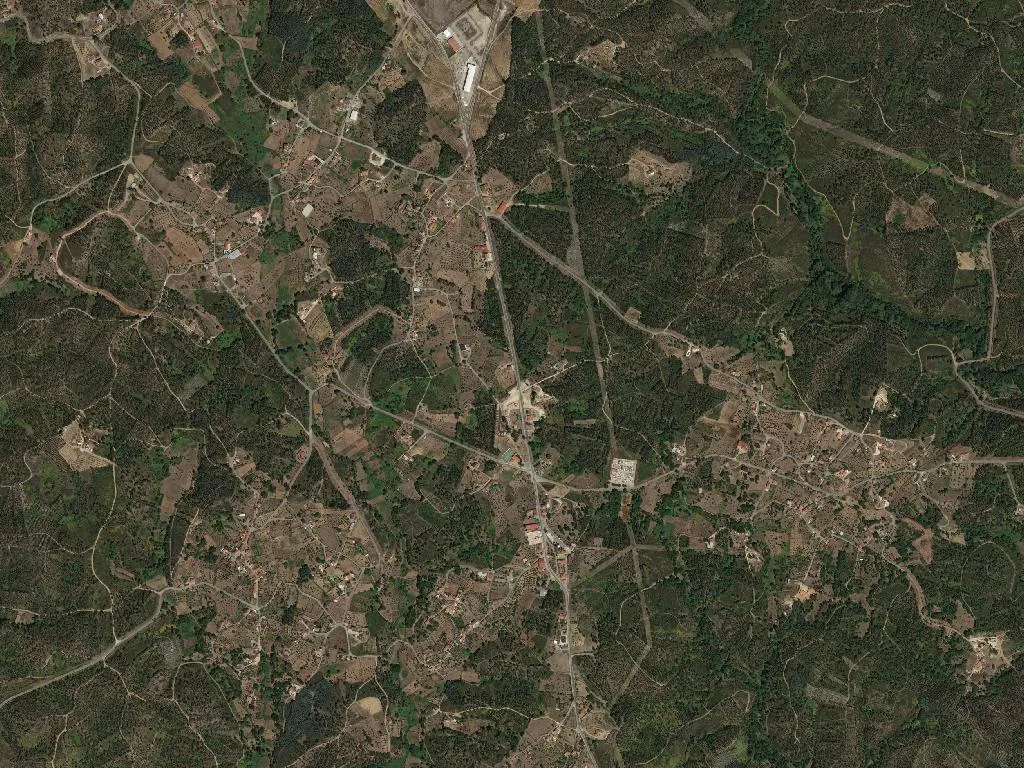
The first thing you register is sound: a door latching shut, a dog barking across the valley, wood-smoke being flattened against schist roofs by a hill wind. Only afterwards does Graça appear—scattered across 3,143 hectares of granite ribs and resinous pine at 355 m, with a human footprint lighter than most of Surrey: 19 people per square kilometre, 598 in total. Space is the dominant material.
When Altitude Writes the Schedule
Up here the thermometer drops five degrees the instant the sun slips behind the Serra da Lousã. Dawnlight arrives sideways, spearing through Pinus pinaster trunks; winter dawns carry the metallic scent of cold that sends residents to rekindle fires before coffee. There is no drive-through, no quick snapshot stop. Roads taper into granite cobbles; boot soles negotiate loose stone, moss on north-facing walls, iron-rich soil that stains fingers like turpentine. The village’s architecture is unsigned and date-stamped only by wear: dry-stone walls swallowing themselves, thresholds scooped out by two centuries of footfall, granite doorways carved 1863 or 1921 that no local historian has bothered to annotate. History is read by texture, not by plaque.
Walking the 35 Classified Viewpoints
Graça’s official nature inventory lists 35 miradouros—though none have souvenir stalls or €2 espressos. Pick any track through the maritime-pine and oak scrub and you emerge onto a ridge where maize and beans still grow on hand-built terraces no wider than a London bus. Sound collapses to a blackbird’s phrase, a tractor in low gear somewhere on the N233, the creak of a five-bar gate. Silence feels physical, like altitude itself.
The parish’s 20 listed food references are similarly unshowy: couve-feijão (a cabbage-bean broth) simmered on a Friday, loaves started with 30-year-old starter, olive oil pressed from centenarian trees that survived the 2017 fires. Ask at the only working adega and you’ll leave with a two-litre Sprite bottle of house red for €3 and an invitation to return in December for the matança do porco.
Logistics of Slowness
The nearest place to buy a newspaper is four kilometres away in Cabração; the bus from Pedrógão Grande arrives three times a week and never on market day. Autumn rain turns the access lanes into slick clay; Google’s estimated travel times are aspirational. Those 30 “logistical difficulty” points on the regional planners’ chart are not a cautionary label—they are simply the truth. Graça was laid out for ox-carts, not for next-day delivery.
Yet it is precisely this resistance to immediacy that shapes the welcome. Sit on the low wall opposite the chapel and within ten minutes someone has produced a folding chair, a glass of aguardente made from the same grapes you’ve just walked past, and directions to the best spot to watch short-toed eagles ride the thermals. Nothing is hurried because nothing is next.
Twilight Equation
At dusk the arithmetic is simple: sun disappears, temperature falls five degrees in thirty minutes, smoke rises straight from chimneys before the wind shears it apart. Between that vertical plume and the granite cooling underfoot, Graça reveals its real location—not just in Leiria district, but in a state of suspension where altitude is measured less in metres than in pulse rate. Bring walking boots, a tolerance for unpunctuality, and curiosity for landscapes that refuse to be hashtagged. The village will handle the rest.