Full article about Abiul: where granite whispers and soil keeps time
Walk silent quarries, taste pears ripened by Atlantic breezes, trace twin Camino paths
Hide article Read full article
The grammar of granite and soil
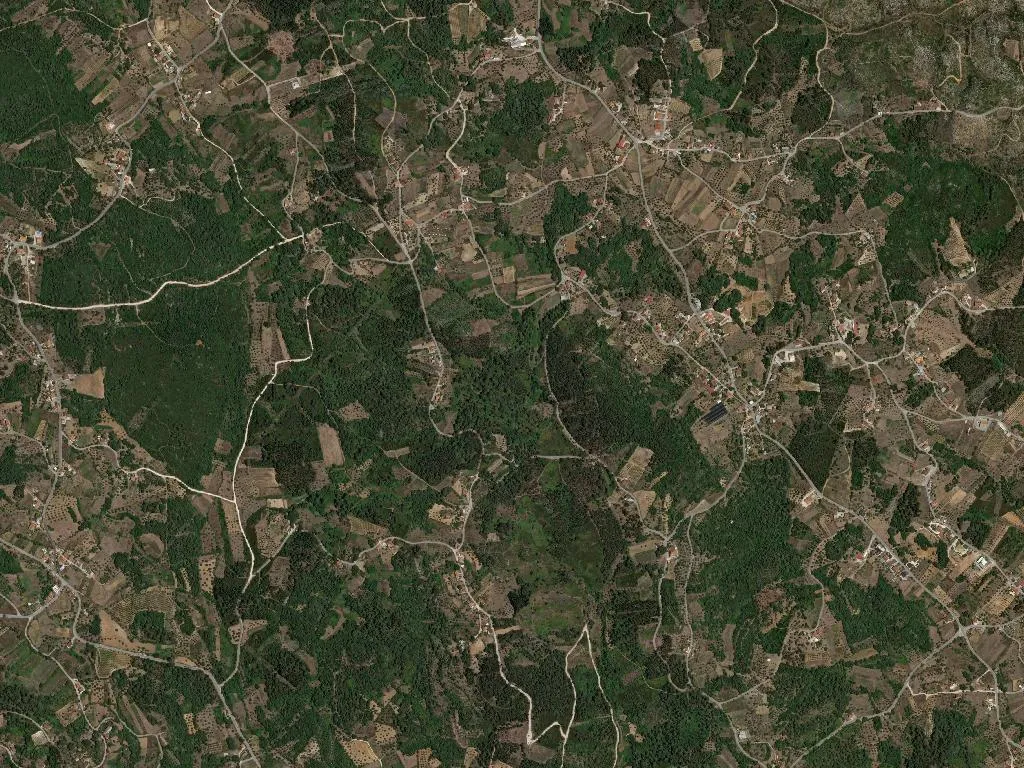
The granite beneath your feet is calibrated to an October morning—cool but not unfriendly, burnished by generations of boots climbing Abiul’s single main street. Beyond the last whitewashed houses the land unrolls in gentle swells, levelling out at 280 m where the air gains density and silence settles differently. This is the geographical dead-centre of Pombal municipality: 54 square kilometres of patiently worked earth and long agricultural memory.
How the land sentences itself
History here is written in furrows. Since the 1500s the parish has lived cheek-to-jowl with the soil—first pasture, then arable, always the stubborn knowledge that land does not lie. The name, probably from the Latin abulare (“to move, to shake”), still carries the seasonal shuttling between sowing and harvest that sets the tempo for 2,236 residents. A density of 41 people per km² is not abandonment; it is breathing room, the agricultural equivalent of a slow shutter speed.
Fields deliver what Atlantic-transition climate allows. West-coast Pêra Rocha pears ripen here with the poised sweetness that only the littoral–interior gradient can coax. Rabaçal DOP cheese is made a few valleys away, yet Abiul’s shopkeepers judge it blindfolded by fingertip and tang—cream-silk body, lemon-sharp finish. Golden Ribatejo DOP olive oil appears at every table, and even Trás-os-Montes PGI potatoes, trucked down from the northern highlands, find honourable placement in village pots.
Stone that testifies
Three kilometres out, the old Avelino quarry has been reborn as a Natural Monument. Saw-cut limestone walls stand like pages—grey, beige, ochre—depending on how the light strikes. Step inside and sound behaves like cathedral acoustics: each footfall doubles back, every syllable finds an echo. Time is suddenly geological, weighed in mineral tonnes rather than WhatsApp pings.
Footpaths that cross
Abiul straddles two St-James routes: the Coastal and the Torres variant of the Portuguese Camino. Pilgrims pass in metronomic rhythm, rucksacks bobbing, briefly sharing the parish metabolism—tap water from the village fountain, a nodded bom caminho, gone. Their footprints last an hour before the wind erases them from the ochre lanes that stitch Abiul to the wider world.
The ripple of Pombal’s annual Bodo feast—an edible medieval legacy once meant to ration meat and bread—reaches this far inland. Today it is ritual, yet still capable of seating three generations at the same paper-laid trestle.
The ballast of years
Numbers tell the visible story: 917 residents over 65, only 178 under 14. Abiul is greying, but not surrendering. Five guesthouses—two granite cottages, a pair of retro-fitted barns, one minimalist cube—receive travellers who come precisely for this deceleration, for the unfiltered sequence of rooster, church bell, and cabbage row.
At dusk, when low sun fires the west-facing façades and shadows pour like ink across the tarmac, the church bell strikes the hour. The note travels clean along the valley, unchallenged by traffic, and lands in the vegetable plots where someone is still cutting kale for supper. The hands that work the soil have cooled to the same temperature as the morning granite.