Full article about Carnide: Where Granite Walls Store the Sun’s Secrets
Pêra Rocha pears ripen on the ground while 16th-century stone hushes pilgrims.
Hide article Read full article
Granite that keeps the sun
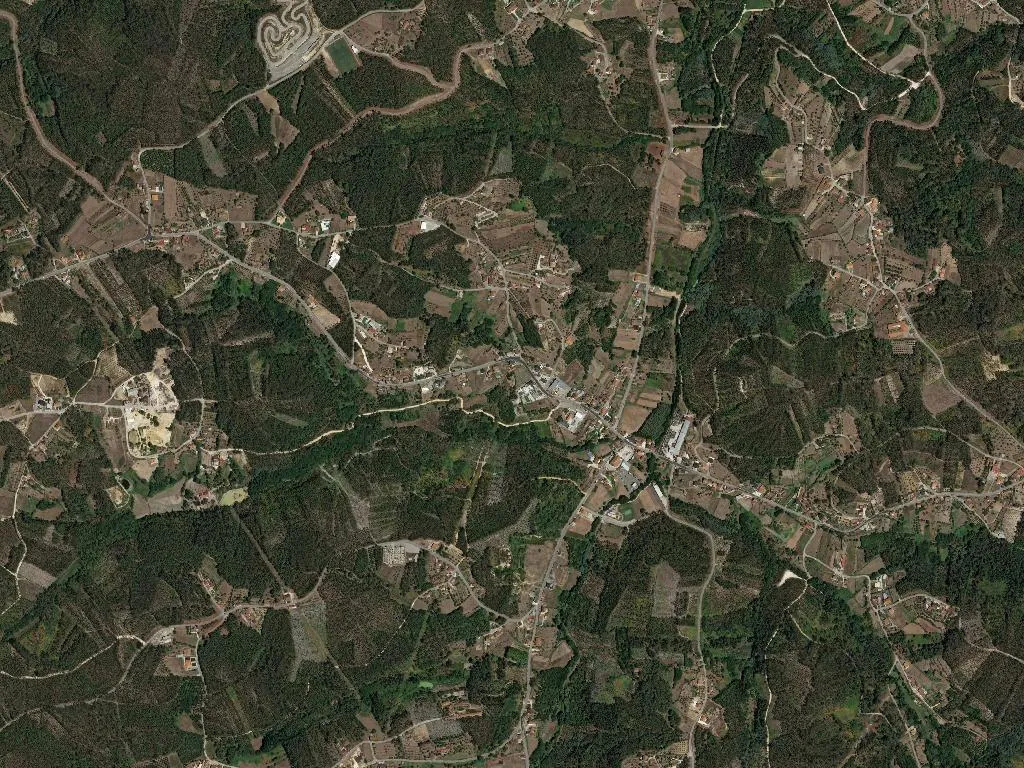
The granite houses of Carnide are the colour of mourning doves, a grey that exists nowhere else and stores the day’s heat like a classified document. At five o’clock the walls are still hot to the touch. The village crouches on its 99-metre hump of schist and refuses to budge. Look south-west and the fields are being turned for autumn wheat, the clay cracking into crusty hunks like stale sourdough. Silence is so complete you can hear Zé Manel’s dog barking in Tapada—two kilometres away across the pinewoods that smell of resin and distant sea.
Stone and pear country
Officially the parish spreads across 20 sq km; in practice it is simply the point where the view runs out. Population 1,622, yet only ten stools fit in the single bar. Everyone else is scattered among smallholdings where holm-oak still feeds the hearth. Pêra Rocha DOP—the crisp, perfumed pear that ripens along this coastal strip—starts here and runs to Lourinhã, but locals swear the sweetest fruit is the batch Tonio leaves on the ground until September so the sugars can climb. Queijo Rabaçal DOP arrives from the Serra do Açor, yet it tastes of Carnide when crumbled over warm corn-bread and washed down with a glass of Talha red. Local olive oil is perfectly decent; the one from Ribatejo simply has a longer CV.
Way-marks and wayfarers
Coastal Camino walkers drift in from Porto via Torres Vedras, lose themselves on the parish lane, then re-materialise at the curve by the 16th-century church. They ask for water, occasionally for espresso. Dona Fernanda pulls the lever on her 1985 Gaggia and interrogates origins. The yellow arrow is painted on Celestino’s gable; he disapproves but tolerates the vandalism because it is, technically, holy. No one lingers. Santiago is due west, the same straight line they’d follow to the barber in Pombal—non-negotiable.
Quarry of lost epochs
Avelino’s quarry is now a “natural monument”, which means hands off. The limestone ribs read like tree rings, each band a million-year instalment no one lived through. Parents bring children on Sunday, tell them the stone predates dinosaurs, and the children glance backwards to check their mothers are seeing the same planet.
Borrowed fireworks
Pombal’s main festival, the Bodo, happens 18 km away but its scent drifts over—charcoal, garlic, gunpowder. The week before, meat prices rise and Carnide’s shoppers drive over for the discounted share. Local celebration is smaller: a single night in the chapel square, sardines blackening over makeshift grills, a Bluetooth speaker pumping out Zeca Afonso from a Lidl carrier bag. There is no Bodo here, only the echo—grandmothers inventorying the absent, teenage boys draining mini-imperials on the Tasco’s single step.
Where to sleep
One house takes guests. Dona Amélia raised three architects in Lisbon; their childhood rooms are now whitewashed, linen-sheeted and listed on Airbnb as “slow tourism”. Breakfast brings pumpkin jam from her 1912 recipe book and coffee that tastes of the Atlantic breeze. Guests arrive because the sat-nav lost the signal or because they actively sought disappearance. When the lights go out you hear only crickets and Adelino’s tractor coughing at 3 a.m. as he trundles off to water tomatoes under the stars.