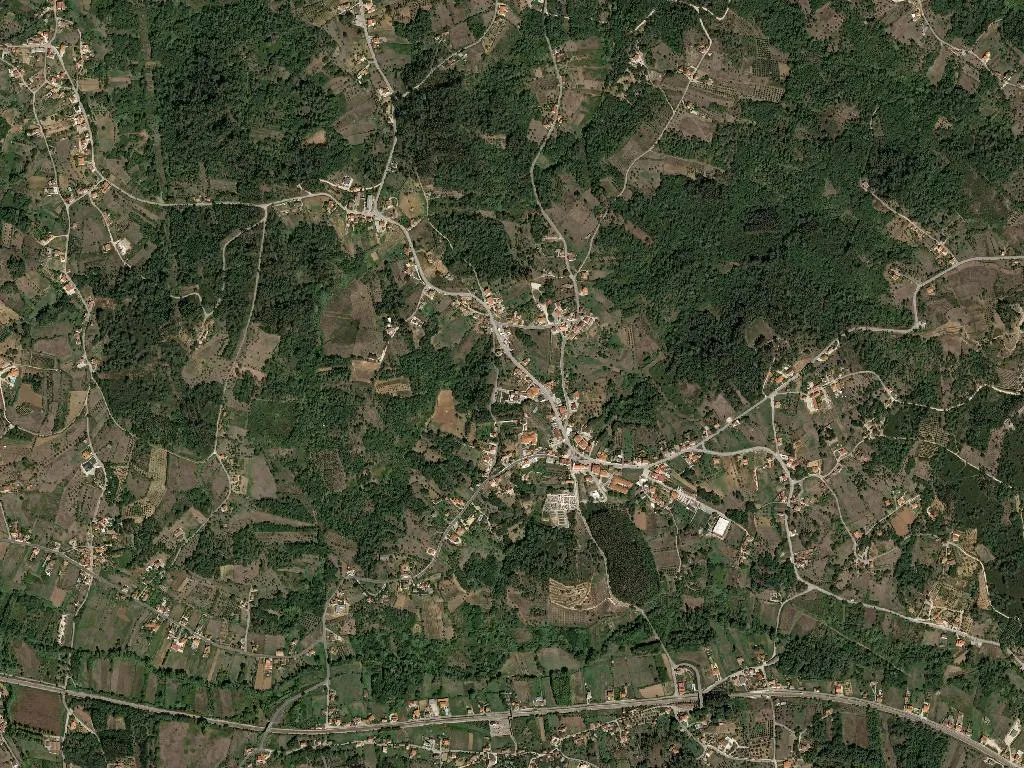
Full article about Santiago de Litém: hearth-smoke & manueline stone
Bakeries, 1512 royal charter, Jurassic quarry and three surviving watermills lace this Pombal villag
Hide article Read full article
Woodsmoke, manueline stone and a 155-million-year-old quarry
The air on Rua Direita smells of oak embers and burnt sugar. At 6 a.m. the shutters of Zé Manel’s bakery go up; the sour-dough mother he inherited in 1958 is already swelling in its trough. Locals simply call the place “o forno” – no need for further decoration. Step inside and you’ll find the same heavy peel his grandfather used, its edges burnished by seventy years of crusty pão de mistura.
Opposite, the tiny praça is dominated by a manueline pillory whose granite isn’t quite uniform. On the eastern face you can still read the inscription NON PLUS VLTRA – a replacement slab ordered after the 1755 earthquake, when the parish tower snapped in half and shattered the royal coat of arms.
Stone, water and a royal charter
On 20 June 1512 King Manuel I signed Santiago de Litém’s foral in Lisbon, granting the village market rights and a collar of protected land. The parchment lives in Lisbon’s Torre do Tombo archive; the parish council keeps only a laminated photocopy in its meeting room. Between 1765 and 1782 master mason António de Oliveira, a native of Soure, rebuilt the parish church whose main altar – dated 1773 – was financed by the Brotherhood of the Blessed Sacrament with vineyard rents from Carvalheira. Around the corner, the chapel of Nossa Senhora da Conceição fits fourteen wooden pews; Mass is offered once a month at 5 p.m., “se houver padre” – if a priest can be found.
Downstream, the Louçã mill-stream once powered sixteen water-wheels (1954 land-registry tally). Three survive: Meio, Fundo and Carrasco. Carrasco is now the private museum of Joaquim Virgolino, a retired miller who opens when the mood takes him (ring +351 919 345 678). A five-kilometre way-marked walk links the thirteenth-century bridge – widened in 1958 – with terraced olive groves; after last summer’s wildfire the yellow arrow at Moita fork vanished, so keep the water on your left.
Jurassic limestone and a Cold-War film set
The Pedreira do Avelino became a Natural Monument in 1996. Its 155-million-year-old ammonite pavements served as the bleak landscape for the 1962 thriller A Caça; the production company paid owner Domingos Avelino the princely sum of 5,000 escudos for five days’ shooting. From the quarry the PR2 footpath climbs 7.8 km to a 416 m summit crowned by a 1942 geodetic pillar. The pine forest rolling north was replanted in 1948-49 with 2.8 million maritime pines, a job directed by Louçã-born forestry engineer Joaquim Augusto Lourenço.
Goat stew, eel trays and Ribatejo olive oil
Wednesdays mean chanfana at O Moleiro, a 2.5-litre clay pot of eight-month-old kid, Bombarral red wine and cooperative paprika, simmered three hours over a low flame. Reserve before 10 a.m.; the recipe belongs to Albertina, the owner’s grandmother, since 1964. At dawn Cândido nets eels in the Mondego and unloads them at 7 a.m. outside the old abattoir gate. On the third Saturday of each month the cultural centre runs tigelada workshops – €15 includes the copper tray, bring your own apron. The local olive oil is pressed from Galega and Cobrançosa fruit; the agricultural co-op opens for tours on Fridays at 3 p.m. (minimum eight people).
Pilgrims, rockets and riverbank bats
The coastal branch of the Camino de Santiago enters the parish along the EM-518 at kilometre 14.2; the bakery, open 7.30 a.m.–7.30 p.m., provides the stamp. On 25 July the church bell rings at 11 a.m. for St James’s Mass, followed by a procession carrying José Joaquim de Almeida’s 1784 carved image and a midday salvo of seven rockets – €2,500 worth of gunpowder approved by the town hall. The annual fair occupies the second weekend of October: 120 stalls, a convent-sweet competition judged at 3 p.m. in the sports pavilion, and concertinas playing Sunday into the small hours (noise permit 234/2024).
Below the village the Louçã river beach reopened in 2021 after Storm Leslie shredded its reed canopy. Showers, loos and a seasonal bar operate June–September. At dusk, University of Coimbra researchers recorded 42 greater horseshoe bats along the medieval paving that slopes to the water – arrive twenty minutes before sunset and listen for their plastic-trumpet echolocation calls sweeping the valley.