Full article about Fossil-Laced Quarry Echoes Above São Simão de Litém
Stone, silence and sheep-goat cheese define this Jurassic-rimpled village in Pombal
Hide article Read full article
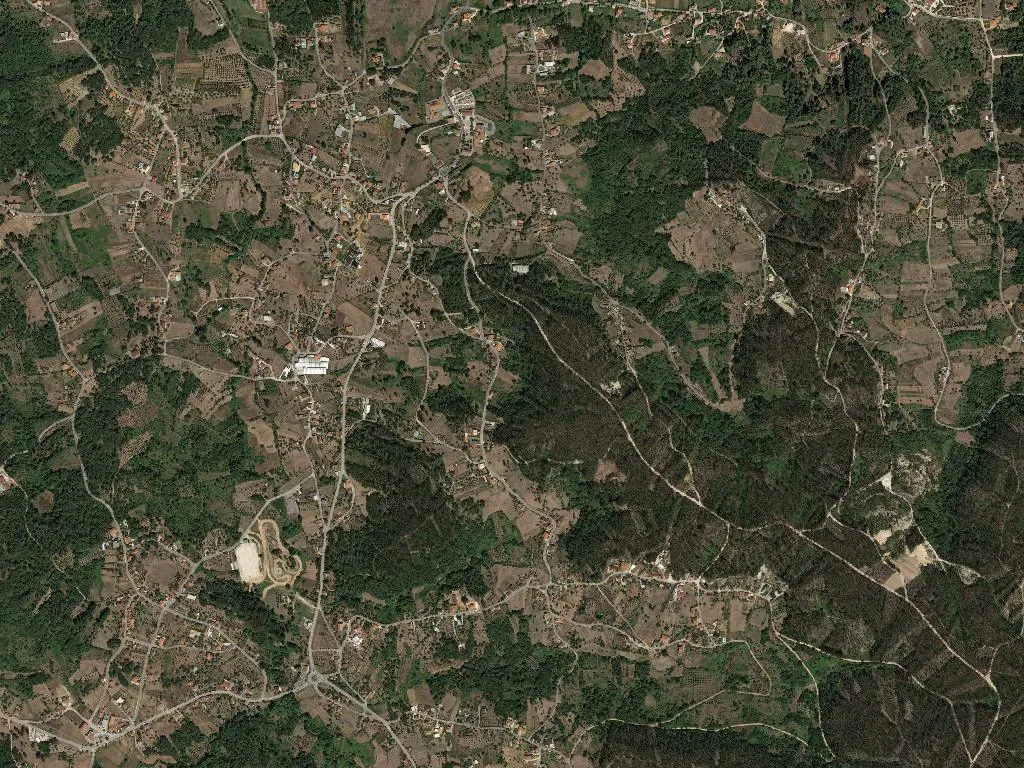
Limestone strata buckle out of the ground like vertebrae, each grey-white slab veined with moss. In São Simão de Litém, 233 m above sea level, stone is the metronome of daily life: the distant cough of a compressor in the quarry marks mid-morning; the sudden hush at five-thirty signals evening. Sparrows replace machines, rattling across terracotta roofs while the last light warms the empty benches outside Café Central.
The parish spreads across 1,607 ha of pear orchards and pocket-sized olive groves that fit between house clusters so loosely that the average density is only 66 souls per km². Demography, though, tilts sharply: 895 residents are over 65, just 224 are under 25. Their absence is audible—no secondary school, no nightclub, only the shuffle of slippers on the lane that drops to the 16th-century parish church.
Where the rock keeps the chronicle
Five minutes west of the church a rough track ends at the Pedreira do Avelino, now a protected geomonument. No ticket booth, no interpretive board—just a 30 m gash exposing Middle-Jurassic limestone packed with oyster fossils and the vertebrae of marine reptiles. Climb the makeshift platform and the village shrinks to a scatter of white cubes among green irrigation circles; the wind funnelling through the quarry walls amplifies every footstep, every wing-clap of the feral pigeons that nest in the ledges.
Both the Coastal and the Torres variant of the Camino de Santiago cut through the parish. Walkers appear each morning, poles clicking, asking the same two questions at the café: “Water possible?” and “Next chemist?” A handful stay the night in one of four signed cottages, leaving at dawn for the 22 km haul to Alvaiázere.
Tastes the council can certify
Friday is cheese day. A dairy van from Ansião brakes sharply beside Café Central at 9 a.m.; by 9.15 the entire week’s allocation of Queijo Rabaçal DOP—sheep-goat discs with a straw-coloured rind—has changed hands. Olive oil travels in five-litre demijohns, passed over garden walls: early-harvest Galega, so bitter it makes your tonsils hum. Between late August and mid-September the ground under the Pêra Rocha do Oeste DOP orchards smells like perry; split fruit ferments where it falls, attracting hornets and the occasional red squirrel.
At the weekend Zulmira fires her wood oven before sunrise. Half the village has standing orders for her seven-seed loaf; crusts blister to the colour of burnt almonds, crumb stays elastic for three days.
A medieval soup pot
Once a year the parish council lends its white plastic chairs to the Festa do Bodo, a medieval charity feast that spills over from Pombal town. On the Sunday after 15 August the Hunters’ Club band strikes up outside the chapel; volunteers ladle sopa de pedra—stone soup—into plastic bowls. Everyone brings something: a chorizo, a potato, a fistful of mint. The scent of roast kid drifts across the football pitch; smoke from the orange-tree bonfires settles on collars like incense.
Dusk is the moment when São Simão de Litém feels most itself. Sunlight slants across the abandoned cut-blocks, warming the stone until it exhales the day’s heat. No buses, no Wi-Fi, no agenda—only the low tick of cooling slate and the knowledge that tomorrow the quarry bell will ring at seven, exactly as it did half a century ago.