Full article about Juncal: Sunrise above Portugal’s Hidden Limestone Village
Where pear orchards scent the breeze below the Aire ridge, Juncal keeps time by fruit, not clocks.
Hide article Read full article
Dawn on the Limestone Edge
Morning light slices through the east-facing panes like a caller who glances in before knocking. At 159 metres above sea level, Juncal wakes to the scent of bread that hasn’t cooled and to a hush of water threading unseen between orchards—an irrigation channel everyone knows but no one sees. Here, halfway between the rush of the Leiria coast and the drama of the Aire ridge, time is kept by apples and pears, not clocks.
At the Park’s Edge
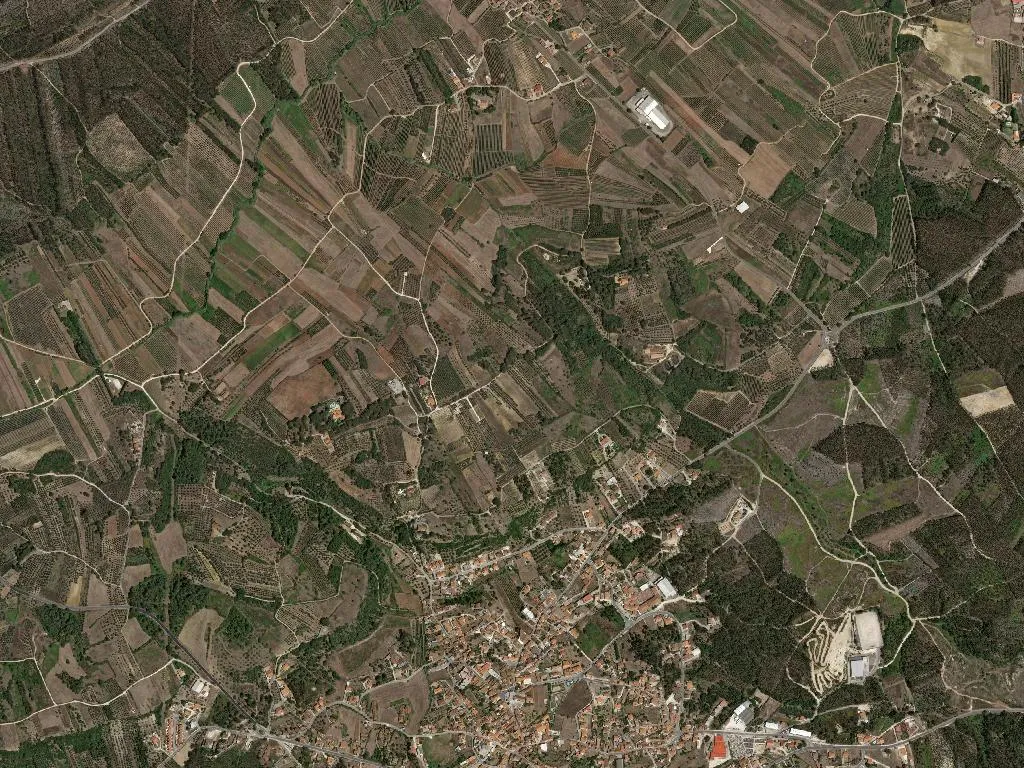
Juncal is stitched to the southern hem of the Serras de Aire e Candeeiros Natural Park. Limestone is not underfoot; it is the view. When fields are cleared, the stones come out larger than they went in, as if the earth were quietly multiplying. The parish covers 2,663 hectares of transition zone: a northerly breeze smells of peat and heather; swing it south-west and Atlantic salt arrives, even though the ocean is a 30-minute drive away.
Officially, 120 people per square kilometre sounds dense, yet most cling to the old EN243. Beyond the tarmac, olive terraces, pear goblets and scrub oak swallow the land, laced only by hunters’ paths. All 3,197 residents pass the litmus test of recognition: at any junction they can name the baker’s granddaughter, recall who bought the olive grove from his father-in-law, and point to the plot that has never left the family.
Fruit that Learns to Cling
The soil is so calcareous that even winter cabbages finish with an almond note. The Alcobaça DOP apples grown here are small, sharp enough to make your molars squeak—tasted before lunch, they leave the mouth begging for soup. Pêra Rocha do Oeste, the region’s pear, ripens slowly, indifferent to market day. Come August, lorries idle on the verge; pickers queue for espresso, buckets steaming in the sun while they grumble over prices as if it were news.
Olive oil is the longer story. Groves were planted by grandfathers who never saw a passport; trunks twist like road atlases. The fruit is tiny—little larger than a chickpea—yet yields a peppery oil that locals drizzle over tomato and day-old bread. In the community mill, the smell of crushed paste lingers on sweatshirts for days; it is the perfume of labour without a time sheet.
Days Handed Down
Elderly: 805. Children: 385. Do the maths—storytellers outnumber story-makers. At four o’clock the school gate clicks open and grandmothers pause their shopping to identify the new girl: granddaughter of the baker who married the girl from Fátima. Thirteen guest cottages do brisk trade when parents visit students in Leiria and seize the weekend to “breathe air”—code for hiking to the spring rock and returning with shoes dusted white.
There are no queues, no tickets, no fridge magnets. What exists is a café where on Mondays the cards slap for Swedish whist and the owner pours the shortest espresso in Porto de Mós—“if you want water, drink from the channel.”
At dusk, when the sun slips behind the ridge, limestone walls glow honey and rosemary steam rises from gardens as though the earth itself is brewing tea. In the ten-minute hush—between the last tractor parking and the first dog barking—Juncal balances, entire, in the palm of your hand.