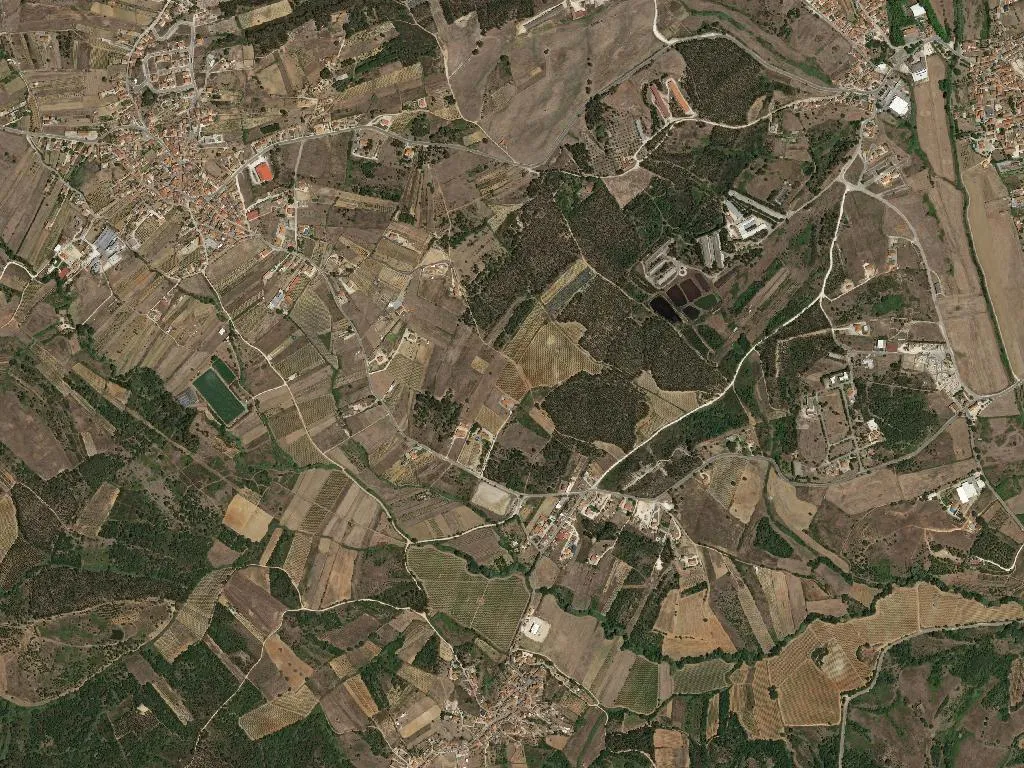
Full article about União das freguesias de Abrigada e Cabanas de Torres
Afternoon gold over chalk vineyards, doorstep Pêra Rocha pears and a pilgrim path with no queues
Hide article Read full article
Afternoon sun, olive-oil thick
The sun slides over the Serra de Montejunto like warm olive oil on a white plate, slowing when it meets the vineyards east of the ridge. Between the rows, the cooperative men at Adega da Labrugeira rinse the last plastic crates and glance at their watches – dinner is timed for when the church bell strikes eight. Officially the cooperative still lists 85 shareholders; in practice half have surrendered their tractor keys to sons and grandsons and now point from the terrace: “That parcel’s mine, the next one is Zé Manel’s.”
Vineyards that still pay the bills
Cherries, peanuts and French beans drifted out of profit years ago, so the chalky slopes have been replanted to vines. The limestone that local geologists call “chalk-water” gives the whites a flinty edge Lisbon sommeliers politely label “elegant”. Restaurante O Pato in Benfica buys the bulk juice, bottles it informally and sells it at €4 to regulars who recognise the postcode on the label. Visit early, before the Atlantic breeze drops and the thermometers panic; bring water because Labrugeira’s café unlocks at 09.30 sharp and the biscuit tin has been empty since 2019.
Pêra Rocha – the quiet relation
The DOP-speckled pears do grow here, but in back-garden quantities that fit inside a single citrus crate. March blossom smells like watered-down honey; by August the surplus is left on doorsteps with biro-scrawled notes – “Take if you want”. Only the shrewd manage to sell a box to the fruit stall in Alenquer market without a lecture on size standards.
Walking without a queue
The Portuguese coastal Camino cuts across the parish, yet you will find no refugios, no neon arrows, just daubs of yellow masonry paint applied by João “Zé” two summers ago and now sun-bleached to buttermilk. Pilgrims tend to be Spanish truck drivers who took a wrong turn or French cyclists whose GPS batteries died. Pack sandwiches: there is no kiosk between the ridge and the village, and the only working spring – Fonte Santa – is used by grandmothers filling plastic flagons for soup.
Sunday at noon
Life clusters around the picnic parks. Lamb espetada drips onto charcoal, red wine sloshes from five-litre jugs, and someone’s radio is locked to Rádio Renascença. Arrive before 13.00 or the stone tables are colonised by teenagers who have already monopolised the swings. Population density is 90 souls per km², which translates to plenty of room to park a Transit van beside the barbecue pit – and no parking meter in sight.
Who stays, who commutes
The roll-call reads: 504 children, 1,127 pensioners, several dozen who leave before dawn for jobs in Lisbon and are back in time for tomato soup at 19.30. Abrigada’s primary school still fills three classrooms; Cabanas’ closed last decade, so parents undertake the 12-minute diesel-fuelled school run, cursing the price of fuel. The GP holds surgery three days a week – book the slot early or wait another seven days. The pharmacy stocks everything except sympathy on Saturday afternoons, exactly when the weekend churrasco headache strikes.
Last glass
By 20.30 the sun has slipped behind the escarpment and the vineyards glow like newly-minted copper coins. The bar shutters officially at nine, but Sr. António will stretch to a quarter past if you ask nicely for “mais um”. There is no playlist, no mood lighting, only the kitchen radio leaking pimba pop and the soft clink of wine landing in glass. When the final sip is gone it tastes of earth, grape skin and calcium – the same every year, which, round here, means the world is still in its proper place.