Full article about Aldeia Galega & Gavinha: Where Vineyards Echo Royal Past
Wander between Gothic fountains, 14th-century pelourinhos and family quintas in Aldeia Galega da Merceana e Aldeia Gavinha, Alenquer.
Hide article Read full article
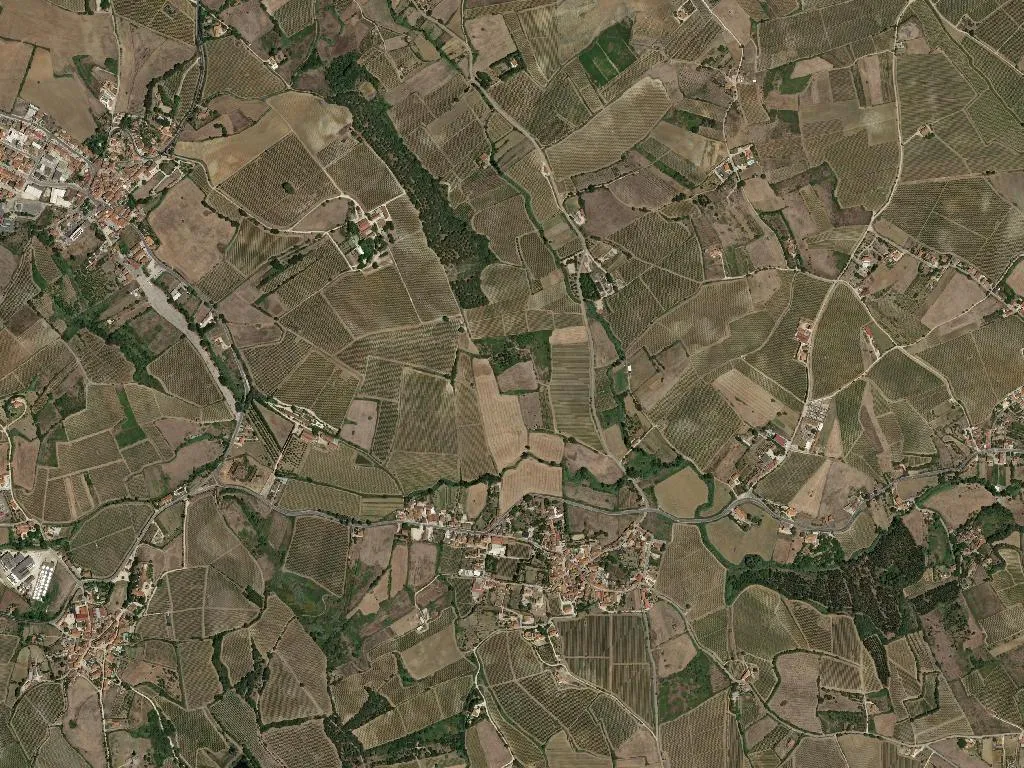
The white stone of the Gothic fountain throws back the morning light like polished pewter. A single arch, knife-sharp, prints its shadow on the ochre earth of Aldeia Gavinha; the slow drip of water keeps the only metronome a village has ever needed. Beyond the last house the vineyards snap into formation – rank upon rank of Touriga Nacional and Arinto – until the land folds into sky and the silence begins to taste of dry soil and last week’s grape must.
What once was a town
Aldeia Galega da Merceana held royal market rights from 1305, granted by King Dinis. It served as a municipality in its own right until the liberal reforms of 1855 stripped it of that status and folded it into Alenquer. What remains of civic pride is the pelourinho – a limestone column that once displayed the royal arms and the town’s own seal – and the parish church of Nossa Senhora dos Prazeres. Its portal is a pre-Manueline curiosity, all restless foliage and knotted ropes, while inside an 18th-century ceiling paints a geometry of flowers that shifts from terracotta to bruised violet as the sun moves. The air is thick with beeswax and breath of centuries; the azulejos, cool under the fingertips, narrate the life of St Francis in cobalt.
Three kilometres east, Aldeia Gavinha exists because of the Black Death. Survivors from the 15th-century plague regrouped around a small hamlet called the Casal de Gavinha, and the settlement stuck. The little church of Santa Maria Madalena, granite-block solid, anchors the main square. On the second Sunday of July the open-air district of Casais Brancos fills with tables for the Festas do Espírito Santo: bread and wine distributed after a procession, the brass band circling back to the same polkas played by grandfathers.
Farms under an open sky
The ridge between the two villages is a ledger of quintas: Quinta do Anjo, Quinta de Chocapalha, Quinta da Cortezia, Quinta da Grila. Some trace their titles to the 17th century; others have converted stone barns into tasting rooms where the reductive hiss of a newly opened bottle mingles with tractor diesel. Alenquer’s terroir sits on limestone and clay at 118 m above sea level; Atlantic breezes slide through the Serra de Montejunto at night, preserving acidity in grapes that spend the day basking. In the cellars the air is tinged with old chestnut vat and bruised apple. Between the rows of vines you’ll spot the wider leaves of Pêra Rocha do Oeste trees; the pears are picked in late August, wrapped in individual brown paper sleeves, and will still be crisp at Christmas.
Stone and faith
The Torres variant of the Camino de Santiago cuts across the parish on its way from Lisbon to Santarém. It is not a route of scallop-shell crowds but a dusty track shared with tractors and the occasional pilgrim who has swapped the coastal fog for wheat fields. The waymarks lead past the Gothic fountain, past the pillory, through hamlets where storks clack on telegraph poles. The entire area lies within the UNESCO-designated Geopark Naturtejo; limestone outcrops record a seabed 90 million years old, and every hand-dug well hits fossilised oyster shells the size of dinner plates.
Names to make you smile
The map still carries designations that sound like pub jokes: Barbas de Porco (Pig’s Beard), Palhacana (Straw Hut), Cortegana (a hamlet whose name no one can satisfactorily explain). They survived the 2013 merger that stitched the two parishes into one administrative unit. With barely a hundred people per square kilometre, space is the dominant crop; houses sit within their own orchards, dogs sleep in the middle of the road, and the church bell at midday carries for miles before it dissolves into the heat shimmer above the vines.
Stand still long enough and the details assemble: the exact profile of a 15th-century arch against a cobalt sky, the flinty finish of an Arinto sipped under a tiled porch, the chill that rises through your palm when you steady yourself on the pelourinho. What lingers here is not spectacle but specificity – the sense that everything worth noticing has already been in place for centuries, waiting for someone to look up.